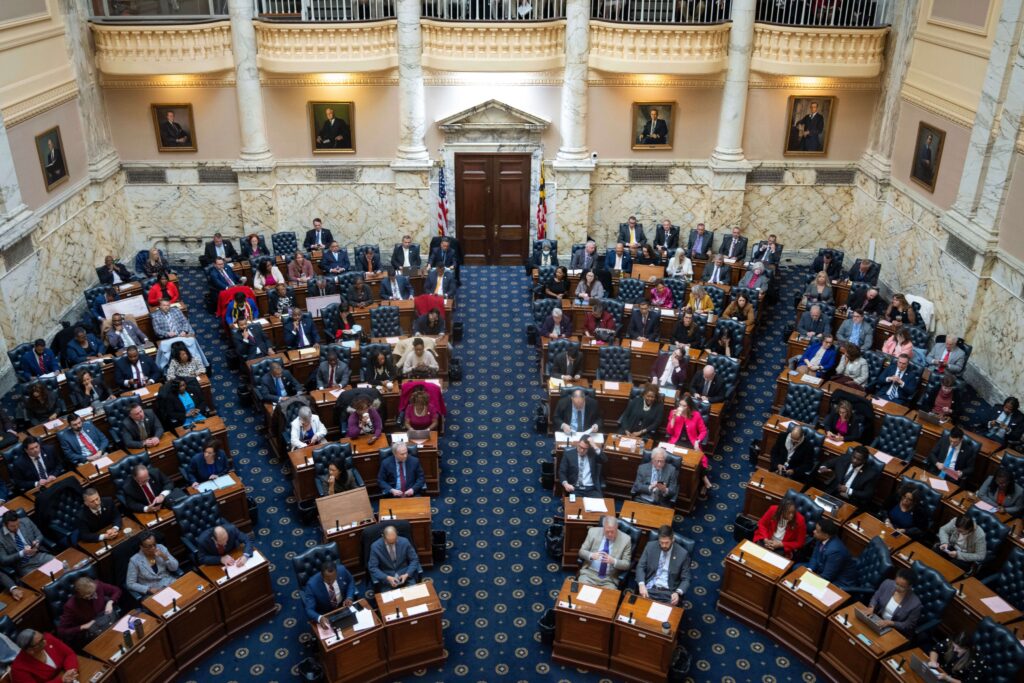
The Maryland General Assembly convenes Wednesday to kick off its 90-day legislative session, where lawmakers will grapple with significant fallout from federal policies set by the Trump administration.
The state is facing a difficult economic reality after the administration cut nearly 25,000 federal jobs based in Maryland since last January. The cost of energy, housing and consumer goods have continued to rise, creating an affordability crisis for many residents. And the state, governed by a Democratic supermajority that holds both chambers of the State House and the governor’s mansion, is frequently at odds with the politics and policies of the White House.
Democratic leaders say they plan to move swiftly on an agenda that opposes many of President Donald Trump’s policies on the economy, immigration, health care and other issues. They also say they are committed to growth and affordability.
“I think if we do the three things that we’ve laid out, making life more affordable for Marylanders, making Maryland more competitive for economic growth, and really doing everything we can do to protect our people from what we’re seeing from Donald Trump and JD Vance, I would consider this session a success,” Gov. Wes Moore (D) told The Washington Post on Monday. Here is what to watch for this session.
Taking aim at Trump
The Trump administration’s actions in 2025 will loom large over the upcoming legislative session.
Last year, lawmakers took a wait-and-see approach to confronting Trump, in part because of fears that a more aggressive posture could put a target on Maryland, which depends heavily on federal jobs. Since then, the state has lost federal jobs, confronted a pause in food stamp benefits and grappled with increasing tensions over immigration enforcement.
Legislative leaders say they are ready to work toward limiting the impact of those federal policy shifts, and Moore has also touted an agenda that includes “protecting our people.”
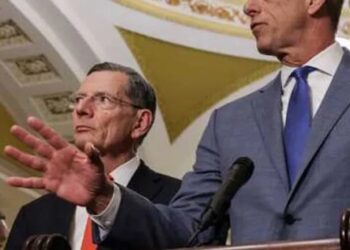
Both Senate President Bill Ferguson (D-Baltimore City) and House Speaker Joseline A. Peña-Melnyk (D-Prince George’s) have said they’ll support legislation proposals to eliminate 287(g) partnerships between local law enforcement and U.S. Immigration Customs and Enforcement that make it easier for authorities to arrest and deport people that officials say are in the country illegally. Eight Maryland counties currently participate in such collaborative agreements. Lawmakers will also consider a bill that would forbid ICE agents from wearing face masks that shield their identity. A third proposal, dubbed the “ICE Breaker Act of 2026,” would ban agents hired during Trump’s second White House term from working in state law enforcement but likely faces hurdles.
Lawmakers will also tackle health care after the Trump administration overhauled federal vaccine recommendations and took aim at entitlement programs like Medicaid. Moore has put forward a bill that gives his health secretary authority to recommend vaccines. Peña-Melnyk said her chamber would consider bills to help the 140,000 Marylanders who may lose Medicaid coverage because of new work and redetermination requirements passed in the One Big Beautiful Bill.
“What the federal government has done is moving us backwards,” Peña-Melnyk told The Post. “We have to be proactive and make sure that we put things in place that allow people to have access to care.”
Ferguson said the Senate will take up some bills that contend with the “Trump administration’s attempts to eviscerate labor law” by undermining the National Labor Relations Board. That effort would expand the state’s equivalent of the NLRB and potentially ban quasi-unions used to undermine collective bargaining, he said.
“We really believe that Maryland has to be a place where we’re building a wall of protection against the lawless Trump administration,” Ferguson said.
Affordability
As Marylanders grapple with high prices that continued to rise in December, General Assembly leaders have singled out affordability as a cornerstone of their legislative agenda.
Moore has backed bills to lower housing costs by clearing the way for transit-oriented development on state-owned land and allowing for smaller homes to be built in an attempt to juice the supply for young people and seniors with limited budgets.
He also said he would prioritize a bill to go after corporate grocery stores artificially raising prices, a practice known as dynamic pricing that has inspired similar proposals in New York and California.
Ferguson and Peña-Melnyk both said skyrocketing energy costs would be another key issue.
“We have an energy crisis,” Peña-Melnyk said, relaying her daughter’s struggle to pay her electricity bill in Baltimore that exceeded $300 a month last year. She said to expect a bill that seeks to prohibit energy company CEO bonuses to be paid by ratepayers, one that deals with battery storage and another that makes monthly power bills more predictable for consumers.
“It shouldn’t be a monthly gamble where you’re like terrified of opening that bill,” she said.
Growth
It’s rare that Maryland Republicans praise the political agenda of the democratic governor, but on the issue of economic growth the two camps share some priorities. Both GOP leaders and Moore have said that the state must rely less on the federal government as a core source of employment and focus on incentivizing private investment in the state.
It’s not yet clear how Republicans, the governor and the rest of the supermajority Democratic legislature will act on that strategy or chart a path forward together. But Moore has said he will push a legislative agenda that focuses on investing in what he calls “lighthouse” industries like technology and aerospace that reduce the state’s reliance on Washington. He’ll reintroduce his Decade Act, which stands for Delivering Economic Competitiveness and Advancing Development Efforts, that passed the Senate last year but failed to move through the House of Delegates.
The governor’s proposed legislation would move some economic initiatives under the Department of Commerce from other departments, extend tax credits for certain small businesses and research and development expenditures, support innovation grant funding and entice the film industry to Maryland.
Ferguson said lawmakers would also vote on bills to clear red tape for small and medium-sized businesses in an effort to make Maryland a more competitive place for companies to operate. He said the state’s permitting requirements would be one barrier to look at.
“We have we got to make it easier,” to run a business in Maryland, Ferguson said. “It can’t take 39 permits to operate annually a grocery store.”
Another Budget Deficit
Despite passing tax and fee increases last year, the state is facing another $1.4 billion deficit.
Moore, Ferguson and Peña-Melnyk told The Post in interviews that new taxes and fees are off the table this year.
Instead, Moore said he will propose a budget balanced primarily through cuts that will shrink the size of the general fund, though he also emphasized modest investments in education and public safety.
The Senate will deal with the budget first this year. Ferguson said he expects to focus on cost-containing measures that slow the growth of entitlement programs like Medicaid, and steeply rising funding for both the Developmental Disabilities Administration and substance-abuse treatment programs.
Though the Blueprint for Maryland’s Future, an education reform plan passed nearly five years ago, will soon run out of dedicated funding and swiftly become one of the fastest-increasing state costs, Ferguson and Peña-Melnyk agreed that debate on any major changes would likely wait for next year after a mid-decade review of the program’s progress.
Redistricting
As states’ nationwide battle over mid-cycle redistricting efforts continue, Democrats in Maryland face intense pressure from national party leaders to redraw the state’s congressional map to push the state’s lone Republican representative out of Congress. They also face political and procedural hurdles.
Moore convened a commission to draw and recommend maps in the fall. Peña-Melnyk has said she supports redistricting in general but wants to see what map the commission proposes. But Ferguson has said he will not entertain the effort, which he said creates “significant legal and political risks that will likely backfire.”
Maryland Republicans have said they’ll file a lawsuit if Democrats move forward with a congressional map that chokes out GOP representation.
Once Moore’s commission makes a recommendation, the proposed map will come before state lawmakers, who must pass redistricting by late February so the new map could be instituted ahead of the 2026 primary election cycle in June.
The post Pushing back on Trump, Maryland embraces a ‘protect our people’ agenda appeared first on Washington Post.