Multiple senior prosecutors in Washington and Minnesota are leaving their jobs amid turmoil over the Trump administration’s handling of the shooting death of a Minneapolis woman.
The departures include at least five prosecutors from the U.S. attorney’s office in Minneapolis, including the office’s second-in-command, according to emails obtained by The Washington Post and people familiar with the matter.
The Minnesota resignations followed demands by Justice Department leaders to investigate the widow of Renée Good, the 37-year-old woman killed last week by an Immigration and Customs Enforcement officer who shot into her car, according to two people familiar with the resignations who spoke on the condition of anonymity out of concern for retaliation. Good’s wife was protesting ICE officers in the moments before the shooting. Prosecutors also were dismayed over the decision by federal officials to exclude state and local authorities from the investigation, one of the people said.
Five senior prosecutors in the criminal section of the Justice Department’s Civil Rights Division also said they are leaving, according to four people familiar with the personnel moves who spoke on the condition of anonymity to discuss personnel matters.
The departures strip both the Civil Rights Division’s criminal section and U.S. attorney’s office in Minnesota of their most experienced prosecutors. The moves are widely seen as a major vote of no-confidence by career prosecutors at a moment when the department is under extreme scrutiny.
The criminal section of the Civil Rights Division is the sole office that handles criminal violations of the nation’s civil rights laws. For years, the Justice Department has relied on the section to prosecute major cases of alleged police brutality and hate crimes. The departures followed the administration’s highly unusual decision to not include the Civil Rights Division in the initial investigation of the shooting.
The Civil Rights Division departures include the criminal section’s longtime chief and deputy — Jim Felte and Paige Fitzgerald, respectively — career attorneys who served in their positions during President Donald Trump’s first administration and through President Joe Biden’s administration. Three other supervisors and senior litigators are also leaving.
The prosecutors in Minnesota did not immediately respond to requests for comment. Felte and Fitzgerald also did not respond to requests for comment.
The Civil Rights Division prosecutors informed their colleagues of their resignations Monday. People familiar with the section, who spoke on the condition of anonymity to discuss personnel matters, said the lawyers who are leaving did not attribute their decisions to the Minnesota investigation.
The department has been offering voluntary early retirement packages to certain sections, and some of the departing civil rights prosecutors qualified for that option. Some indicated to their colleagues before the Minnesota shooting that they were considering the retirement packages.
“Although we typically don’t comment on personnel matters, we can confirm that the Criminal Section Leadership gave notice to depart the Civil Rights Division and requested to participate in the Department of Justice’s Early Retirement Program well before the events in Minnesota. Any suggestion to the contrary is false,” a Justice Department official said in a statement.
Deputy Attorney General Todd Blanche released a statement saying: “There is currently no basis for a criminal civil rights investigation” into the shooting.
Trump’s appointees at the Justice Department pushed out and transferred many of the section heads and deputies in the Civil Rights Division in the early days of the administration. But the leadership of the criminal section was largely left intact.
For months, however, frustration has been growing within the section, according to people familiar with the division who said that further resignations are likely. Many lawyers in the office have said they feel the administration has prevented prosecutors from doing their work. The administration has repeatedly reversed positions on cases that the section has spent years litigating.
In July, for example, the Civil Rights Division told a judge that the Biden administration should not have prosecuted the Louisville police officer convicted in connection with a raid that resulted in Breonna Taylor’s death — and asked that the officer receive one day in jail. In November, the administration successfully pushed to dismiss a police brutality case in Tennessee, which was set to go to trial that month. The Civil Rights Division had been litigating that case for more than two years.
Within the Justice Department, the Civil Rights Division typically experiences the sharpest swings in priorities between Republican and Democratic administrations. But several former officials interviewed by The Post described the shifts implemented so farunder the Trump administration as more intense than anticipated.
In the first Trump administration, former Justice Department officials said, the division was largely left intact. The section did not pursue actions against police departments in the way that Democratic administrations had, but it prosecuted police brutality cases and continued to focus on prosecuting hate crimes, protecting disability rights and enforcing employment laws.
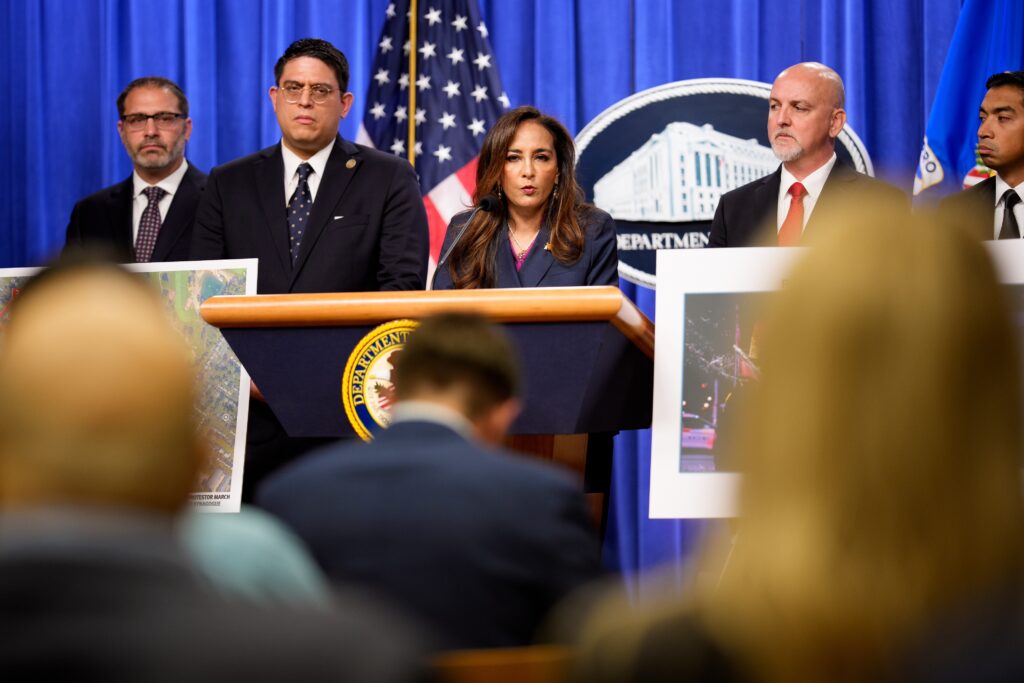
During the current administration, the division has dramatically changed its mission. A majority of its nearly 400 attorneys left in 2025 as a result. The head of the Civil Rights Division, Harmeet K. Dhillon, changed mission statements across the sections to focus less on racial discrimination and more on fighting diversity initiatives. The division has also aggressively pursued cases alleging antisemitism and anti-Christian bias.
After conservative activist Charlie Kirk was killed at a public event in September at Utah Valley University, the Civil Rights Division launched a hate-crime probe. The investigation is examining whether hate-crime charges can be pursued against the suspect because of anti-Christian bias, according to a person familiar with the probe.
Prosecutors have also explored whether it would be possible to pursue hate-crime charges against the suspect, Tyler Robinson, if evidence shows motivation because of Kirk’s stance on transgender individuals — a move that would be a novel use of hate-crime laws. Robinson’s romantic partner was undergoing a gender transition at the time of the shooting, his mother told police.
Dhillon has said she welcomes people to leave if they do not agree with the new direction for the department. Dhillon told conservative podcaster Glenn Beck in April that she intended to send a new message to her staff.
“These are the president’s priorities,” Dhillon said on the podcast. “This is what we will be focusing on. Govern yourself accordingly.”
MS NOW reported the civil rights resignations late Monday.
Dhillon has also said that her office is being flooded with applicants to fill vacant roles. But people familiar with the division said that just a fraction of the open roles have been filled, a process impeded by bureaucratic delays and a lack of qualified candidates. Some of the sections within the division are so understaffed that they cannot effectively complete their workloads.
“This exodus is a huge blow signaling the disrespect and sidelining of the finest and most experienced civil rights prosecutors,” said Vanita Gupta, the head of the division during the Obama administration and the associate attorney general during the Biden administration. “It means cases won’t be brought, unique expertise will be lost and the top career attorneys who may be a backstop to some of the worst impulses of this administration will have left.”
The Civil Rights Division was established in 1957 as part of that year’s Civil Rights Act, which focused on fighting racial discrimination. Since its launch, the division has been tasked with upholding “the civil and constitutional rights of all people in the United States, particularly some of the most vulnerable members of our society,” according to the Justice Department’s website.
The office has 12 sections that aim to combat discrimination in educational opportunities, housing, employment, voting and more.
A Justice Department official also said that ICE has been conducting its own investigation of the Minnesota shooting.
“As with any officer-involved shooting, each law enforcement agency has an internal investigation protocol, including DHS. As such, ICE OPR has its own investigation underway. This runs parallel to any FBI investigation,” the official said, referring to the Office of Professional Responsibility.
Hannah Natanson contributed to this report.
The post Top prosecutors in D.C., Minneapolis leave amid turmoil over shooting probe appeared first on Washington Post.