President Trump had a ringing message of solidarity on Tuesday for demonstrators in the streets. “KEEP PROTESTING – TAKE OVER YOUR INSTITUTIONS!!!” he wrote online. He decried “the senseless killing of protesters,” and added that those pulling the triggers “will pay a big price.”
He meant the protesters in Tehran, not Minneapolis. By contrast, the people in the streets of Minnesota, he wrote just 63 minutes earlier, were “anarchists and professional agitators” trying to cover up a fraud scandal. He vowed that “THE DAY OF RECKONING & RETRIBUTION IS COMING!”
The eruption of protests on opposite sides of the planet at this moment in history has brought Mr. Trump’s views of democracy and popular dissent into stark relief. The situations in Iran and Minnesota, of course, are different and complicated, but the president’s rule of thumb seems simple enough: Those who take to the streets supporting a cause he favors are laudable heroes. Those who take to the streets to oppose him are illegitimate radicals.
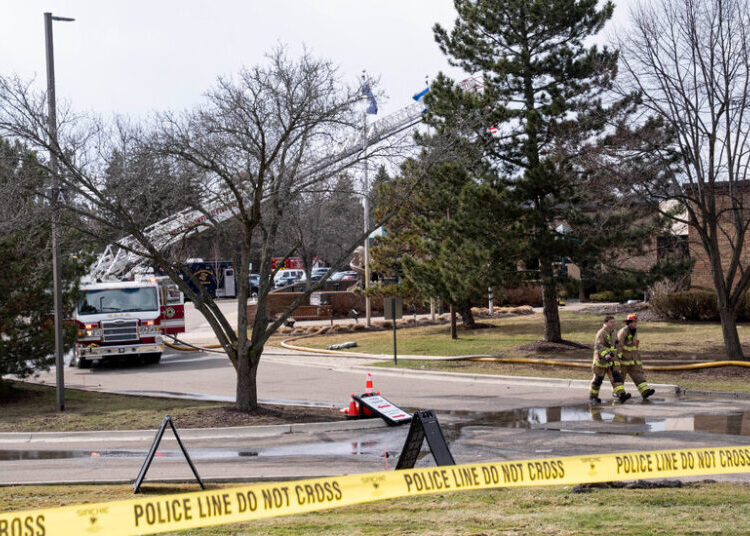
Mr. Trump discussed possible military strikes in response to the brutal and deadly crackdown on protesters in Iran, even as he has dismissed concerns about the shooting death of Renee Nicole Good by an ICE agent in Minnesota. While he vowed that “help is on its way” to Iranian protesters, his administration moved to block outside inquiries into the Minneapolis killing, which he appeared to rationalize because Ms. Good had been “disrespectful” to federal officers.
“He frames each protest movement in terms of himself,” said Amy Hawthorne, a former State Department official and longtime scholar of democracy issues in the Middle East. “He justifies state violence against protesters who challenge him or his policies, and promises protection when he thinks demonstrators can hurt his adversaries.”
The support for a popular uprising in Iran also comes as Mr. Trump has abandoned democracy proponents in Venezuela. While he ordered a special forces raid to capture President Nicolás Maduro on drug charges, Mr. Trump left the rest of the repressive regime in place, dismissed the leading opposition leader as irrelevant and declared that he himself would run the country rather than hold elections any time soon.
While Mr. Trump finally agreed to meet on Thursday with María Corina Machado, the opposition leader he said “doesn’t have the respect” to govern Venezuela, Mr. Trump has made clear his real interest in the South American country is seizing its oil, not freeing its people.
Presidential support for democracy and human rights abroad has long been selective. During the Cold War, presidents routinely castigated communist governments aligned with Moscow and turned a blind eye to the abuses of dictatorships on the U.S. side of the struggle with the Soviet Union.
But rarely has it been as situational as it has been under Mr. Trump. He denounces tyranny in places like Iran and Cuba but not in Russia or China.
He once assailed Ukraine’s democratically elected president as a “dictator without elections,” and has chastised European democracies for being insufficiently tolerant of right-wing movements But the president told oppressive Arab states where internal opposition is forbidden (and where his family does business) that the United States would no longer be “giving you lectures on how to live.”
That is a realpolitik that might have challenged even former Secretary of State Henry A. Kissinger, the legendary master of unsentimental geopolitics. “One can say that Trump’s view is rather like Kissinger’s: nations are closed black boxes,” said Elliott Abrams, who served three Republican presidents, most recently as Mr. Trump’s special representative for Venezuela in his first term.
“You deal with the leaders who are in power, not the populations or opposition leaders,” he said. “Human rights and democracy arguments can harm relations with the existing rulers. This is especially significant for Trump because he values his personal relationships so highly.”
Those personal relationships and personal instincts have made for a highly improvisational presidency. The Mr. Trump who decried foreign intervention in his first term has now bombed seven countries in his second. The Mr. Trump who once scorned nation building is now talking about rebuilding Venezuela, not to mention Gaza. With his eye on Greenland and maybe Panama and even Canada, isolationism has morphed into imperialism.
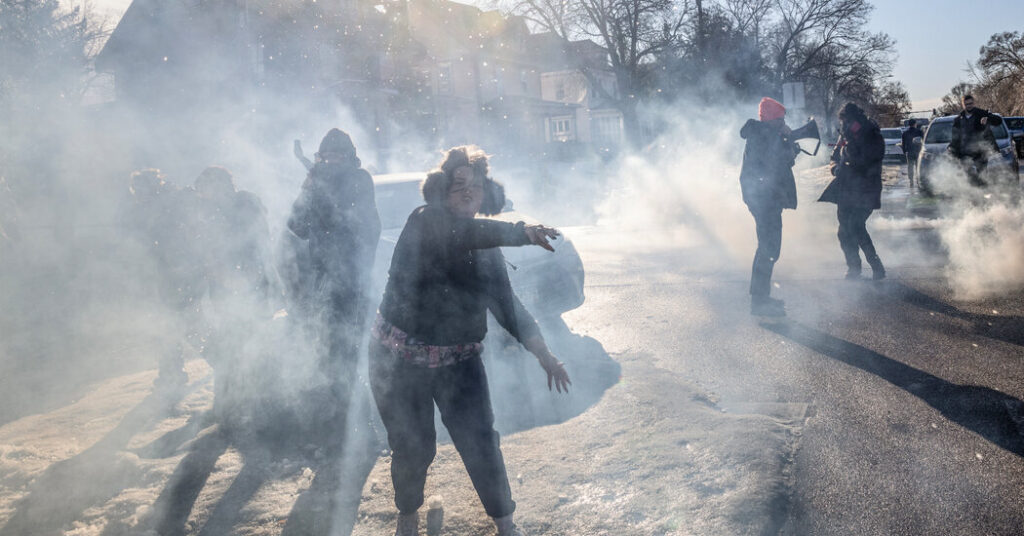
The split-screen television images of mass protests in the streets of Minneapolis and Tehran in recent days have invariably highlighted the complications and contradictions of Mr. Trump’s presidency.
“Across the world, from Iran to Minneapolis, people are fighting for freedom and against violence and authoritarianism,” Representative Summer Lee, Democrat of Pennsylvania, wrote on social media. “Yet as Trump praises the courage of Iranian citizens as they take to the streets, his own lawless agents are inciting violence against those protesting ICE here at home.”
Richard W. Painter, a former White House official under President George W. Bush who switched parties to run unsuccessfully for Senate as a Democrat in Minnesota in 2018, questioned the logic of Mr. Trump’s threat to use military force to protect Iranian protesters.
“Does this mean Iran or some other country can attack the USA because ICE gunned down a protestor in Minneapolis?” he wrote on social media. “Of course not, but thats because we’re bigger than they are. Might makes right is what international law is becoming these days.”
Some conservatives dismissed what they called an apples-and-oranges comparison that overlooked the profound differences between events in Iran and in the United States.
To defend one of the most despotic regimes in the world, Iranian forces have reportedly opened fire indiscriminately against protesters in one of the deadliest crackdowns in years, with a death toll said to be in the thousands. Nothing taking place in Minnesota comes close to that scale of mayhem.
“The issues around which both rally are real, but several orders of magnitude different,” said Michael Rubin, a longtime specialist on Iran at the American Enterprise Institute. “No matter how odious Trump might be, there is no moral equivalency here.”
Karoline Leavitt, the White House press secretary, said the protesters in Minnesota were standing up for “illegal alien criminals,” not democracy.
“Apparently, they are protesting the removal of heinous murderers and rapists and criminals,” she told reporters this week. “Not a single person in those protests” would “want those individuals in your neighborhood,” she added.
Yet in the responses to the demonstrations, there are echoes that are not hard to hear. Iran’s president, Masoud Pezeshkian, denounced protesters in his country as “rioters,” and other Iranian officials have called them “terrorists,” much as Kristi Noem, the homeland security secretary, accused Ms. Good of “domestic terrorism” and Vice President JD Vance called her “a deranged leftist.”
Unlike past presidents in volatile situations like this, Mr. Trump and his team did not wait for an impartial investigation to cast judgment. Nor has he given the impression that he wants an impartial investigation.
His administration has blocked local and state authorities from looking into the matter. On Tuesday, six federal prosecutors resigned in protest after the Justice Department sought to investigate Ms. Good’s widow rather than the officer who fired three times, following the resignation of several others in Washington. Todd Blanche, the deputy attorney general, said on Tuesday that “there is currently no basis for a criminal civil rights investigation.”
After video footage called into question whether Ms. Good really sought to harm the ICE officer, Mr. Trump seemed to lower the bar for a fatal shooting by saying that she “was very, very disrespectful to law enforcement.” Ms. Noem announced on Sunday that she was sending hundreds more federal officers into the streets of Minnesota on top of those already in Portland, Ore., and other places around the country.
Mr. Trump has long talked about using violence against unarmed protesters, immigrants and looters. In his first term, he repeatedly asked administration officials and military officers if they could shoot immigrants trying to come into the country. He brought up the idea again in 2020 during the protests that followed George Floyd’s murder. “Can’t you just shoot them?” he asked. “Just shoot them in the legs or something?”
But he has objected to using force against protesters who were on his side. In the five years since his supporters stormed the U.S. Capitol on Jan. 6, 2021, to try to prevent Congress from certifying his election defeat, Mr. Trump has rewritten history to cast rioters who beat police officers as patriots who were unfairly persecuted.
Ashli Babbitt, who was shot to death by a Capitol Police officer as she tried to force her way through a smashed glass door close to the House chamber, was an “innocent, wonderful, incredible woman” who was “murdered.”
One of Mr. Trump’s first acts after being sworn in last year was to pardon or commute the sentences of more than 1,500 people prosecuted in the Capitol attack. On an official government website riddled with falsehoods that was posted on the anniversary last week, the White House called the attackers “peaceful patriotic protesters” and “innocent Americans” who had been victimized by police officers whose “provocative tactics turned a peaceful demonstration into chaos.”
In Mr. Trump’s world, those protesters were martyrs. In a social media post this week, he had a different term for those now protesting his immigration crackdown in Minneapolis and elsewhere around the country: “the insurrectionists.”
Peter Baker is the chief White House correspondent for The Times. He is covering his sixth presidency and sometimes writes analytical pieces that place presidents and their administrations in a larger context and historical framework.
The post Trump Supports the Protesters, Except Those Protesting Him appeared first on New York Times.