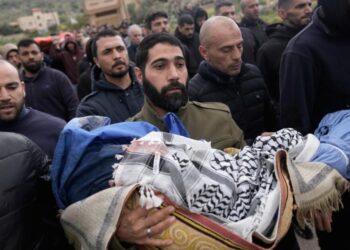
Under the cover of a total internet shutdown that has now lasted more than 100 hours, Iran’s security forces have unleashed bone-chilling brutality on protesters, killing at least 2,000 people, according to Iranian officials. Rather than hiding its crimes, the regime has broadcast footage from a morgue on state television. Corpses overflowed the facility, where relatives searched for their loved ones. The news anchor casually declared that the bodies were mostly those of “ordinary people.”
This is not another incidence of the Iranian regime crushing a mass protest. Rather, it might just be the end of the Islamic Republic. But the Iranian opposition could still blow it.
Although Iranians have demonstrated in huge numbers again and again—in 2009–2010, 2017–18, 2019–20, and 2022–23—the protest movement has repeatedly failed to produce a well-organized leadership that poses a clear alternative to the regime. If this time is going to be different, the opposition has to fix that problem.
[Read: Is the Iranian regime about to collapse?]
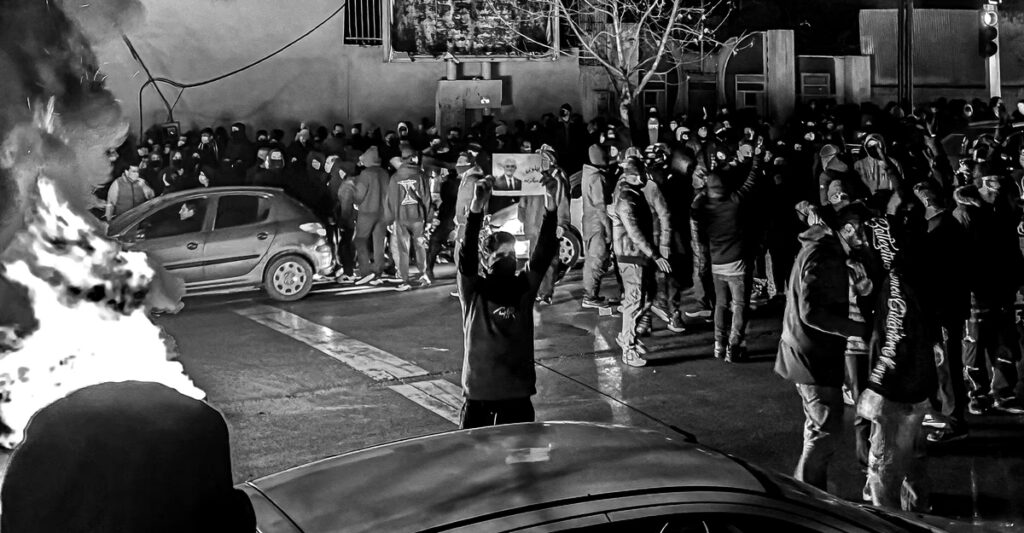
In this wave of protests, for the first time, thousands of Iranians chanted slogans in support of an opposition leader abroad seeking to dismantle the regime. Reza Pahlavi, the U.S.-based son of the former shah, has declared himself ready to lead the transition away from the Islamic Republic. His call for protesters to come out last Thursday and Friday (Iran’s weekend) helped grow the numbers to levels probably unseen since 2009.
Pahlavi doesn’t appear to have a coherent follow-up plan, however. His subsequent calls for workers’ strikes in strategic sectors weren’t answered on any scale. He claims to have the loyalty of thousands of defectors in the security forces, but the evidence for this has not emerged. And although he enjoys significant support on the Iranian street, he still seems to lack the type of organized on-the-ground networks necessary for the long haul.
Politically, Pahlavi has been anything but a unifying figure for the Iranian opposition. Instead of bringing together the opponents of the regime around a shared program, his camp (including his major advisers) antagonizes non-monarchist opponents of the regime. Perhaps in order to draw sole emphasis to pro-Pahlavi slogans such as “Javid shah” (“Long live the king”), his supporters now decry the rallying call of the 2022–2023 protests, “Women, life, freedom,” as a distraction. Pahlavi dropped these words from his social-media bios last week. And the former crown prince has persistently implored Donald Trump to intervene militarily in Iran, suggesting that his strategy depends on the aid of a president who just last week refused calls to meet him. (Trump has, however, actively supported the protests, and today admonished Iranians to “KEEP PROTESTING—TAKE OVER YOUR INSTITUTIONS.”)
Pahlavi has become the opposition front-runner despite these shortcomings mainly because he doesn’t face many rivals. Liberal opposition leaders, such as the Nobel Peace Prize laureate Narges Mohammadi and the former Cabinet minister Mostafa Tajzadeh, languish in prison. Alongside 15 other figures, they issued a call on January 2 for a “peaceful transition” away from the regime. But they enjoy nothing like Pahlavi’s name recognition and are unable to organize their supporters from behind bars. The non-monarchist opposition forces abroad (called “republicans” in Iranian political parlance) have failed to come together, and they spend much of their time complaining about Pahlavi instead of organizing their own ranks. The result is a divided opposition that wages war with itself rather than trying to build a united front against the regime.
Iranians need a unifying and diverse coalition to lead them. The protest movement also needs to secure defections from the regime’s security forces. Without this, it is unlikely to be able to replace the Islamic Republic with a democracy. With it, success is thinkable. Opponents of the Iranian regime have important differences, but most share these common goals: free elections for a constituent assembly, and the safeguarding of Iran’s territorial integrity.
[Read: Iranians have had enough]
And the Islamic Republic really is in distress. It has been exposed as lacking not just democratic legitimacy but also basic competence. The state has been reduced to clusters of financial and military elites who enrich themselves without even the pretense of acting in the public interest. Of the previous four major rounds of protests, three were sparked by the regime’s inability to provide its people with economic security. Internationally, Iran is now one of the most isolated states in the world. Two decades ago, it could rely on improving ties with Europe, Canada, and Australia, and it held significant sway in the region. Now even its lukewarm relationships with Western countries have gone cold, and it has lost anti-Western allies such as Syria and Venezuela. Pro-Iranian militias in the Arab world have been decimated.
Cold-blooded as it has proved to be, the regime won’t be able to kill its way out of this crisis. The core policies of the 1979 revolution—puritanical sociocultural repression at home and anti-Western and anti-Israeli activity abroad—will have to be discarded. This will be true even if the regime strikes a Venezuela-style deal with Trump in which it offers the scalp of Supreme Leader Ayatollah Ali Khamenei in exchange for the survival of its security institutions. In such a scenario, the regime’s defining structure—clerical rule shepherded by a grand ayatollah—would have to be abandoned.
Under the combined pressure of Iranian citizens on the streets and adversarial governments abroad, the Islamic Republic is set to finally unravel. Few will miss it—not its Arab and Israeli neighbors; not the far-flung countries in Europe, Latin America, and elsewhere where it has committed its crimes; certainly not Iranians who have suffered under it for almost half a century. What remains is to replace the Islamic Republic with something that reflects the aspirations of Iran’s people.
The post The Islamic Republic Will Not Last appeared first on The Atlantic.