Clayton Anderson is a retired NASA astronaut, author and adjunct professor at Iowa State University.
Human spaceflight is cool again, but still very, very hard. America just makes it look easy.
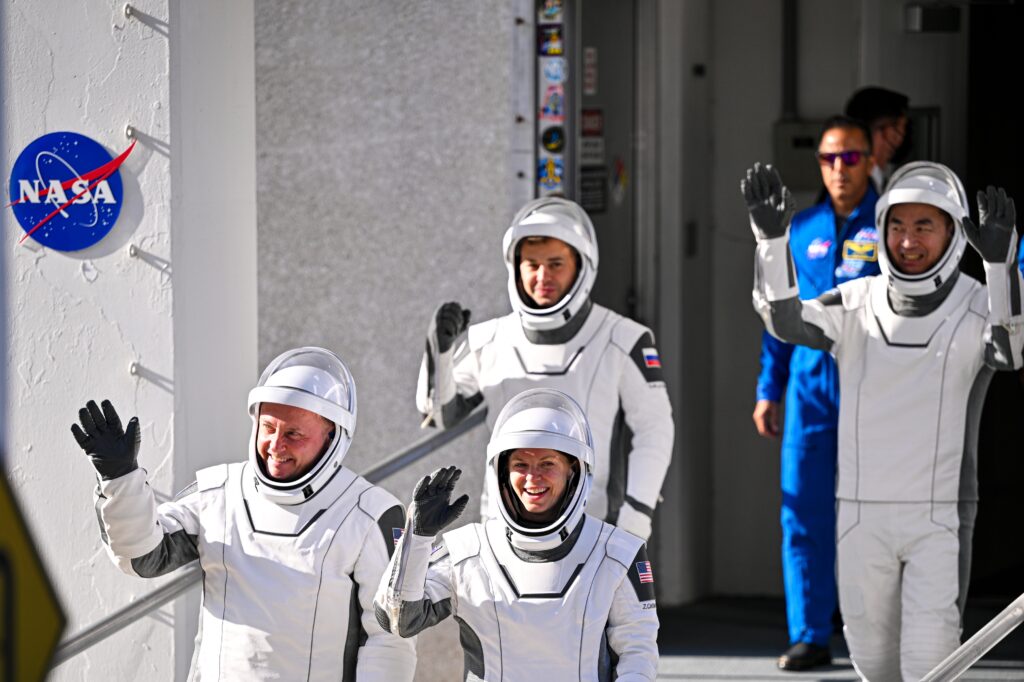
Last week, for the first time in the International Space Station’s 25-year history, NASA decided to bring a crew home early, citing a serious but “stable” medical emergency involving an astronaut. NASA did not describe the health problem or identify the astronaut. The four-person Crew-11, which launched in August, has been directed to return no earlier than Thursday. The need to treat the astronaut with medical equipment on Earth may have driven the decision.
As an astronaut, I believe our current technology may not have solutions for critical situations we are bound to face moving away from low Earth orbit, and this incident illustrates exactly that. NASA needs to address some urgent and sometimes uncomfortable questions. For example, should a doctor always be on the crew? Should a spaceship heading to Mars have high-tech medical capabilities and facilities — not just a “med kit?” A kit consisting of only medications, saline solution, a defibrillator and a few basic instruments places a crew at a serious disadvantage if things really go south.
What if an IV, which the ISS currently has, was required for the Crew-11 astronaut? How would the spacesuit be put on? Would they come home not wearing their suit? To mitigate risks faster, we need to bring the best minds to bear on these questions so that when emergencies such as a stroke, heart attack or appendicitis happen, NASA and its astronauts know what to do. Human spaceflight demands expeditious advancement in space medicine.
NASA has always said its top priorities are crew safety, vehicle safety and mission success. This prudent focus should reassure the public that NASA is addressing the right priorities. Yet, even as the fascination grows with advancements in robotics and artificial intelligence — I know thousands have already asked Grok how to solve this problem — this Crew-11 episode shows we will only succeed with better medical safeguards for deep-space goals.
The Artemis II moon mission planned for this year is poised to take center stage and prefaces what many Earthlings feel we’re also ready for: a visit to the glamour destination of Mars. A 6- to 9-month trip to the Red Planet puts this medical situation in a different light. We simply couldn’t “bring them home.” Health factors experienced thus far in space have been rectified (consider my very personal ISS battle with diarrhea), but the need to develop solutions for advanced medical challenges is paramount.
The effects of microgravity are numerous — bone and muscle loss, fluid shifts causing vision issues and radiation exposure. The problem, however, is the lack of capabilities to confront these risks.
NASA is developing medical technologies for Mars, focusing on diagnostics, telemedicine, wearable biosensors, portable imaging, 3D bio-printing and integrated health monitoring systems. But is there appropriate urgency? Can we deal with the implications of lunar stays or Mars trips where evacuation isn’t possible unless you’re Mark Watney?
Reduction in communication will be a huge obstacle. Calling Houston for medical issues and psychological crises will be limited. Survival will depend not only on crew abilities to recognize, evaluate and fix situations but on the technological level of their environment. Systems need to be significantly more autonomous, and diagnostic abilities must increase, perhaps even to levels utilizing AI (watch out for HAL!). Procedures need to be so clear that there is no question about what the crew must do. We cannot, during critical medical situations, simply rely on a steely-eyed astronaut having the right stuff. They need the tools to pull it off.
Physical and mental tolls on crew members, constantly balancing workload with simply staying alive, will be magnified by a tremendous sense of isolation and no real-time coordination with mission control. Help will come from a crew’s ability to troubleshoot a range of problems.
The United States has accomplished marvelous things. Its space history is nothing short of amazing, but we have much more to do.
We must welcome all ideas, suppressing the “not invented here” syndrome. Funding new research, advanced monitoring, AI diagnostics, radiation countermeasures and perhaps even genetic modification testing on astronauts should all be on the table, buoyed by full transparency to increase public trust in America’s deep-space plans. We must treat medical resilience with the same urgency as rocket reusability.
Space exploration is dangerous. It’s difficult and expensive. NASA’s cautious ISS evacuation decision should spark urgency, so we don’t get caught flying blind.
NASA’s catchphrase of “we are going” — to the moon and Mars — is inspiring and ambitious, but it’s only meaningful if, in arriving, we ensure humans can survive the journey.
The post I’m an astronaut. Here’s what the ISS emergency reveals. appeared first on Washington Post.