The Justice Department division that regularly handles investigations of police shootings has not been brought into the probe of an immigration officer’s fatal shooting of a woman in Minneapolis, according to multiple people familiar with the matter.
The decision so far to not involve the Civil Rights Division’s criminal section provides a window into the unusual way the Trump administration has handled the investigation. The move has deepened doubts, already raised by Minnesota officials, about whether the shooting will receive a fair and scrupulous examination.
“When you put that together with the state authorities being excluded from even access to the evidence — like shell casings, the car — I don’t have any confidence that a use-of-force investigation is actually even happening when it comes to the death of Renée Good,” said Keith Ellison, the Democratic attorney general of Minnesota.
“I don’t know for certain that they are not doing anything, because they have been amazingly uncommunicative. But they are not telling us what they are doing.”
President Donald Trump, Vice President JD Vance and Homeland Security Secretary Kristi L. Noem have all declared the shooting justified, despite an investigation not being completed and video footage that challenges parts of their narrative.
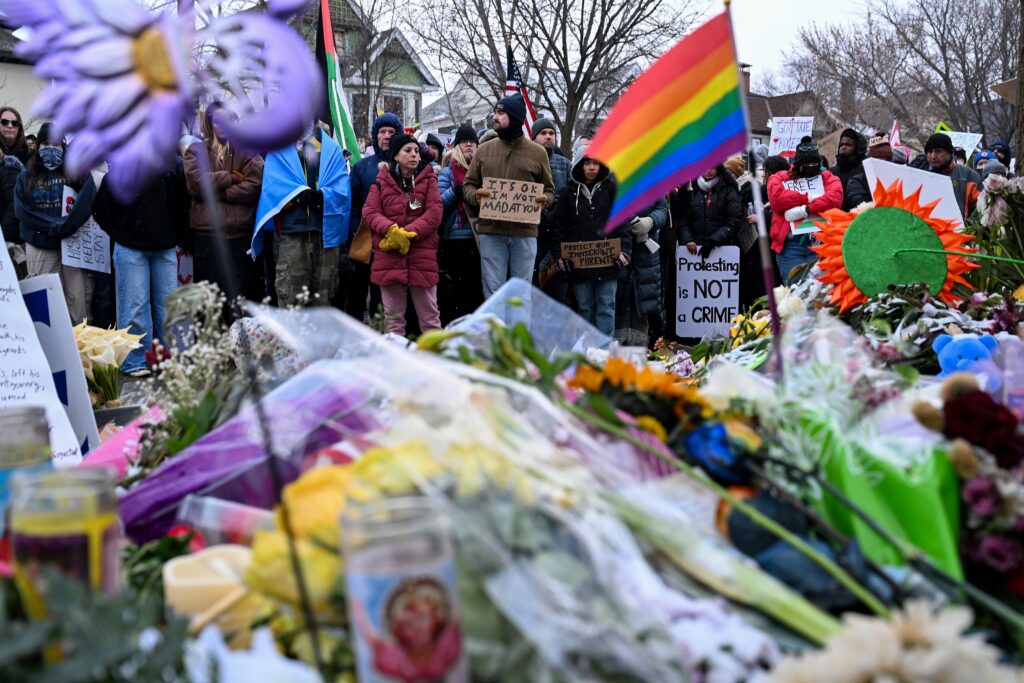
The fatal shooting last week of 37-year-old Renée Good has ignited protests nationwide and sharp disagreements between the administration and local and state authorities about what happened.
Administration officials have said the FBI would be investigating the killing. State leaders said last week that federal law enforcement had blocked local officials from accessing evidence. Local, state and federal officials typically work together on high-profile probes.
Vance last week ruled out any involvement by state or local officials in investigating the officer who shot Good, saying that “the idea that [Minnesota Gov.] Tim Walz and a bunch of radicals in Minneapolis are going to go after and make this guy’s life miserable because he was doing the job that he was asked to do is preposterous.”
Minnesota’s Bureau of Criminal Apprehension said last week that it was “open to conducting a full investigation of the incident should the U.S. Attorney’s Office and FBI reconsider their approach and express a willingness to resume a joint investigation.”
Law enforcement officers are rarely charged for using lethal force.
The law provides significant leeway for officers to decide when use of force is needed. A robust federal investigation could determine that the officer was justified in shooting Good, legal experts noted. Such a conclusion can only be accurately reached if law enforcement officials examine all relevant state and federal laws and their application to the facts in the case, they said. A thorough investigation, for example, might conclude that the officer’s first shot at Good was justified, but that the next two were not.
The Civil Rights Division is typically involved in such investigations because the federal law that enables the Justice Department to probe whether officers used excessive force is a civil rights statute that prohibits law enforcement from denying a person their rights under “color of law.” The officers responsible for the killings of George Floyd in Minneapolis and Tyre Nichols in Memphis, for example, were tried by Civil Rights Division prosecutors and convicted by juries under this law, generally referred to as Section 242 for its place in the U.S. criminal code.
Federal regulations do not require Civil Rights Division prosecutors to participate in such investigations. The head of the division, Harmeet K. Dhillon, would need to be involved, however, if the Justice Department decided to pursue civil rights charges.
Legal experts said that it is possible that the U.S. attorney’s office in Minnesota could handle such an investigation on its own, but that it would be highly unusual not to involve the expertise of the Civil Rights Division.
They also said that in the beginning stages of probes, it’s common practice for FBI agents to be on the ground at the shooting scene and lead the investigation, but that agents typically consult Civil Rights Division prosecutors from the start to ensure that all relevant factors are being looked into.
Civil Rights Division prosecutors would typically work alongside FBI agents to guide investigatory strategy on a case. Prosecutors would also be needed in the early investigatory stages to help with the legal process, including with grand jury subpoenas and appearances.
The Justice Department did not respond to requests for comment and would not say whether the U.S. attorney’s office is meaningfully involved in the investigation. U.S. attorneys’ offices often announce involvement in a high-profile investigation.
“It is highly unusual for the Civil Rights Division not to be involved from the outset with the FBI and U.S. attorney’s office,” said Vanita Gupta, the head of the division during the Obama administration and the associate attorney general during the Biden administration.
“I cannot think of another high-profile federal agent shooting case like this when the Civil Rights Division was not involved — its prosecutors have the long-standing expertise in such cases,” she added.
Several former law enforcement officials who reviewed video footage of the moments surrounding the shooting and spoke to The Washington Post faulted the actions taken by the ICE officer — identified through court records as Jonathan Ross, an employee of the agency’s Enforcement and Removal Operations division.
The officials said Ross placed himself at needless risk by stepping in front of Good’s vehicle, escalated the situation and went against best law enforcement practices. Law enforcement officers should not position themselves in front of vehicles, and they need to try to de-escalate confrontations and must generally avoid shooting into moving vehicles, these officials said.
The videos show that Good’s vehicle did move toward the ICE agent as he stood in front of it. The footage also shows that he was able to move aside and fire at least two of his three shots from the side, according to a Washington Post analysis.
Under Dhillon, the Civil Rights Division has dramatically changed its mission, and the workforce has been reduced, with the majority of the section’s nearly 400 attorneys having left since Trump began his current term in office. The division changed mission statements across its sections to focus less on racial discrimination and more on fighting diversity initiatives. Some of the sections within the division are so understaffed that they cannot effectively complete their workloads, people familiar with the section said.
But while the Civil Rights Division’s criminal section has also seen widespread departures, people familiar with the section said it still has the expertise to respond to cases such as the Minnesota one. The section’s chief and deputy are both career attorneys who served in those positions during the Biden administration.
Some of the most notable changes of direction by the Civil Rights Division have involved police use of force. In May, the administration moved to abandon an agreement that would force changes within the Minneapolis Police Department.
Federal officials also said they were backing out of a similar agreement in Louisville.
In July, the Civil Rights Division requested that a Louisville police officer convicted in connection with a raid that resulted in Breonna Taylor’s death be sentenced to one day in prison — far less than what federal guidelines recommend.
Administration lawyers suggested in an unusual sentencing memo to a judge that the Biden administration should not have prosecuted the officer on the civil rights charges on which a jury convicted him.
Mark Berman and Jeremy Roebuck contributed to this report.
The post Justice Dept. experts on police shootings are left out of Minneapolis probe appeared first on Washington Post.