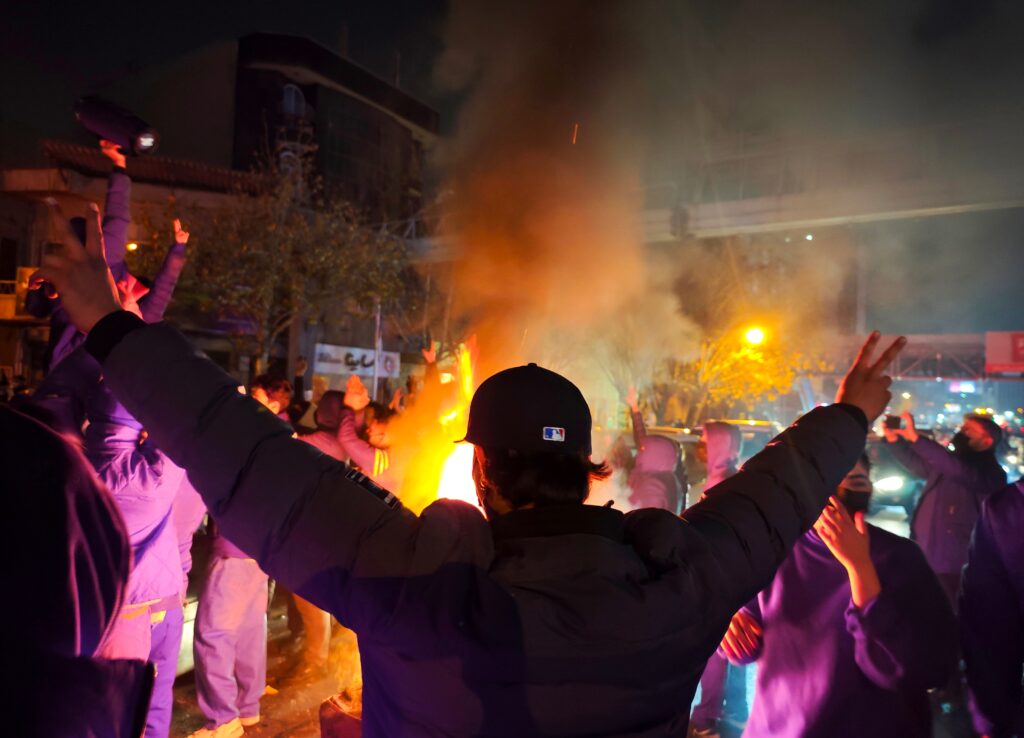
The United States government is not contemplating regime change on the scale of Iraq as it ponders how to make good on President Donald Trump’s promise to come to the “rescue” of Iranian protesters being slaughtered in the streets by their government. But Trump’s top advisers face a menu of other options as they gather Tuesday to weigh next steps.
The regime in Tehran is clearly rattled. It shut down not only the internet, but also cellphones and landlines, as part of a crackdown against protests that have spread like wildfire, erupting in more than 180 cities and towns across all 31 provinces. The blackout makes it hard to know how many have died, but estimates start at around 500. Protests in 2019, triggered by rising fuel prices, also saw the mullahs sever internet connections as they massacred more than 1,500.
The Trump administration is split on how to proceed. Iran is offering to reopen talks on its nuclear program to get the U.S. to back off. Vice President JD Vance wants to give these talks a try before Trump launches airstrikes. Another faction sees the offer of talks as a desperate play for time. Indeed, Iran refused to engage in negotiations after the Twelve Day War, saying the U.S. was making “unreasonable demands.” What’s changed? For his part, Trump has signaled that he may do both: strike first, talk after.
Trump has military options to make good on his threats. A kinetic approach might involve bombing the bases that belong to security forces or directly targeting top government officials. It could be as simple as directing drones to take out paramilitary militias as they drive to violently put down protests.
Late Monday, Trump announcedtariffs of 25 percent on any country that continues to do business with Iran. Other non-kinetic options include cyberattacks against government targets, as well as finding ways to smuggle in additional Starlink terminals to pierce the blackout. The Biden administration balked at that option for fear of exposing the methods used by intelligence services for getting materiel into the country. If Trump is playing for keeps, he need not be deterred by such tactical considerations.
Repressive regimes only collapse when fissures emerge within their ranks. Protests can be catalysts for a crack-up, but they are themselves often insufficient. The brave Iranian people are providing meaningful pressure from inside the country. By repeatedly taking to the streets to be beaten and killed, they raise the human cost and increase the odds that some elements among the fragmented security services start to refuse the orders they’re being given to massacre civilians.
Adding pressure from the outside can tighten that vise. The key is to ensure that it’s seen as being in support of the people on the street, not as part of a larger agenda. If a militia commander feels the walls closing in, he may defect. If he perceives that he is defending his country against nefarious foreigners, he may fight harder.
The biggest unknown is what Trump ultimately wants to achieve. This can end in one of two ways: the regime collapses or it holds on. Trump may think, with enough pressure, he could hammer out a durable nuclear deal and avoid fresh chaos that an imploding regime might create. But the prospect of truly resetting the geopolitics of the Middle East and beyond — Russia and China would be hardest hit — is more tantalizing. Whichever goal Trump decides on, easing pressure on the regime at its point of maximum vulnerability would be a mistake.
The post How the Iranian regime falls appeared first on Washington Post.