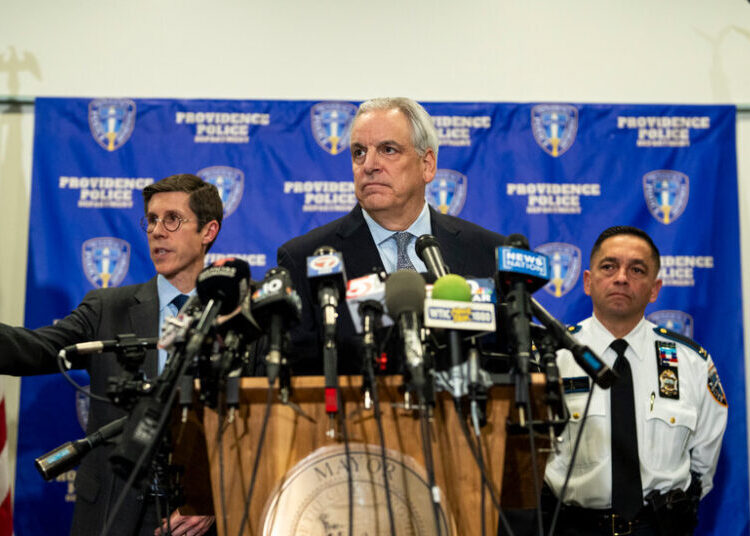
On a Wednesday morning in mid-December, Senator Ted Cruz, chairman of the powerful Senate Commerce Committee, faced off with a potentially hostile witness — Brendan Carr, the conservative Republican who heads the Federal Communications Commission.
Cruz called Carr to testify before the committee in October, days after Carr very publicly demanded that ABC suspend the late-night host Jimmy Kimmel, citing a monologue about Charlie Kirk’s killer that inflamed the MAGA right. “We can do this the easy way or the hard way,” Carr had said on a right-wing podcast. Disney, ABC’s parent company, took Kimmel off the air for a week.
In the run-up to the hearing, Fox News and CNN commentators anticipated a “grilling.” Divisions within Trump’s movement were becoming more common, with fights breaking out over the Epstein files, Israel and even the place of neo-Nazis in the Republican big tent. The F.C.C. attack on network television had thrust free speech into the mix, with a few Republicans saying things had gone too far and others saying they needed to go further still. JD Vance, the expected Trump standard-bearer in 2028, dismissed Carr’s threats as “a joke on social media.” But Cruz, whose own undisguised presidential ambitions rested in part on maintaining his reputation as a free-speech warrior, had said they were “dangerous as hell,” and likened Carr to a mobster “right out of ‘Goodfellas.’” The Wall Street Journal’s editorial page, which agreed, called it Cruz’s “finest hour.”
Still, Cruz couldn’t get out too far ahead of the party. Republicans had long been united in the view that a leftist censorship-industrial complex was victimizing conservatives. “Free speech” was a great rallying cry of President Donald J. Trump’s comeback, and Cruz had presented himself as a First Amendment champion as far back as 2014, when as a freshman senator he moved to block proposed restrictions on the flow of dark money to political ads. Cruz had followed Trump’s 2025 Inauguration Day vow to “immediately stop all government censorship” with his own pledge to go after any big tech companies that suppressed speech.
By the fall, though, it was hard to ignore the fact that Trump’s entire second term seemed to be a grand exercise in coercive government, and in particular that the government effort to suppress free speech drew largely on the power of the government itself to speak freely. By way of interviews or proclamations or letters, or even just posts on social media, the president and his agencies compelled universities to eliminate diversity initiatives and restrict campus protest and forced several major law firms to pledge political neutrality.
The administration attacked network television with particular intensity. As Trump lashed out at ABC, NBC and CBS for what he called bias, his F.C.C. chairman clarified the real stakes, warning the networks that he could and would use his powers to block mergers or pull the licenses of broadcasters who did not operate in the public interest — which finally bought him an invitation to Cruz’s hearing room.
“Chairman Carr, let’s start with free speech,” Cruz said. Democrats and leftists, he asserted, had long sought to weaponize the F.C.C.’s public-interest standard — which requires licensed broadcasters to use the public airwaves in a manner consistent with “public interest, convenience and necessity” — to pressure conservative media companies. Did Carr agree that such pressure is wrong? Carr agreed.
Then Cruz moved on to the reaction to Kimmel’s monologue. “ABC and its affiliates would have been fully within their rights to fire him or simply to no longer air his program,” Cruz said. “That was their choice. But what government cannot do is force private entities to take actions that the government cannot take directly.”
Here was the crux of the matter. Cruz was talking about “jawboning,” a still-evolving legal term for government coercion by speech. But the line between the bully pulpit and flat-out bullying was still being drawn. “Government officials threatening adverse consequences for disfavored content is an unconstitutional coercion that chills protected speech,” Cruz said. “This is why it was so insidious how the Biden administration jawboned social media into shutting down conservatives online over accurate information on Covid or voter fraud.”
Then Cruz finally addressed Carr’s actions, but obliquely. “Democrat or Republican, we cannot have the government arbitrating truth or opinion,” he said. “Mr. Chairman, my question is this: So long as there is a public-interest standard, shouldn’t it be understood to encompass robust First Amendment protections to ensure that the F.C.C. cannot use it to chill speech?”
Carr took the both-sides framing of the question as a free pass. “Yes, Senator, I agree with you there,” he said. “And I think the examples you laid out of weaponization during the Biden years are perfect examples.” Cruz didn’t follow up with any questions related to Kimmel, or to any other actions under Trump. Having managed to maintain his stand against weaponizing the F.C.C., Cruz left the tough questions about whether Carr had done any jawboning to the Democrats on the committee.
Those watching online or on C-SPAN would have said that the expected grilling had come to little. One viewer, though, had a very different perspective on Cruz’s implication, veiled as it was, that Carr had done something wrong.
“A lot of us conservatives were incredibly burned by the social media experience in the Biden years,’’ a Wisconsin-based lawyer named Daniel R. Suhr told me after the hearing. But Carr was doing something different, Suhr said, something that was important and good. “There’s a difference between a bureaucrat reaching outside their jurisdiction to jawbone and a regulator speaking within their jurisdiction on the issue where they regulate,” he said.
Suhr had unique insight on the matter. He and his public-interest law firm, the Center for American Rights, had been developing the legal logic for Carr’s effort since before the 2024 election. He explained his thinking in an opinion piece for the conservative website The Daily Signal this December, just ahead of the hearing. “Carr stands out for his no-nonsense competence,” Suhr had written, in part because he had restored three media-bias complaints that Suhr’s firm filed with the agency in late 2024 that were dismissed under Biden’s F.C.C. chair.
In fact, those complaints, which sought to use old and largely unenforced television regulations to punish the networks for perceived anti-Trump partisanship, had animated much of Carr’s chairmanship to date. Suhr didn’t say so in his piece, but he had also been specifically pursuing late-night television.
In July, Suhr sent Carr a letter arguing that “the network late-night shows are relentlessly left-wing” and that “Democrats’ appearances on late-night shows are a cornerstone of the D.C.-Hollywood axis.” Then in September, just days before the Kimmel incident, Suhr filed another formal complaint, arguing that the late-night host targeted the G.O.P. ticket consistently, which amounted to “a massive abuse of the airwaves.”
Cruz hadn’t questioned Carr on any of that, but if he had, he might have learned more than he and his colleagues on the committee had expected. Bias, Suhr’s firm had argued, violated a longstanding but seldom-used public-interest standard. It was a shaky legal interpretation, but it offered the F.C.C. a weapon in a much larger war to use its power to crack down on the networks, control what they broadcast and begin a new era of conservative mass media.
‘The President’s Speech Police’
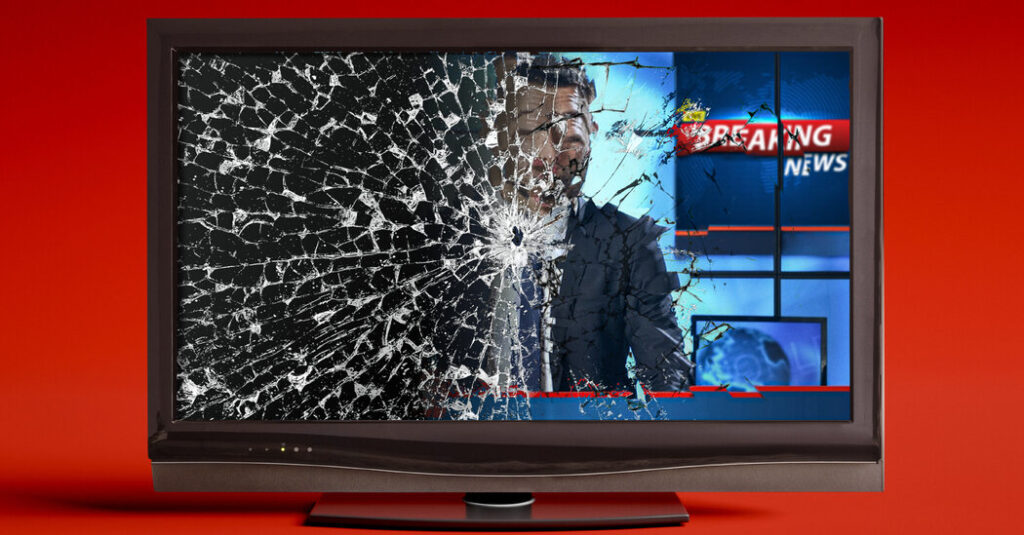
Given its diminished state and declining influence, network television might seem to be an odd prize in the Trump-era culture wars. But network television, which can still be received free by any home with an antenna, regularly draws a mass audience on the order of 10 million for “60 Minutes,” 7 million for ABC’s “World News Tonight” and more than 100 million for the Super Bowl. The stations’ local newscasts are the only form of journalism that still rates well with members of both parties in polls on media trust.
Trump, who spent more than a decade as the star of NBC’s “The Apprentice,” registers every televised knock on him as a serious political hit. Since his earliest days running for president, he has demanded that the F.C.C. punish the networks for any perceived mistreatment by stripping them of their licenses. Few took the demands seriously, in part because they were based on an erroneous premise: The F.C.C. does not in fact license ABC, CBS, NBC or Fox — it licenses the hundreds of affiliated local television stations that broadcast their content over the public airwaves, some of which are independently operated and some of which are owned by the networks themselves.
Still, when Trump called once again for the F.C.C. to pull the license of a network after his September 2024 ABC debate with Kamala Harris, which he deemed “rigged,” Suhr took note. He and his colleagues at the Center for American Rights, based in Chicago, had been thinking about how the government could discipline the networks for what they saw as anti-Trump bias, and they had seen that the obvious pressure point would be the local stations that broadcast their programming. For nearly a century, the federal government has managed traffic over the public airwaves with exclusive licenses to specific bands of the radio and television spectrum, which it declared a public resource. The right to use that public spectrum came with a statutory obligation to serve the “public interest,” largely by providing educational and news programming that was politically balanced.
The F.C.C. has developed various rules for making sure stations comply. For instance, stations are required to give rival candidates equal opportunities to buy ad time and appear on their airwaves. The most sweeping regulation, known as the Fairness Doctrine, required stations to present all sides of important civic issues — and to grant free airtime to those who could convincingly argue that their side was shut out. But it was scrapped in 1987, after a long campaign by conservatives who argued that it gave the F.C.C. undue power over speech. Its elimination set the terms for the subsequent explosion of right-wing radio and the template for Fox News.
The F.C.C. also became far less aggressive about policing the rest of the public-interest rules, even as the parties traded power back and forth over the years. But those rules remained on the books, and that was Suhr’s opening. He would argue that the stations, by spreading the networks’ liberal bias, were violating the public interest. “We do what lawyers do,’’ Suhr, 41, told me in October. “We research it, we read the law, we get into it.”
Television was new territory for Suhr. Until then, he had been working on cases pushing back against teachers’ unions and diversity, equity and inclusion requirements. But by the fall of 2024, Leonard Leo, the longtime leader of the Federalist Society — where Suhr once worked — was pursuing a new effort to “crush liberal dominance” in American culture by incubating projects to inject more conservative thinking into mainstream news and entertainment.
Suhr told me he saw an opening to use the old F.C.C. rules to not only punish the networks for bias, but also to “play a small niche role in creating opportunities” for projects like Leo’s to take hold in broadcast television. “It’s the same fight, right?” he said. He described a future in which television was very different. It was not just about getting liberal content off the air but also getting conservative content on the air. “One of my hopes,” he said, “is that we clear the way for family friendly, faith-inspired patriotic content.”
Two weeks after Trump aired his grievance about the debate with Harris, Suhr’s group filed its first complaint, against WPVI, an ABC-owned station in Philadelphia, where the debate had been held, arguing that it was an “unprecedented exercise in ‘broadcaster favoritism.’” The F.C.C. had long ago exempted news coverage and debates from its equal-time rules, determining that it was compelled to defer to the “good-faith judgment” of journalists. But Suhr had a novel argument: ABC’s debate was so biased against Trump that its stations did not deserve that presumption of good faith. The complaint demanded the F.C.C. reprimand the station, a formal process that could then count against WPVI when it came time for the commission to renew its license.
The next month — after Trump said CBS should be punished for what he claimed was an overly flattering edit of a “60 Minutes” interview with Kamala Harris, to make her look “more presidential” — Suhr filed a complaint against WCBS, the CBS-owned station in New York, where “60 Minutes” is produced. This time, he cited a 1949 F.C.C. policy statement that forbade deliberately “rigging or slanting the news.” The complaint was widely covered, even by one of Trump’s personal lawyers, Will Scharf, now the White House staff secretary, who wrote a laudatory piece in The Federalist. Two weeks later, Trump filed a suit, also citing Suhr, against CBS that accused the network of election interference and ultimately sought $20 billion in damages.
Trump Administration: Live Updates
Updated
- A federal prosecutor is fired amid further turmoil in the Comey case.
- The criminal inquiry of Powell drew backlash from some Republicans.
- The administration is close to a trade deal with Taiwan that would lower Trump’s tariffs.
Days after that, Suhr filed another complaint, this time against WNBC, the NBC-owned station in New York. The issue: Harris had appeared in a sketch on “Saturday Night Live” — but not Trump.
Little came of the complaints at first. Andrew Jay Schwartzman, a veteran public-interest lawyer who had fought the eradication of the Fairness Doctrine in the 1980s, told me they used selected passages from old proceedings and rulings to assert that the F.C.C. had legal powers that it didn’t. The complaints, he said, were “gobbledygook.”
One person on the F.C.C. team who reviewed the complaints told me they were so poorly argued that they didn’t even warrant a response. But Biden’s F.C.C. chair, Jessica Rosenworcel, wanted to send a message about the three complaints, as well as a separate petition, from the Media and Democracy Project, a progressive activist group, against a Fox-owned station in Philadelphia, a major market in a swing state, citing Fox News’s promotion of Trump’s lies about the 2020 election.
She directed the commission to formally reject the filings and issued a stinging statement. “The agency has before it four complaints and petitions that seek to curtail freedom of the press and undermine the First Amendment,” she wrote. And she was rejecting them all. The F.C.C. would not “weaponize the licensing authority of the F.C.C.” to punish stations for their content. “First, the F.C.C. should not be the president’s speech police,” she wrote. “Second, the F.C.C. should not be journalism’s censor in chief.”
‘Fundamentally Reshaping the Media Landscape’
On his first day back in office, Trump appointed Carr, one of the F.C.C.’s commissioners since 2017, to the top job. Two days later, Carr reinstated all three of Suhr’s complaints. (Not the petition against Fox, though; he agreed with the now-departed Biden F.C.C. chair that the argument was not compelling, and thought it should have been dismissed even sooner.)
The template was now set for Carr to give Trump what he had always wanted — muscle behind his previously hollow threats to punish the networks. In an interview in November, Carr gave the president of the Center for American Rights credit for lighting the way. “Daniel Suhr has been very helpful in pointing out not just the issue but providing sort of the legal and regulatory framework to move forward on it,” he told me. Enforcing the public-interest standard, he said, was his duty as the F.C.C. chair; the rules were the rules.
Carr ran with Suhr’s approach. In February, he sent a letter to KCBS radio in San Francisco asking it to prove to him that it hadn’t violated the terms of its license when its reporters revealed the live locations and vehicle descriptions of federal undercover immigration raids then underway in San Jose. The Associated Press reported that KCBS’s journalists were subsequently “dissuaded from pursuing political or controversial topics,” a claim the station denied.
Carr aimed even higher with Suhr’s revived CBS complaint. When Trump announced his appointment, Carr declared that Suhr’s complaint was likely to be a factor in the F.C.C.’s decision on the proposed sale of CBS and its parent company, Paramount, to a smaller rival, Skydance Media. Because the deal included CBS’s 28 licensed stations, Carr now had final say.
Paramount’s controlling shareholder, Shari Redstone, was desperate to close the deal and sought to allay the administration. Eleven days after Trump took office, CBS agreed to comply with an F.C.C. request for all unedited transcripts and camera feeds from the Harris interview. No evidence of deceptive editing emerged, but Carr decided to keep the case alive regardless. That kept the heat on Redstone, who prompted CBS News bosses to place extra scrutiny on politically sensitive segments on “60 Minutes.” The show’s executive producer, Bill Owens, quit in protest.
Suhr, meanwhile, was exploring new ways to deploy the commission to force changes at CBS. In March, Suhr had a video meeting with Carr’s top legal adviser to discuss a list of conditions he was calling for the F.C.C. to place on the Skydance purchase of CBS. Among them, according to an account of the meeting Suhr filed with the commission, was a commitment from Skydance to appoint a news ombudsman who was “independent, empowered and balanced.” That is, someone who would keep a constant and vigilant eye on CBS News for perceived bias.
In another letter, Suhr also offered Carr outside cover on his ongoing efforts to push back against diversity efforts, which were in line with a January presidential order for all agencies to “enforce our longstanding civil rights laws to combat illegal private-sector D.E.I. preferences, mandates, policies, programs and activities.” Carr, Suhr noted, had previously written to the chief executive of Comcast, which owns NBC, to express concern that the company was still embracing “invidious forms of D.E.I.,” by, for instance, having executives solely dedicated to “promoting D.E.I. across the TV and programming side of the business.” Suhr observed that similar concerns could well be raised about Paramount and CBS, in the context of the public-interest standard. “Commission action to protect the public interest is necessary, then, to stop D.E.I. ideology not only when it violates the law, but also when it undermines the public interest and convenience.”
Here Suhr also had specific demands: not only ending D.E.I. programs but also including “positive steps to achieve true diversity that serves the whole public, like moving editorial and content functions out of New York and Los Angeles or broadening hiring pipelines to include content creators from rural communities or faith-based colleges.”
In July, the fruits of these efforts were revealed in the final terms the F.C.C. set for approval of the deal. Skydance confirmed that Paramount had ceased all D.E.I. programs “as consistent with the law and the public interest” and would not try to revive them. It also agreed to install an ombudsman “who will receive and evaluate any complaints of bias or other concerns involving CBS” for “a period of at least two years.”
The F.C.C., for its part, said that “we further recognize Skydance’s commitment to ensuring that New Paramount’s array of news and entertainment programming embodies a diversity of viewpoints across the political and ideological spectrum and that CBS’s reporting is fair, unbiased and fact-based.”
This represented an unusual set of government demands on a national broadcast network. But Skydance did not blanch. Predominantly a movie studio, it was controlled by David Ellison, who had never owned a news network and offered no obvious commitment to editorial independence. And he was financing the deal with help from a friend of Trump’s — his father, the Oracle co-founder Larry Ellison.
With a deal deadline looming, Redstone hastily removed the final stumbling blocks, agreeing to pay $16 million to settle Trump’s lawsuit. Two weeks later, CBS announced the cancellation of Stephen Colbert’s late-night show, a regular target of Trump’s fury (CBS executives said the cancellation was “not related in any way to the show’s performance, content or other matters happening at Paramount.”)
The following week, Carr and the two other sitting members of the commission held the vote: Carr and his fellow Republican on the commission, Olivia Trusty, voted for it; the sole Democrat, Anna M. Gomez, voted against. Carr was clear about how he saw the stakes. “President Trump is fundamentally reshaping the media landscape,” he said shortly after.
Gomez did not disagree. She warned in a statement that the F.C.C. was “now imposing never-before-seen controls over newsroom decisions and editorial judgment, in direct violation of the First Amendment and the law.” And she was not alone in her concerns. “I cannot think of a more egregious use of government power,” wrote Al Sikes, the F.C.C. chair for George H.W. Bush, in an online opinion piece.
Mark Fowler served as Ronald Reagan’s F.C.C. chair in the 1980s and had led the charge in dismantling the Fairness Doctrine. Now 84 and a Trump supporter, he told me he was shocked nevertheless by the final terms of the Paramount deal and the actions of the F.C.C. He said it had just never occurred to him that the government would use what remained of the public-interest rules to compel broadcasters to alter their content. But in Carr’s hands, Fowler told me, those rules had been transformed into a “made-to-order jawboning instrument.”
‘The Bully Pulpit Versus Coercion’
For months before the Kimmel incident, Cruz and his staff had been working on a bill that dealt exclusively with government jawboning of social media companies. It had grown out of a 2022 suit by the Republican attorneys general of Missouri and Louisiana against the Biden administration, arguing that it had violated the First Amendment when it urged social media platforms to remove or demote posts that involved what it characterized as speech “disfavored by the left,” including posts about the validity of the 2020 presidential election results and disputed claims about vaccines.
The First Amendment precludes the government from abridging any American’s speech. But the Republican lawyers argued that the Biden administration got around the prohibition by jawboning the platforms — private companies not bound by the First Amendment — into censoring on the administration’s behalf. As they pursued the case, they showed examples of administration officials requesting platforms to take some types of posts down in worried messages and phone calls. In a preliminary ruling in 2023, the judge presiding over the case, a Trump appointee, enjoined the State Department, the Centers for Disease Control and Prevention, the F.B.I. and several other departments and agencies of the Biden administration from speaking to the platforms for “the purpose of urging, encouraging, pressuring or inducing in any manner the removal, deletion, suppression or reduction of content containing protected free speech.”
The Supreme Court struck the injunction down the following year. In a 6-to-3 opinion, Justice Amy Coney Barrett determined the plaintiffs did not have standing to sue because they had failed to establish that the platforms acted in direct response to government influence or threats of punishment; the platforms were already removing content under their own rules. Cruz’s legislation would define jawboning in legal terms and offer a remedy for those who believed they were its victims: They could sue a government official or agency that was doing the jawboning.
Cruz called it the JAWBONE Act — for Justice Against Weaponized Bureaucratic Outreach to Network Expression — and though it was originally aimed at protecting social media platforms, he indicated after the Kimmel incident that the draft bill would offer standing to all kinds of companies. “We cannot remain idle in the face of government agencies manipulating private companies into silencing their critics,” Cruz said in October.
His Democratic colleagues expressed some openness to the bill in committee discussions, but in their view it was far from perfect. Few Democrats would support the narrative that the Biden administration had targeted conservative thought, which they viewed as a conspiracy theory. Moreover, government officials also enjoyed the right to free speech. As Senator Maria Cantwell of Washington, the ranking Democrat on Commerce, said in one hearing on the bill, any jawboning legislation would have to weigh “the bully pulpit versus coercion.”
Cantwell had gotten to a central challenge of any legislation against jawboning, which is that it, too, was a form of speech. When Theodore Roosevelt coined the term “bully pulpit,” he was talking about a forthcoming presidential message. “I supposed my critics will call that preaching,” he said of the draft, “but I have got such a bully pulpit!”
Roosevelt meant that the presidency offered a terrific — bully — platform, and that he reveled in it. For him, and for nearly every other politician, speech is the essence of leadership. Cruz’s legislation could only protect the First Amendment privileges of those outside the government at the expense of those within — an especially meaningful concern in a country where elected officials, at least in theory, speak for the people. An attack on their platform, no less than an attack on platforms like Facebook or X, could also be seen as an attack on a cornerstone of democracy.
To address such concerns, Cruz’s aides say they are narrowly casting the language that defines coercion. The law would work through the civil courts, creating a basis for those who believed they had been illegally censored to file a lawsuit for relief and for damages. Still, no matter how carefully written, the law could expose public officials to all kinds of lawsuits, some malicious, some justified, but all of them chilling, for better or worse.
Such a law would also require those who most feared the power of the government to speak up. Would they? So far the networks — like the colleges and the law firms — have been a mixed bag. Disney ultimately brought Kimmel back onto ABC, greatly displeasing Trump. But Skydance, now Paramount Skydance, was far more pliant.
After it struck its agreement with the F.C.C. to present “unbiased” news on CBS, it brought in Kenneth R. Weinstein, a former chief executive of the Hudson Institute, a right-leaning think tank, as an ombudsman. It also hired as its chief editor Bari Weiss, a former New York Times opinion journalist who in 2021 founded The Free Press, a media company known for its attacks on the left and the mainstream media. In 2023, her work earned her a speaking invitation from the Federalist Society, which she called ‘‘the ancestral, indigenous land of Leonard Leo’’ in the speech — titled ‘‘You Are the Last Line of Defense’’ — and drew a standing ovation. Trump voiced approval of her hiring.
Looking ahead, Ellison, the Paramount Skydance chief executive, is also publicly hinting that he will change another news network — CNN — to Trump’s liking if the administration approves his proposed purchase of its parent company, Warner Bros. Discovery. “We’ve had great conversations with the president about this,’’ Ellison said of the potential deal on CNBC.
Would a jawboning law fix any of this? Senator Ed Markey, a Massachusetts Democrat and a 50-year veteran of the House and Senate commerce committees, said that in his view such an expectation was far-fetched. “Media companies are not standing up for their rights,” Markey said. “They keep giving in.”
‘The Role of Government Writ Large’
Late last fall, the Reagan and Bush F.C.C. commissioners, Fowler and Sikes, along with several other former F.C.C. commissioners, all represented by a group of public-interest lawyers including Schwartzman, submitted a petition to the F.C.C. calling for the end of the “news distortion” policy that Carr had used against CBS. In their petition, they asked the commission to rescind the policy and affirm that, except in very narrow circumstances, “the agency cannot police broadcaster licensees’ speech for bias or the falsity of the speech they carry.” The petition won the endorsement of the Wall Street Journal editorial page. But at the F.C.C.’s monthly open meeting on Nov. 20, Carr told reporters he would not comply. “I don’t think it makes sense to step back from that,” he said.
After the meeting, I asked Carr outside his office how he squared his use of the public-interest standard with the longtime conservative view that the F.C.C. should stay out of content decisions. He said times had changed and the conservative thinking about government’s role was evolving. “Part of this is a broader symptom of a realignment,’’ Carr said. The past was about Republicans who were close to being what he called “fundamentalist libertarian.” The future was about using government power in the public interest. “As Congress has said,“ he told me, “you have a public-interest authority; you have to hold these guys accountable.”
Suhr echoed Carr’s comments about the conservative turn from free-market orthodoxy. “There is certainly a divide among conservative thinkers about the role of government writ large right now,” he said. To him it came down to what produced results. “Conservatives have complained about media bias forever,” he said. “And we’ve always relied on the idea that the free market would address it.” But in his view, “this sort of libertarian free-market answer isn’t working.”
Suhr, in discussion with Carr’s staff, is now exploring other legal and regulatory methods to promote network programming that they believe to be in the public interest — even as his previous complaints against the networks remain sitting in the F.C.C. files, looming over decision makers at CBS, NBC and ABC. The complaints were working, Suhr told me, so he would be filing more of them. “President Trump and Chairman Carr and their willingness to lead on these issues opened the door for a new vision for the public-interest doctrine,” he said. “In many ways we’re just pressing ahead with making that vision concrete.”
At least one part of that vision — network television that overtly embraces a particular form of patriotism — did seem to be coming into sharper view. The new year would begin with an announcement of editorial principles from the “CBS Evening News,’’ the network’s flagship newscast. Among them: “We love America. And we make no apologies for saying so.”
The post The MAGA Plan to Take Over TV Is Just Beginning appeared first on New York Times.