Ted Nordhaus is founder and president of the Breakthrough Institute, a nonprofit supporting technological solutions to environmental challenges.
One of the great ironies of the first Trump administration was that amid all the talk of bleach, horse dewormers, mask mandates and school closures, most people didn’t pay attention to the policy that essentially ended the pandemic: Operation Warp Speed.
A president whose pandemic response was viewed by many as incompetent at best and brazen denial at worst spearheaded the development of the coronavirus vaccine, an accomplishment that Donald Trump hardly talks about lest he alienate his MAHA wing. Meanwhile, many in the public health establishment, which today recoils in horror at the current administration’s anti-vax posture, were skeptical of Trump’s ambitious timeline for a vaccine.
One year into the second Trump administration, a similar dynamic could be underway around climate change. Trump has described it as a Chinese hoax. His administration has withdrawn the United States from the Paris climate agreement, slashed funding for climate research and laid waste to greenhouse gas regulations, all to the consternation of environmentalists and Democrats.
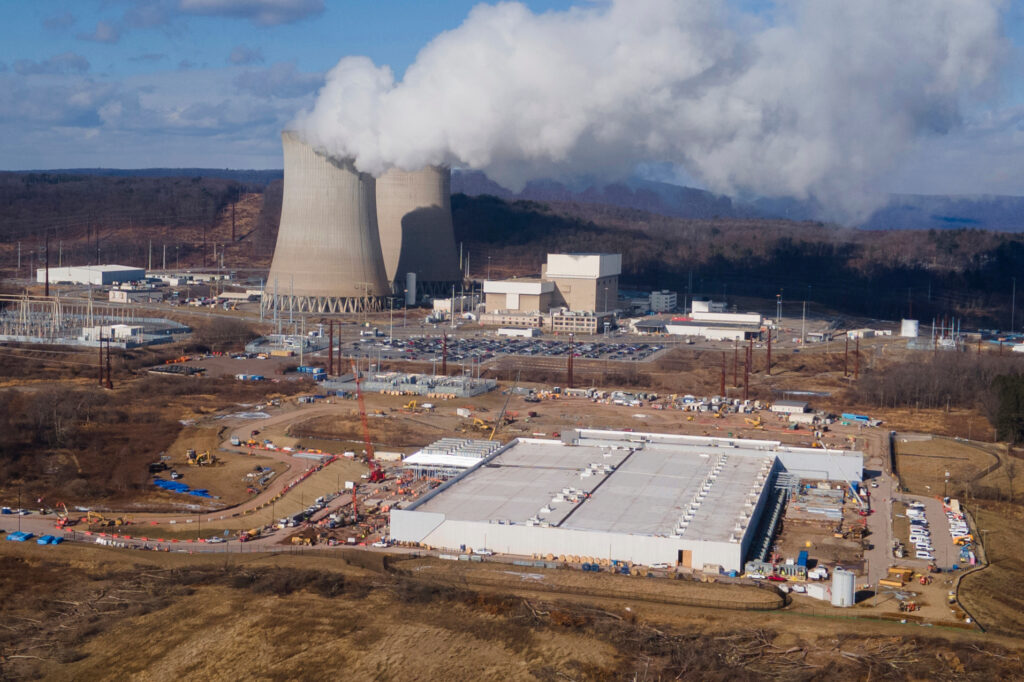
But the administration has also launched the most ambitious effort to commercialize new nuclear energy technology since the Eisenhower administration’s Atoms for Peace initiative. The goal is to develop smaller and more nimble reactors to help meet a growing demand for energy, which is partly driven by an explosion of data centers for the artificial intelligence boom.
Love Trump or hate him, his administration’s determination to quickly demonstrate, license and commercialize new nuclear technology is unprecedented. Executive orders that mandated sweeping reform at the Nuclear Regulatory Commission are underway. Against concerns that the administration intended to install bomb-throwers and flunkies on the NRC, the White House has appointed two remarkably qualified commissioners, Ho Nieh and Douglas Weaver. Both are nuclear engineers and seasoned regulators who were confirmed by the Senate with bipartisan votes.
Early this year, the NRC is expected to make public a revision of its regulatory code. The Energy Department is on track to review, approve and demonstrate multiple small test reactors at the Idaho National Laboratory this year. The Defense Department has started a program to offer contracts to deploy small reactors at military bases. In anticipation of safety reviews of those reactors, the Energy Department is revamping radiological health standards, setting practical thresholds for exposure rather than assuming, without well-established epidemiological evidence, that exposure to vanishingly low doses of radiation creates significant public health risks. Energy Department standards will likely become the template for revisions at the NRC and the Environmental Protection Agency.
The rapid transformation of federal policy has impacted states and private markets. Governors, red and blue, are jostling to be the first to deploy new reactors. Utilities and state regulators are scrambling to incorporate new nuclear reactors into long-term electricity planning, figure out where to place reactors and prepare for NRC licensing of new facilities.
In the private sector, the market for advanced reactors is booming. The advanced nuclear sector minted its first billionaires last year, well before their company, California-based Oklo, had licensed or built so much as a demonstration reactor or produced a single electron. With few firms trading on the public markets, those that do have seen a huge run-up in stock valuation. Whether it is hype, a boom or a bubble, the gold rush to invest in nuclear energy illustrates the need for new and innovative nuclear technology.
There has been much talk in recent years about the need for “climate moon shots” — bold public efforts to develop and commercialize new and game-changing low-carbon technologies. The Trump administration’s effort to revitalize the U.S. nuclear sector is as close as we’ve seen to a moon shot. And this comes from a president who is skeptical of climate change and shows little concern for the environment.
Like Operation Warp Speed, there is, of course, no guarantee that the effort will succeed. Nor will the problem of climate change be solved if it does. But having cheap, scalable nuclear energy helps reduce the world’s dependence on fossil fuels, provides more clean power and could prove critical in making deep reductions in global emissions.
The post Trump’s surprising win for the climate appeared first on Washington Post.