Joshua Meservey is a senior fellow at Hudson Institute.
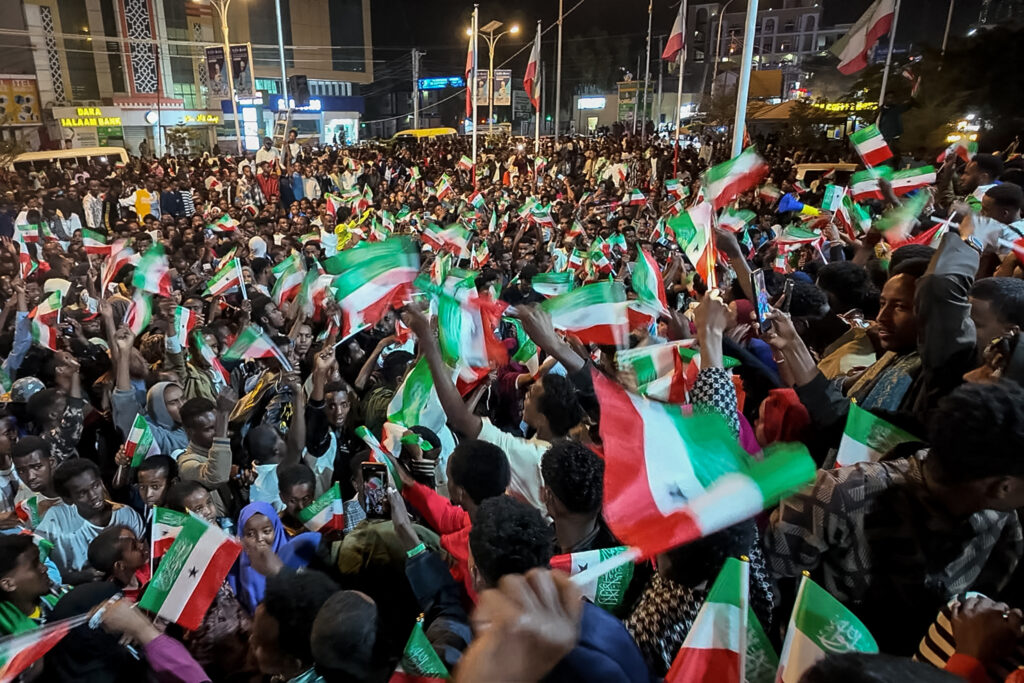
Israel sparked a diplomatic furor last month by becoming the first country to recognize Somaliland, a small, self-governing enclave in the strategically significant Horn of Africa. President Donald Trump, who said in August that his administration was “looking into” recognizing Somaliland, said after Israel’s declaration that the United States would not follow suit. But the reality of Somaliland’s functional independence means the case for its recognition will remain unavoidable.
International recognition has been the primary focus of Somaliland’s foreign policy for 35 years. It had a few days of stand-alone independence following the end of British colonial rule in 1960, but soon joined Italian Somaliland to form the republic of Somalia. In the late 1980s, however, hostilities between the republic’s government in Mogadishu and members of the dominant Isaaq clan in northern Somalia turned into genocide.Somali national forces razed the territory’s capital, Hargeisa, and killed or displaced hundreds of thousands of Isaaqs. Somaliland re-declared its independence in 1991.
Since then, it has built a more functional state than some recognized African countries. Yet African states are wary of defying the African Union, which is opposed to Somaliland’s recognition despite its own 2005 report that Somaliland’s quest was “historically unique and self-justified.” Furthermore, Somaliland has claimed nothing beyond its colonial-era borders, in keeping with the standard established by the African Union’s predecessor organization. Nevertheless, many African leaders fear that recognition will embolden secessionist movements on the continent despite the obvious uniqueness of Somaliland’s experience.
It was a non-African country, then, that made the first move. Israel’s interest in Somaliland isn’t hard to divine. The de facto state has around 500 miles of coastline on one of the world’s most important waterways: the southern approach to the Bab el-Mandeb Strait, which connects the Red Sea to international shipping routes and is key to Israel’s maritime trade. Somaliland’s recently refurbished commercial port in Berbera could also be a gateway to landlocked Ethiopia, the economic and diplomatic giant of the region.
Somaliland also sits just across the Gulf of Aden from Yemen, home to the degraded but still extant al-Qaeda in the Arabian Peninsula and to the Houthis — the Iranian-backed terrorist group that has attacked international shipping and Israeli territory with missiles and drones.
Since its first nationwide vote in 2001, Somaliland has regularly held free and fair elections resulting in incumbents peacefully relinquishing office. It is a relative bastion of stability in the turbulent East Africa region and has ably defended its territory from the terrorist organizations ravaging Somalia. It has its own currency, flag, government, military, passports and foreign relations.
It is this history that informs Somaliland’s refusal to reunite with Somalia and its press to escape the damaging association with its southern neighbor. Somalia’s corrupt elites in Mogadishu spend much of their time wrangling for power, occasionally deploying their personal militias to settle political disputes. For more than 15 years, al-Shabab, one of al-Qaeda’s deadliest affiliates, has controlled swaths of the country.
The United States shares Israel’s security and economic concerns in the area, and Somaliland is also a potential front in the global U.S.-China competition. Neighboring Djibouti houses America’s only permanent African military base. China opened its own much larger military base there in 2017 and counts the Djiboutian government among its closest African friends. Somaliland is openly pro-American and established diplomatic ties with Taiwan in 2020.
Nonetheless, Trump has so far not recognized Somaliland. Some within the administration worry that Somalia would cut counterterrorism cooperation with the U.S. in retaliation. That is possible, and it is necessary to fight al-Shabab and the Islamic State in Somalia. Yet the fact that such a concern is plausible further demonstrates that Mogadishu lacks the commitment the U.S. needs in a counterterrorism partner. There are also other countries, including Turkey, that are heavily invested in Mogadishu’s security and would be loath to see it fall to al-Shabab. And the U.S. could achieve many of its counterterrorism goals by working bilaterally with some of Somalia’s federal member states.
Recognizing Somaliland carries risk. It is poor and struggles with a clan uprising in its east. Some regional states that oppose Somaliland’s independence could try to destabilize it in various ways. China is a committed enemy because of Somaliland’s relations with Taiwan. Somalilanders themselves could be disappointed by what will be slow improvement in their situations even if widespread recognition materializes.
Yet recognizing Somaliland is recognizing reality, which is a necessary foundation on which to build effective policy. Mogadishu’s protest that recognizing Somaliland destroys Somalia’s unity, territorial integrity and sovereignty relies on a mythical conception of Somalia. The country hasn’t been functionally unified since the 1980s. The government controls little of its territory and survives largely because foreign armies protect it and foreign governments fund it. While it is understandable that Mogadishu imagines a unified and sovereign country given Somalia’s long suffering, it demands that the rest of the world participate in the fiction. Israel was the first to refuse to continue the charade, but it should not be the last.
The post Why should Trump consider recognizing Somaliland? Because it works. appeared first on Washington Post.