It’s a story so good it could have been a screenplay. In 2000, Reed Hastings and Marc Randolph sat down across from John Antioco, then CEO of video rental giant Blockbuster, and pitched him on acquiring their still unprofitable DVD-by-mail startup, Netflix, which at the time had around 300,000 subscribers. But when they told him their price—$50 million and the chance to develop and run Blockbuster’s online rental business—Antioco balked. It was a famously shortsighted business decision: By 2010, Blockbuster had filed for bankruptcy, and Netflix had stormed Hollywood with its entertainment streaming service
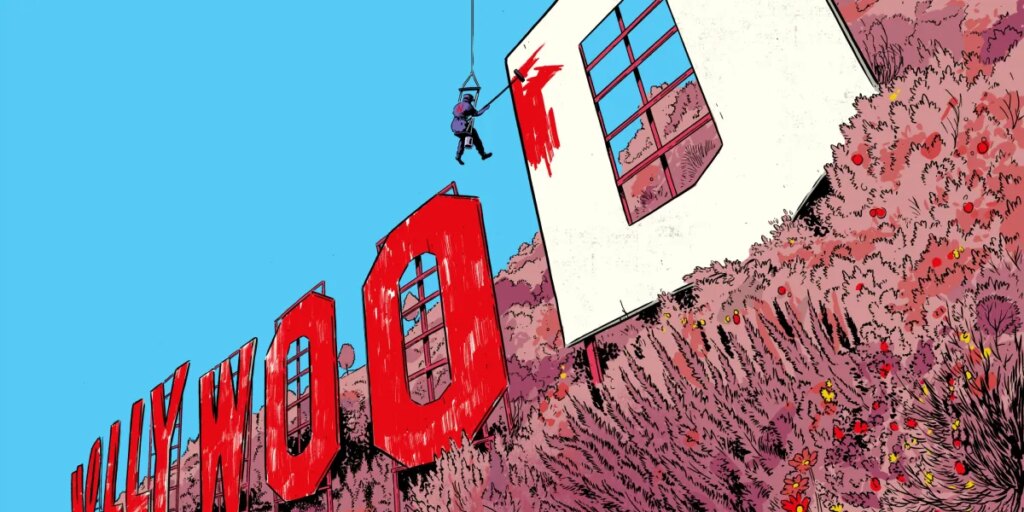
Now Netflix—a behemoth that has moved far beyond streaming others’ films and shows, with an estimated $18 billion content spend for 2025—is writing the sequel, following the same underdog-towinner trope. It announced in early December an $82.7 billion deal to become the new owner of the storied Warner Bros. film and television studios, plus cable crown jewel HBO and streamer HBO Max. The deal comes some 15 years after an executive who previously oversaw those very assets dismissed the notion of Netflix being a threat to Hollywood’s power structures: Jeff Bewkes, then CEO of Warner Bros. parent Time Warner, described that scenario in 2010 as “a little bit like, is the Albanian army going to take over the world?”
To be sure, Netflix has never before attempted a deal of this size. And with rival Paramount making a play for the entire Warner Bros. Discovery business through a hostile bid, a Netflix–Warner Bros. tie-up is still far from a sure thing. But even if the deal never actually materializes, Netflix has demonstrated how to not just disrupt an industry but swallow it.
It’s a trajectory that’s all the more impressive given the company’s scrappy, dotcom-era start. “Netflix should have never existed,” says Peter Supino, who analyzes the media and entertainment industries as managing director at Wolfe Research. “Their path relied on a bunch of strategic decisions that were risky and uncertain at times and the body of which proved out to be smashingly correct.”
To dominate streaming today, of course, is to dominate all of entertainment. And Netflix now has a market cap—almost $400 billion currently— that exceeds the combined value of legacy competitors Disney, Warner Bros. Discovery, Fox Corp., Paramount, and Lionsgate.
So just how did Netflix do it? The company has built a culture that fosters flexibility and daring, and has repeatedly shown its adeptness at taking calculated risks—including a series of strategic U-turns. Netflix was never going to make original television shows and movies—until it ponied up an unprecedented $100 million for two seasons of House of Cards from executive producer David Fincher in 2011, sight-unseen without a pilot. Netflix didn’t care about password sharing—until it began vigorously enforcing a “one household” rule in 2023. Netflix was never going to introduce livestreaming or advertising—until it added both within a few months in 2022 and 2023, then struck its first major sports rights deal, another one-time no-go, in 2024.
“When one of your people does something dumb, don’t blame them. Instead ask yourself what context you failed to set. Are you articulate and inspiring enough in expressing your goals and strategy? Have you clearly explained all the assumptions and risks that will help your team to make good decisions?”
Reed Hastings on leading with “context, not control.” From No Rules Rules: Netflix and the Culture of Reinvention, by Reed Hastings and Erin Meyer
And Netflix was never going to go all in on theatrical releases—until it decided to buy Warner Bros. and pledged to distribute its films to movie theaters. “We’ve built a great business, and to do that, we’ve had to be bold and continue to evolve,” co-CEO Ted Sarandos told investors on the call announcing the deal. “We can’t stand still. We need to keep innovating and investing in stories that matter most to audiences.”
Call it “innovating,” or call it misleading the competition, most people agree that Netflix has offered a master class in audacious strategy. In his business tome, No Rules Rules: Netflix and the Culture of Reinvention, Hastings offers guidelines for strategic pivots, pointing out: “The vast majority of firms fail when their industry shifts.” The former CEO, who kicked himself upstairs to chairman in 2023, attributes the company’s success to a culture that prioritizes innovation, motivates top performers, and has few controls, allowing Netflix “to continually grow and change as the world, and our members’ needs, have likewise morphed around us.”
This is antithetical to how business is usually done in Hollywood, where studio executives would rather bet on proven IP with sequels, spinoffs, reboots, and copycats than stick their neck out for new, untested ideas.
A bolder approach has given Netflix the upper hand. “We were willing to take the risk that these other companies weren’t willing to take because they were so stuck on what made them successful in the first place,” says Jessica Neal, former chief talent officer at Netflix. This approach means also accepting what Neal calls “the tax” of sometimes disappointing customers in the short term, in service of a bigger goal. Case in point: Netflix’s short-lived plan to split its DVD-by-mail operations into a separate unit called Qwikster in 2011, while arguably necessary to maintain the focus on streaming growth, annoyed customers, and its execution was seen as a rare blunder for the company
“Companies do [themselves] a massive disservice because they look at mistakes as failures, and we looked at mistakes as learning,” says Neal, who worked almost 12 years in talent-focused roles during two stints at Netflix. “But you have to teach people how to do it, and we did. And you also have to hire people that have the appetite to do it.”
That once-scrappy DVD-by-mail company now employs around 14,000 people worldwide. And after nearly 30 years of strategic pivots, little of Netflix’s original business model remains in place. Yet remarkably, the company’s internal corporate culture remains relatively unchanged. It’s that work environment—and what Supino calls an “unsentimental culture”—that just might be its secret weapon.
Thousand-fold growth
Blockbuster turned down the opportunity to buy Netflix in 2000.
~300,000
Approximate number of subscribers to Netflix’s DCD-by-mail service in 2000
>300 million
Netflix’s 2025 streaming subscribers, in over 190 countries Sources: Netflix, Media Reports
In 2009, Netflix published a 125-slide culture deck on how it has become such a high-functioning workplace. The memo has been updated several times, but it continues to emphasize a handful of unique concepts, including freedom over processes, leading with “context, not control,” and a commitment to candor, even (or especially) when it’s uncomfortable.
As Hastings’s book acknowledges, Netflix’s culture is weird. The company doesn’t keep track of vacation or expenses. It champions internal transparency around performance data and executive salaries. And to ensure it’s only employing people at the top of their game, the company famously applies a “keeper test”—essentially an employee review where bosses ask themselves, “If X wanted to leave, would I fight to keep them?”—to decide who is delivering real results and who should be let go. Some very senior executives have exited the company in accordance with these principles, including Patty McCord, the company’s original chief talent officer and one of the architects of its corporate culture.
“We were very focused on feedback and having tough conversations that people don’t want to have,” says Neal. “And we believed that telling the truth to somebody was actually caring, and it was uncaring to do the opposite.” This helps teams communicate during rough patches, she says: “We actually were able to navigate those things much more effectively because we were able to talk about the tough stuff.”
Take the moment, all those years ago, when Time Warner’s CEO shrugged Netflix off as the “Albanian army.” In what could be a scene straight out of the official Netflix movie, a comment intended as an insult instead galvanized the troops. Hastings reportedly gifted top executives camouflage berets featuring the double-headed eagle from the flag of Albania, and Neal remembers staff wearing Albanian army dog tags “with pride.”
Even back then, they knew they’d eventually get their Hollywood ending.
This article appears in the February/March issue of Fortune with the headline “How Netflix swallowed Hollywood.”
The post Netflix’s $82.7 billion rags-to-riches story: How the a DVD-by-mail company swallowed Hollywood appeared first on Fortune.