The Associated Press this week reported a stunning fact: Of the 13,000 homes destroyed a year ago in the extraordinary wildfires in and around Los Angeles, fewer than a dozen have been rebuilt.
The massive, fast-moving wildfires that tore through Los Angeles County last January directly killed at least 31 people and sickened many more, torching more than 16,000 structures in total. With an economic toll estimated as high as $275 billion, the 2025 Los Angeles fires may be the costliest disaster in US history.
The flames driven by hurricane-strength Santa Ana winds ignited on top of a severe housing crisis in the region.
“Los Angeles residents faced a tight rental housing market even before these unprecedented wildfires forced thousands from their homes and compounded the problem,” Tomiquia Moss, California Business, Consumer Services, and Housing Agency secretary, said in a press release.

The Palisades fire leveled the Pacific Palisades Bowl Mobile Estates neighborhood. Its many residents have since struggled to rebuild.
|
Allen J. Schaben/Los Angeles Times via Getty Images
According to the housing research firm Up for Growth, California is short of nearly 840,000 homes, with the LA region in particular at a deficit of nearly 340,000 residences. What’s worse, the Palisades and Eaton fires displaced about 100,000 people as their flames engulfed entire neighborhoods within hours.
The disaster has created immense political pressure to rebuild as fast as possible and, indeed, California state officials say that things are moving much faster than in past disasters. But even faster than ever still isn’t fast enough.
The state government and local officials signed orders to speed up permitting and waive environmental reviews to try to accelerate the reconstruction effort. A year after the 2018 Camp Fire in Northern California burned down a comparable number of homes, just 385 rebuilding permits had been issued. The state reports that of the 6,191 rebuilding permit applications received in areas afflicted by last year’s fires, 2,617 have been approved.
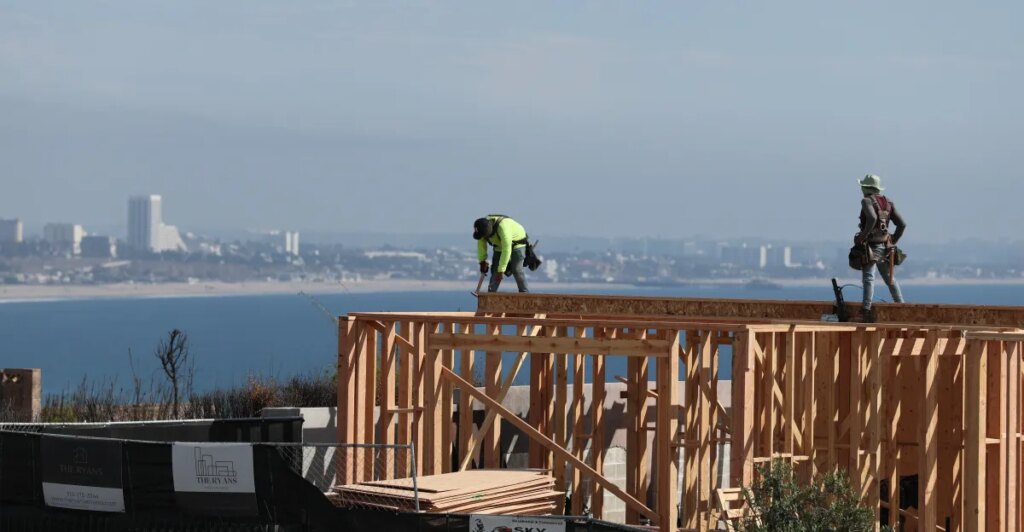
But even with the ramped-up effort, only about 900 homes are under construction, and less than a city block’s worth have been rebuilt to date.
Even with strong political backing, tens of thousands of lives, and billions of dollars at stake, LA’s slow restoration is a grim warning of what’s to come in a state facing growing wildfire risks as more people encroach on regions primed to burn and as the planet continues to warm. It’s not just houses and neighborhoods that have to adapt to higher levels of risk; fire-prone regions need more effective public policy.
“The system structurally is not built for rebuilding and recovery,” said Minjee Kim, an assistant professor of urban planning at the University of California Los Angeles. “You just need a whole different animal to enable comprehensive reconstruction.”
What’s still holding back fire recovery
Reemerging from the ashes of a wildfire is always a long process.
The Los Angeles Times reported in September that of the 22,500 homes lost in the most destructive fires between 2017 and 2020, only 38 percent have been rebuilt to date.
The Palisades and Eaton fires together burned close to 40,000 acres across all tiers of wealth, from multimillion-dollar coastal mansions to inner-city apartment complexes. According to Realtor.com, the communities that experienced the brunt of the blazes — Altadena and Pacific Palisades — lost $8.3 billion in home values. Residents are also struggling to pay for reconstruction as insurance payouts have been slow to process. Many wildfire victims didn’t have insurance coverage at all.
Faced with rising risks, falling property values, tight budgets, and mounting reconstruction costs, only a small fraction of Angelenos afflicted by fires say they plan to rebuild. At least 600 homeowners have already decided to sell what’s left of their land.
But for those looking to stay, it’s going to take a while to move back in.
There are several key reasons why. One is that building a home in the Los Angeles area, even in ideal conditions, takes longer than the national average, anywhere between 10 to 18 months.
Of course, the aftermath of a wildfire is anything but ideal. The flames leave behind toxic debris that can contaminate the air, the water, and the soil. Simply cleaning up the ashes of an inferno can take months, and many homes in the area still face chemical hazards.
Almost every step of the rebuilding process requires permits — clearing debris, construction, connecting power and water lines — and each permit takes time to process. The city of Los Angeles reports it has received more than 3,000 permit applications for more than 1,400 addresses — still already a small fraction of what was lost. Even so, the city issued just under half of these permits.
Los Angeles County, which includes unincorporated areas, notes that it takes on average 95 business days to issue new residential construction permits. Of the 2,905 rebuilding applications received, only seven homes have been completed.
window.addEventListener(“message”,function(a){if(void 0!==a.data[“datawrapper-height”]){var e=document.querySelectorAll(“iframe”);for(var t in a.data[“datawrapper-height”])for(var r,i=0;r=e[i];i++)if(r.contentWindow===a.source){var d=a.data[“datawrapper-height”][t]+”px”;r.style.height=d}}});
These permits help ensure that rebuilt and new homes meet a minimum standard of safety and quality, but the tradeoff is that they require time and money. “When you zoom into regulation as an issue, it’s not individual departments that are delaying the process — it’s more like the entirety of the network of reviews that needs to happen that is an impediment to a faster recovery,” Kim said.
And all these hurdles stand in your way if you want to rebuild close to exactly as you were. Most of the efforts to accelerate the permitting process apply to “like-for-like” construction, meaning the rebuilt structure doesn’t exceed 110 percent of the original building’s height and area.
If you’re an Angeleno who wants to build bigger, with greater density, or modify your home significantly to better withstand future fires, you’ll have to jump through another set of hoops.
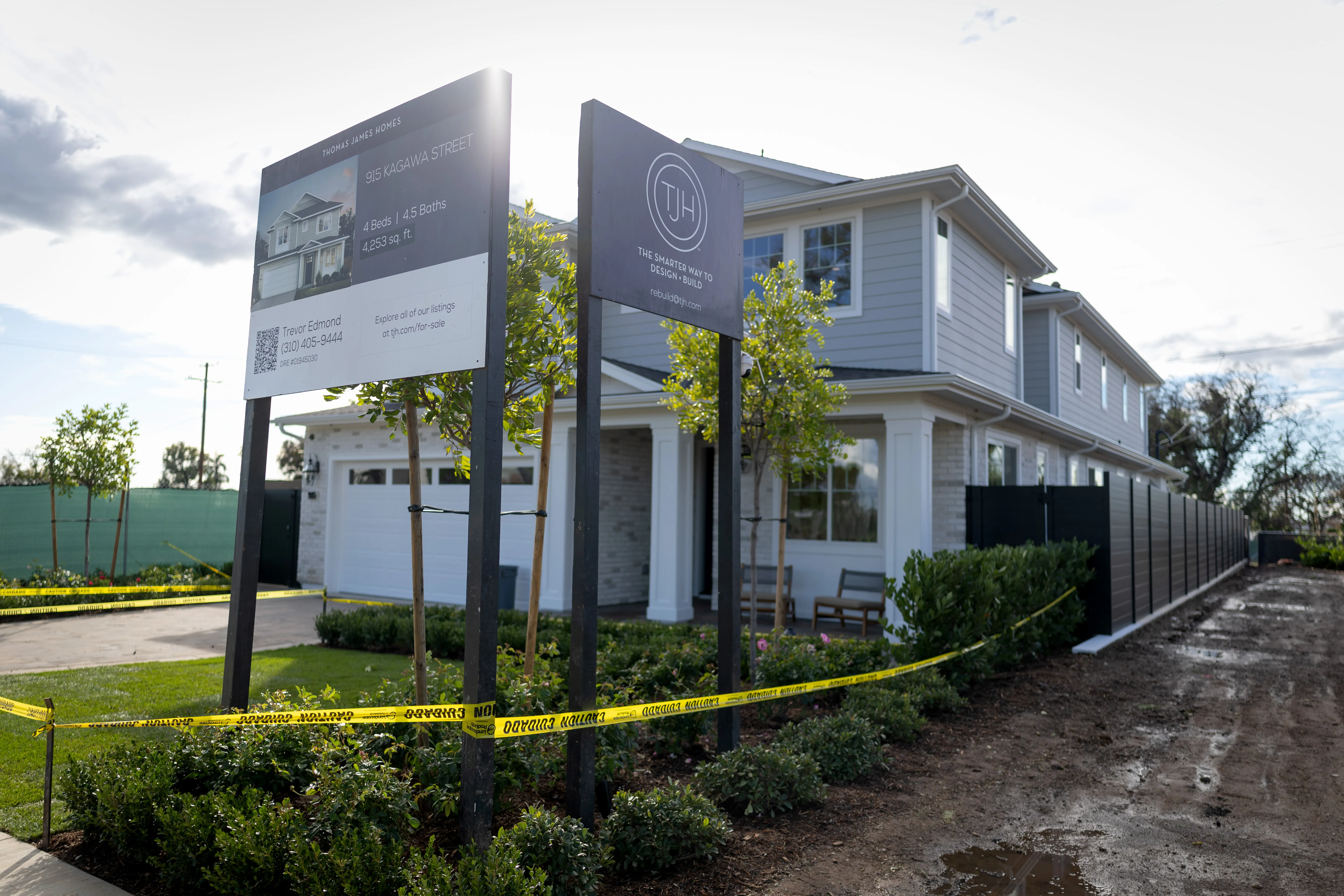
The first rebuilt home in Pacific Palisades to receive a certificate of occupancy after the Palisades Fire in 2025.
| Eric Thayer/Los Angeles Times via Getty Images
The fact that so many people are trying to rebuild their homes at the same time has also caused shortages of labor and construction materials, further hobbling the pace of recovery. The Trump administration’s tariffs are further driving up costs on vital building supplies like lumber. Federal immigration raids have made it harder to recruit construction workers in the Los Angeles area, many of whom are undocumented.
All of this is dashing the hopes that the 2025 Los Angeles fires would at least be an opportunity to rethink and rebuild communities better.
Some experts thought that the wake of the disaster would encourage communities to work together on coherent fire mitigation strategies, harden houses against ignition, pull back from the riskiest areas, and spur work to conserve water, reduce natural fuels, and mitigate climate change. In other fire-prone regions like around Lake Tahoe in California and Nevada, communities have found some success in being proactive about reducing fire risks and saving money on their insurance rates.
But once a fire has already occurred, especially in one of the most housing-starved regions in the country, the focus remains on getting homes built as fast as possible. Broader efforts to adapt to a hotter, more fiery world take a back seat.
“Our faith is up to individual decisions made by the homeowners,” Kim said. “I don’t think there is a higher-level neighborhood-scale rethinking of fire resiliency that is happening at this point.”
The post Why almost none of the homes burned in LA have been rebuilt since last year’s fires appeared first on Vox.