In the spring of 2021, I was in a pub in North Cornwall, England working my way through a dreadful carvery lunch. By that point, the people of Britain had largely gotten over lockdown mania and were enjoying a sustained semblance of normality. Businesses were creeping open, the summer was upon us, and charges for flaunting the rules were collapsing in court.
Yet the owners of this establishment—a gay couple with a reputation for getting in Facebook beefs—had not taken anything for granted. They had implemented a stringent one-way system in their pub, complete with ropes, barriers, floor markings, and signs. A setup that brought to mind a U.S. embassy in the Middle East.
The young staff were doubling their distances and spitting orders into their visors. On the screens that usually showed Manchester United and Exeter Chiefs games was some kind of COVID-specific news feed—where death stats and reports about new variants in Manaus rolled across the screen like some paranoid ticker-tape parade.
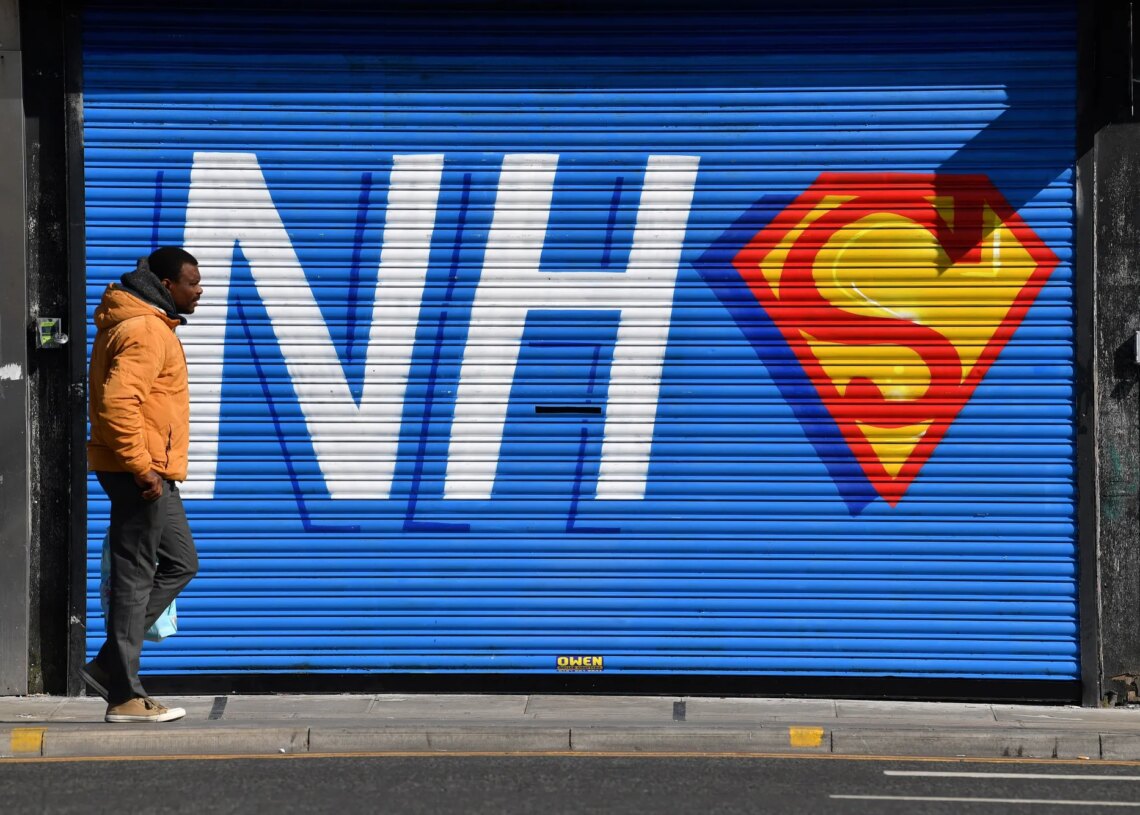
But as surreal, unnerving (and highly unappetizing) as this scenario was, it apparently came from a place of love. The huge wall mural of an NHS nurse with angel wings and a rainbow flag perched above her screamed as much. The landlords’ message was clear: “We care a lot.” And they weren’t the only ones to become obsessed with altruism in this time.
The years between Brexit and October 7 were the peak of the Carewave, an avalanche of empathy and charity that, for a moment, engulfed our national identity. This was the era of ‘Marcus Rashford 4PM,’ when grown adults would @ the young Manchester United forward on social media, imploring him to get stuck into any injustice going—from under-threat youth clubs in the Midlands to faraway famines—as if he were some socially conscious Batman.
It was a time of declaring you had a crush on anti-Brexit campaigner Gina Miller, of checking in on the old dear who lives next door, of raving for food banks, of football mascots dressed as dinosaurs taking the knee to end American racism—of dancing postmen, barges doing doughnuts in the Thames, mawkish bank-advert poetry, supper clubs “for Ukraine,” “fuck Boris,” ‘sending love,’ Gareth Southgate, and “owning the gammon.”
Although it was fervently anti-government, the Carewave was not particularly political. It seemed to be more about the politicians’ personalities and their delinquency rather than their policies. Plenty of Conservatives were swept up in the Carewave (albeit in their own Royal British Legion kind of way), to the point where David Cameron started volunteering at his local food bank. And they got swept up in it because it was simply the done thing at the time.
Although it aligned with some left causes, the Carewave was a long way from American-style woke and always had a strong undercurrent of patriotism running beneath it (even if that manifested in shouting about the welfare state rather than the Duke of Wellington). It was about deeds, statements, ‘giving back,’ and ‘doing better.’
Although the left would have hated to admit it at the time, it looked a lot like David Cameron’s much-maligned ‘Big Society’ plan, but fused with the iconography and trauma responses from other campaigns: Big Poppy syndrome, ‘Je Suis Charlie,’ the Manchester bees, ‘For the Many Not the Few.’ It was semi-performative, brand-friendly, and rose-tinted: a post-Brexit, post-austerity, post-Corbyn attempt at creating a “better,” but decidedly non-radical, Britain.
Naturally, not everyone bought into the Carewave, and in the margins, the rage train was gathering pace. But looking at mass media in this era, you would have assumed that Britain had forged an unlikely moment of national unity from the doldrums.
When Keir Starmer came in, it felt like things would probably stay this way. As a self-identifying sensible and quasi-liberal man of institutions, gestures, and accountability, he more than any other politician seemed to be naturally aligned with the Carewave (unless you were a victim of a police shooting, that is).
But just four years later, this moment seems a distant memory, as far away today as Live Aid felt in 2019. By late 2022, the Queen was dead, the cost-of-living crisis was scratching its nails on the door, the Captain Tom estate were anxiously looking at their accounts, and Marcus Rashford had started wearing balaclavas. A year later, the Ukrainian cause had descended into an ultraviolent, geopolitical stalemate, and systemic slaughter in Gaza pushed direct action, discourse, and state response into the extreme.
By the time mass culture had caught up, ‘giving back’ and ‘community’ had stopped being buzzwords in advertising decks, and heart-warming stories fell out of the daytime TV schedule in favor of fierce debates about small boats and puberty blockers. Note that the latest McDonald’s advert does not feature “the dreamers, the schemers, the people who make us proud,” but a team of teenage master criminals in snoods and ballies, who commandeer jet skis and light aircraft to perform a “world menu heist,” while Stormzy—very much the Bob Dylan of the Carewave—seems to have entirely ceased making music.
“Just four years later, this moment seems a distant memory, as far away today as Live Aid felt in 2019”
While some people certainly stuck around in the volunteer space, numbers massively declined as life got harder to parse. Between August 2021 and 2022, the Independent Food Aid Network found that 72 percent of food banks reported a drop in food donations, while 87 percent reported supply issues. A parliamentary briefing in May 2024 noted that volunteering had fallen sharply between November 2023 and January 2024, with 65 percent of IFAN organizations reporting a drop in food donations and 45 percent reporting a drop in financial donations.
While many people moved towards vital, immediate topics like Palestine and trans rights, others found themselves drawn towards the weird. The numerous conspiratorial anti-government splinter movements that spawned during the COVID lockdowns started to build traction—and many segued easily into anti-immigration protests.
Today, as shit continues to splatter the fan, the stakes have heightened on all sides. No doubt many of the people who were playing ‘street bingo’ in 2020 are now playing ‘stop the boats’ in 2025, their ‘stay home, save lives’ banner pictures seamlessly replaced by AI images of Union Jacks and the Dover’s white cliffs. In turn, the students serving up lentil soup at Momentum-affiliated kitchens are now more focused on cultural embargos than OAPs.
The decline of the Carewave also manifests way less dramatically—in lethargy, nostalgia, and a kind of ambient resentment. An overwhelming sense of nobody giving a fuck about their neighbors anymore. Domestic altruism seems to have well and truly left the national conversation in favor of hardline realpolitik. People thought 2020 was a true dystopia at the time, but maybe, it was something close to peace.
Although much of this shift we see today was born in COVID, it strikes me that lockdown landed at a fairly convenient time. Not just a moment in which people realized how remote their work could really be, and how much of their entertainment stemmed from screens, but a time in which the population actually wanted to connect after Brexit and a bitter election. For a brief moment, it (sort of) worked.
But you don’t have to be a Nick Land fan to imagine the same situation would result in a bloodbath today. There would be fierce arguments about who deserves what and who should be forced to work, value judgements based on how long you’ve been in this country, and ‘Christ is King’ murals in place of nurses with wings. Thinking about a pandemic in 2025 is a ‘choose your own disaster’ game.
Then there is the question as to how some tragedies would be received today. When the Manchester bombing attack occurred, the dominant response was one of vigils, not riots. And while there were a few scumbags mocking the Grenfell victims in their back gardens, I dread to think how such an event—and such a demographic—would be memorialized in some ‘Oh-Tommy-Tommy’ sections of the country today.
With perpetual stories about going-postal knife attacks and images of YouTubers fighting crackheads in Piccadilly Gardens blasted into our mind’s eye, it all now feels that we are more likely to reinstate the death penalty than get another ‘clap for your carers.’
“No doubt many of the people who were playing ‘street bingo’ in 2020 are now playing ‘stop the boats,’ their ‘stay home, save lives’ banners seamlessly replaced by AI images of Union Jacks and Dover’s white cliffs”
The political language has shifted intensely in the last few years. Elected and unelected representatives on all sides are not talking about bringing people together but battening down the hatches. The England football manager now talks about how his mother is “repulsed” by Jude Bellingham, and our feeds are loaded with cynicism, conspiracy, and bile.
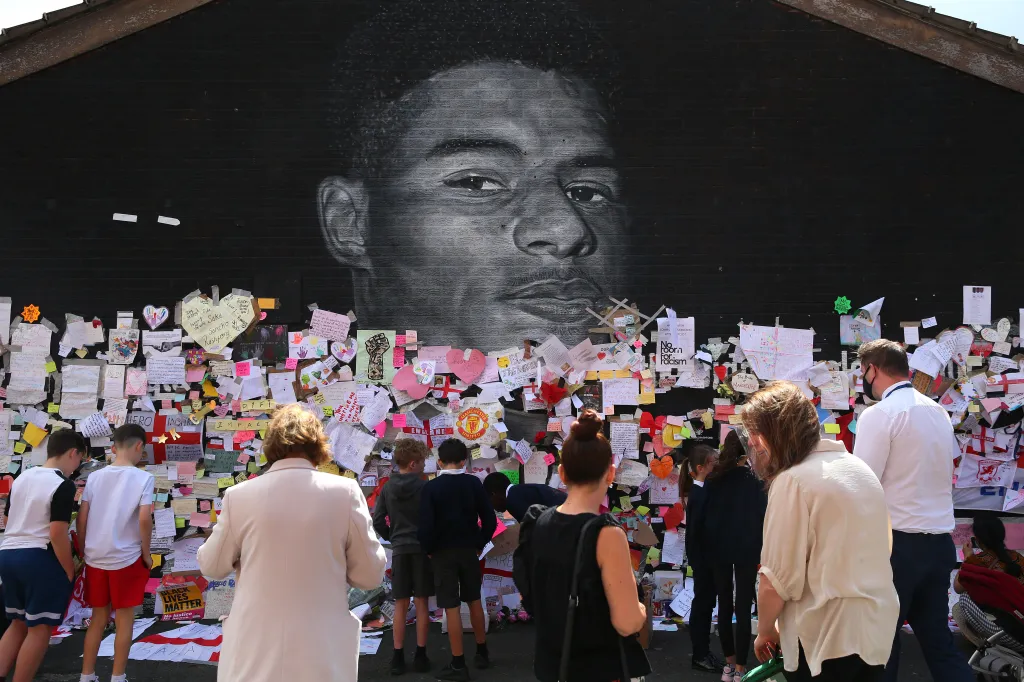
It all feels a far cry from the absolute zenith of the Carewave: the day a Burberry-sponsored mural of Marcus Rashford (which had been defaced by some local ne’er-do-wells after his penalty miss in the Euros) was swamped with so many flowers and cards and flags that it started to resemble the gates of Kensington Palace in the autumn of 1997.
In 2025, Burberry has distanced itself from such causes, and its campaigns now feature Netflix actors and non-controversial national treasures like Richard E. Grant set in timeless, “iconic” London locations. Because why even pretend to care anymore? Why not just walk in a world of nostalgia and achievable glamor instead?
Today, that pub in North Cornwall seems entirely apolitical. Its Facebook now speaks only of “mid-week roasts” and Halloween discos, where not too long ago, it was fixated on global health policy. And as corny and hectoring as the Carewave could be, perhaps some of that sentiment was worth keeping.
The faded remnants of COVID-era schmalz and branded altruism still linger on the streets, but when the next disaster hits, don’t expect the writing on the walls to be so pretty.
Follow Clive Martin on X @clive_mart1n—and subscribe to his Substack, British Chaos.
The post What Happened to the UK ‘Carewave’? appeared first on VICE.