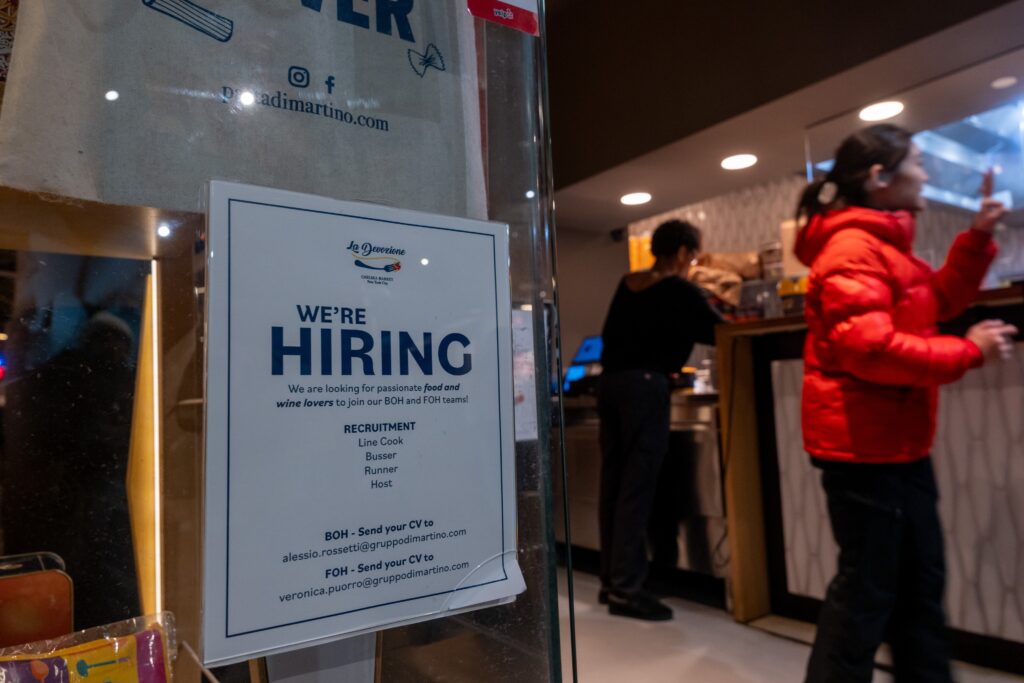
The U.S. labor market is expected to have turned in its weakest performance in 2025 since the pandemic-era recession, despite upbeat estimates for December job gains.
Employers put the brakes on job creation with the fewest jobs created since 2020. The unemployment rate rose to its highest level since 2021. And wage growth slowed, straining households grappling with years of high inflation.
The December jobs report, to be released Friday morning by the Labor Department, will cap a year defined by economic uncertainty intensified by tariffs, immigration barriers and the rollout of artificial intelligence technologies.
Economists forecast that employers added some 73,000 jobs in December buoyed by a later-than-typical start to the holiday season and a hiring spree by federal law enforcement. Those gains would mark a boost from October and November when the economy shed jobs — including tens of thousands resignations from federal government workers.
“A late in-the-year surge in holiday hires and a recouping of what was lost to the government shutdown should provide a boost to employment at year-end,” wrote Diane Swonk, chief economist at KPMG in an analyst’s note.
The labor market weathered Trump administration policies better than expected by some economists and policymakers. Those policies are still rippling through the economy and layoffs appear to be contained for now, hitting a 17-month low in December, the consulting firm Challenger, Gray & Christmas said Thursday.
But economists to not expect a December bump in job creation to make up for a year that became increasingly gloomy as the months progressed.
“You might get a correction upwards [in December], but it’s not going to change the trend,” said Dan North, senior economist at Allianz Trade North America.
Employers added an average of 55,000 jobs per month in 2025 through November. That’s less than one-third of the average monthly jobs created in 2024, at 168,000. And the unemployment rate climbed to 4.6 percent in November from 4 percent in January.
Meanwhile, the number of job openings hit the lowest level in more than a year and hiring slowed in November, according to a separate jobs report released Wednesday by the Labor Department.
“It’s more difficult to get a job right now, because corporate America looks to be in an extended hiring pause,” said Joe Brusuelas, chief economist at RSM US. “The duration of unemployment is slowly rising.”
Black and teenage workers have been hit particularly hard. The unemployment rate for both groups has climbed sharply over the past 12 months to more than 8 percent for Black workers and more than 16 percent for teens. Rising joblessness for those groups often serves as a bellwether for a broader economic downturn. Recent college graduates, aged 20 to 24, have also had a harder time finding work, Labor Department data shows.
“A lot of job openings are ‘ghost openings,’” said North, the Allianz Trade Americas economist. “They’re positions that are posted that were never really meant to be filled unless a really awesome candidate comes along.”
Meanwhile, many Americans find themselves in less-than-desirable work arrangements. The number of part-time workers who say they would prefer full-time positions jumped sharply in November to an eight-year high. And those with multiple jobs — 5.7 percent of the workforce — is at its highest level in more than 25 years.
The Trump administration’s aggressive immigration crackdown and deportation efforts could mean that fewer jobs are needed to keep the unemployment rate steady compared to previous years. Economists say it’s possible that around 50,000 jobs a month is enough to maintain a healthy labor market, as net immigration to the United States plummeted in 2025.
Brusuelas, the RSM economist, said that slowing job growth is also an effect of “the [hiring] pause that the corporate sector is engaged in as they assess the impact of their investment in AI.” That could spell solid economic growth and corporate profits in 2026 even with a weak labor market.
“Corporations are rightsizing their workforce and they’re being rewarded for it in terms of their stock share prices,” Brusuelas said. “I think this is where we’re going to be at for a good period of time.”
In 2025, healthcare and social services buoyed the entire labor market, as demand from aging Baby Boomers grew. Economists warn that a labor market dependent on just one or two sectors remains more vulnerable to one-off shocks.
Elsewhere, hiring stagnated with the federal government leading job losses this year, cutting some 271,000 jobs since last January. Manufacturing and transportation and warehousing also cut positions, under the weight of higher tariffs. And job creation in white collar industries remained weak all year.
Federal Reserve officials cut interest rates at three consecutivemeetings at the end of 2025, signaling that they are more focused on cushioning a softening job market than fighting still stubborn inflation.
Fed Chair Jerome H. Powell warned in December that official statistics could be overstating job creation by 60,000 jobs a month, calling jobs data “a complicated, unusual and difficult situation.”
Abha Bhattarai contributed to this report.
The post 2025 was the toughest year for labor market since 2020 recession appeared first on Washington Post.