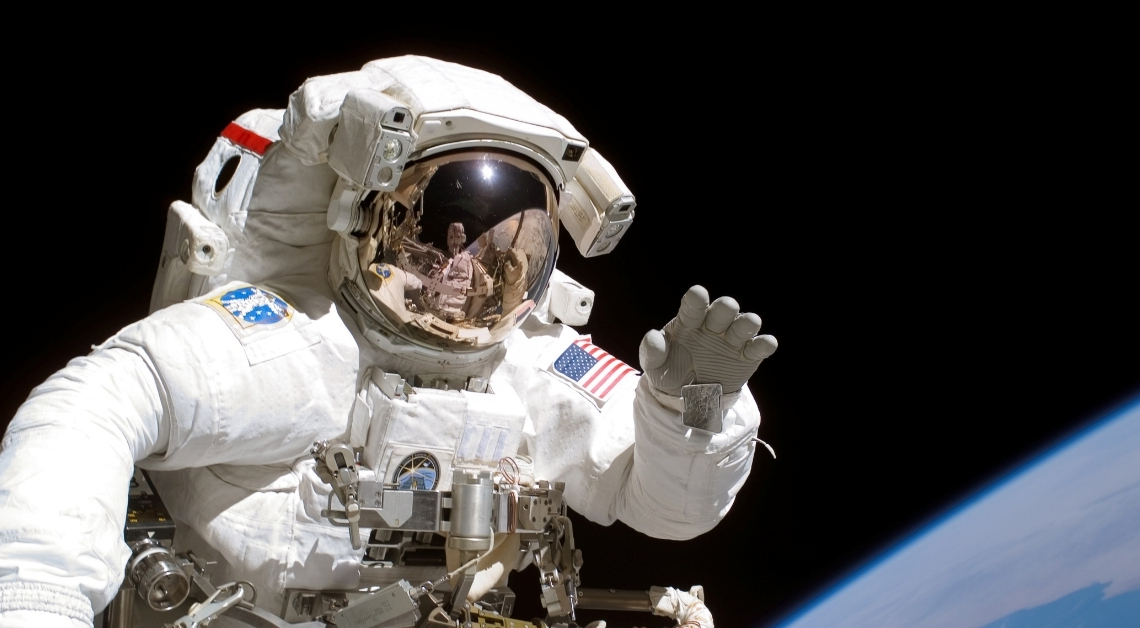
If you’ve ever watched astronauts float around the ISS and thought, sign me up, you might want to reconsider. You see, space doesn’t just “feel different” because of the lack of gravity. Microgravity also changes how your body uses fluid, muscle, bone, and even blood.
NASA has spent decades documenting the weird parts—because the weird parts are the most interesting—but also, they can be pretty dangerous. With that in mind, here’s the quick list of what space can do to a human body.
1) Puffy face, clogged nose, bland food
Without gravity pulling fluids downward, they redistribute. NASA has stated that astronauts can experience a puffy face and nasal congestion that dulls their sense of smell, which can make food taste off.
2) Vision changes that can stick around
NASA has identified a condition called Spaceflight-Associated Neuro-ocular Syndrome, in which changes in pressure and fluid affect the eyes and brain. In some astronauts, vision doesn’t fully snap back after they’re home. Wicked, right?
3) Bone loss that adds up by the month
Bones rely on constant stress to stay dense, and being in space takes that away. NASA estimates bone density loss can reach 1% to 1.5% per month during typical ISS missions.
4) Muscle atrophy, even with workouts
Without gravity, muscles lose the constant resistance they rely on to stay strong. NASA has made daily exercise a non-negotiable part of life on the ISS to protect muscle and bone health.
5) You can get taller, plus back pain
Gravity normally keeps the spine compressed. In space, that pressure disappears, allowing the spine to lengthen and often leading to back pain.
6) “Space anemia” Is a Thing
NASA reported evidence of increased red blood cell destruction during spaceflight. A Nature Medicine paper found that hemolysis was higher in space and could increase the risk of anemia during long missions.
7) Immune changes, with viral reactivations
The immune system doesn’t behave quite the same way in space. Long-duration missions have been linked to the reactivation of viruses the body normally keeps in check.
8) Blood clots in the neck
Blood clots weren’t always on the spaceflight bingo card, but they are now. NASA has documented cases involving the internal jugular vein and updated guidance to screen astronauts for clot risk.
9) Radiation exposure
Astronauts face higher radiation levels than on Earth. NASA lists radiation-induced cancers as a major human health risk, especially for longer missions farther from Earth’s protective shielding.
Space travel turns the body into a living experiment. Astronauts adapt, then readapt back on Earth, and sometimes the changes take longer than anyone wants. Countermeasures exist, but they demand constant maintenance, not a one-time fix.
The post 9 Super Awful Things Going to Space Does to the Human Body appeared first on VICE.