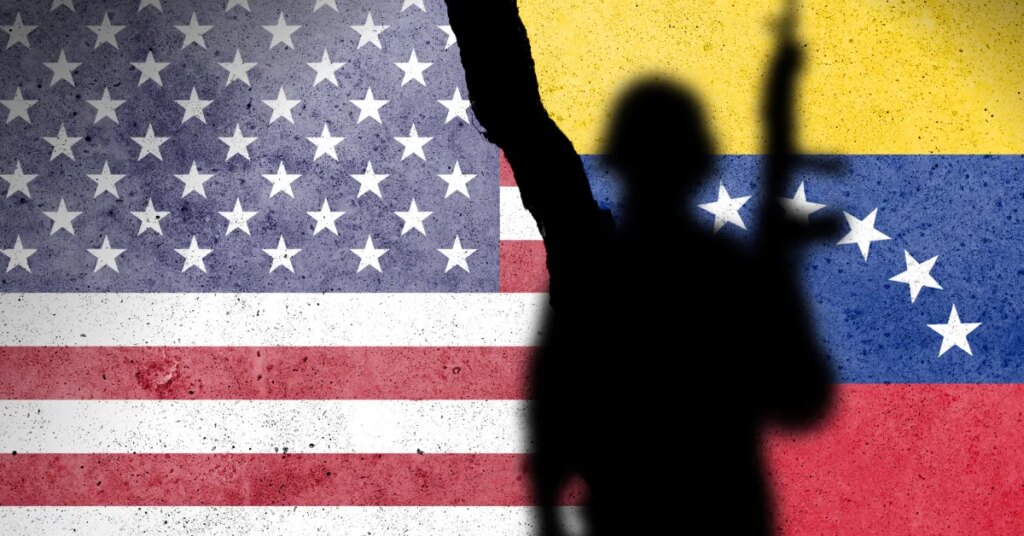
It’s been a whirlwind year for Venezuela, and it’s just getting started. Over the weekend, the U.S. launched an incursion into Caracas, capturing the nation’s President Nicolás Maduro and leaving the country in a state of uncertainty over its political and economic future.
The operation was the culmination of a monthslong military pressure campaign by the Trump Administration, which had been framed as an effort to stymie drug trafficking and so-called “narco-terrorism.” In the days since, the U.S. has asserted control over the direction of Venezuela’s governance and its crude oil industry.
[time-brightcove not-tgx=”true”]
While much remains unclear, here’s what we do know.
Where is Venezuela and what should I know about it?
The Bolivarian Republic of Venezuela is located in the northern end of the South American continent, covering an area about 1.3 times the size of Texas. The country of more than 28 million people is bordered by Colombia to the west, Brazil to the South, Guyana to the east, and the Caribbean Sea to the north.
Venezuela is famously a petrostate, home to the world’s largest oil reserves. Post World War II, it had the fourth-highest GDP per capita globally and had previously earned the nickname “The Millionaire of America,” thanks to its oil wealth.
But since the turn of the millennium, partly due to policies by its late former President Hugo Chávez, the country’s economy flagged—eventually crashing in the mid-2010s amid hyperinflation, political corruption, and poor governance. Poverty has since become the norm: the Humanitarian Data Exchange says that since 2017, the share of households living under Venezuela’s poverty line has surpassed 90%. As of early 2026, about 7.9 million people in the country require humanitarian assistance, according to the U.N.
Who is Maduro?
Following Chavez’s death in 2013, his mentee Maduro won by a narrow margin in a special election.
Maduro’s regime has been characterized by repression and human rights abuses, as he has gone after his political opponents. The mix of Maduro’s authoritarian rule, staggering poverty levels, and citizens’ limited access to food and other basic necessities have forced an estimated 8 million Venezuelans to leave the country and look for better living conditions elsewhere, according to the Human Rights Watch. Maduro declared victory in subsequent disputed elections in 2018 and 2024—but several countries, including the U.S., have not recognized his victories and consider him an illegitimate President.
The 63-year-old leader is particularly at odds with President Donald Trump over the influx of Venezuelan immigrants and drugs into the U.S. In 2020, the Justice Department during the first Trump Administration charged Maduro—along with other officials—for allegedly running a narcoterrorism conspiracy and using cocaine as a weapon to “flood” the U.S. The Trump Administration designated two Venezuelan drug gangs, Tren de Aragua and Cartel de los Soles, as Foreign Terrorist Organisations—even alleging that the latter was led by Maduro. But the Venezuelan leader has denied leading drug cartels, asserting that the U.S. has been actively trying to depose him under the guise of an anti-drug campaign.
Why did the U.S. military intervene in Venezuela and capture President Maduro?
In the early hours of Jan. 3, the U.S. conducted a military operation across Venezuela—including in the capital Caracas, where Maduro and his wife, Cilia Flores, were staying and eventually captured.
The Administration has framed the operation as part of the U.S. campaign against illegal drugs, but Trump has suggested the operation was also a means of forcing regime change. He added the operation was in line with a foreign policy doctrine that asserts U.S. influence in the Western Hemisphere, saying that under Maduro, the South American country was “hosting foreign adversaries” and “acquiring menacing, offensive weapons” that threatened U.S. security.
But Trump has also expressed a desire to control Venezuela’s oil industry, claiming that the country had “stolen” it from the U.S. Trump said that as his Administration “runs” Venezuela, it will fix the country’s “badly broken” oil infrastructure and improve its petroleum refining and extracting operations.
What U.S. activity preceded the intervention?
In August, the U.S. began deploying U.S. Navy missile destroyers, along with thousands of military personnel, to the edge of Venezuelan territorial waters purportedly to thwart drug trafficking. The Trump Administration also committed other military assets to the region, and ramped up its attacks on Maduro specifically, including offering a $50 million reward for information leading to his arrest.
Since Sept. 2, the Trump Administration has also killed at least 115 people in more than 30 strikes on boats in the Caribbean and the Pacific alleged to be transporting drugs to the U.S. The governments and families of several of those killed have rejected the Trump Administration’s claims of “narco-terrorism” and said the men killed were fishermen.
In early December, the U.S. military seized an oil tanker off the coast of Venezuela—the first known seizure since the strikes began in September—on the basis that the tanker was transporting Venezuelan oil sanctioned by the U.S. A week later, Trump announced an oil blockade on Venezuela.
How did Venezuela respond to U.S. aggression before the intervention?
In response to the U.S.’s moves in August, Maduro announced a plan to mobilize more than 4.5 million militiamen and provide them with weapons to defend Venezuela. Chávez created the Venezuelan Militia in 2005 and formally established it in 2010.
The Venezuelan government has repeatedly said the real goal behind the Trump Administration’s military aggression was regime change in Venezuela and the seizure of the nation’s natural resources, including its oil. The government accused the Trump Administration of “piracy” after it seized the oil tanker in December.
How did the U.S. intervene in Venezuela?
Planning for the intervention reportedly began as early as August last year, with military officials rehearsing how to conduct the operation. Trump said the U.S. had intended to carry out the plan four days before Jan. 3, but weather conditions nearly delayed it.
Eventually, Trump ordered the intervention, which sent more than 150 U.S. military aircraft soaring through the skies and into Venezuela, late Friday night. American forces arrived at Maduro’s compound in Caracas just after 2 a.m. local time Saturday. Maduro and his wife Flores surrendered and were extracted and on board U.S. aircraft by 3:29 a.m. ET. The operation ended without any loss of life from the American side, though Venezuela’s interior minister said 100 people died in the attack, possibly including Cuban military and intelligence personnel, who assist Venezuela.
Did Trump declare war on Venezuela?
Trump has never formally declared war on Venezuela, despite overseeing an aggressive military campaign on the South American country and the ousting of its leader. The President reiterated that the U.S. is not at war with Venezuela in a Jan. 5 interview with NBC, saying instead that the U.S. is “at war with people that sell drugs. We’re at war with people that empty their prisons into our country and empty their drug addicts and empty their mental institutions into our country.”
The Trump Administration has justified its attacks using the President’s Article II constitutional powers, which give him the authority to defend the country against threats—in this case, theVenezuelan drug cartels it has designated as terrorist organizations. In a confidential notice to Congress last fall, the Administration said that U.S. forces are engaged in “noninternational armed conflict” with drug cartels; the term has previously been used to describe the U.S.’s war on terror.
But many legal experts and lawmakers have questioned the legal basis for Trump’s attacks on Venezuela, arguing that the Administration has indiscriminately killed civilians without due process and used sustained force against Venezuela without clear evidence of an imminent threat or explicit congressional authorization. Several members of Congress have described the Administration’s actions as “illegal,” and have sought to rein in the President through bipartisan war powers resolutions, although none have become law.
Did Venezuela ‘steal’ oil from the U.S?
Trump has claimed that Venezuela stole oil from the U.S. and demanded that the South American country return those assets, but the reality is not as straightforward. In 1976, former Venezuelan President Carlos Andrés Pérez nationalized the country’s oil industry and established the state-owned oil company Petróleos de Venezuela SA (PDVSA). That revoked the concessions granted to foreign companies—including U.S. firms like Exxon, Shell, and Gulf Oil (now known as Chevron)—which had allowed them to pump and sell Venezuelan oil in exchange for royalties to the Venezuelan government.
Foreign oil companies were partially compensated by the Venezuelan government to the tune of around $1 billion for their lost concessions. Meanwhile, foreign firms could continue to operate in Venezuela as affiliates of PDVSA.
In 2007, Chávez renationalized the country’s oil industry by requiring that foreign companies give PDVSA a 60% equity stake in their joint ventures. ExxonMobil and ConocoPhillips—two of the biggest U.S. oil companies—refused to give PDVSA majority control, and as such had their assets expropriated. ExxonMobil and ConocoPhillips later won arbitration cases against the Venezuelan government, which have not been fully paid.
What happens to Maduro next?
Maduro is accused of narco-terrorism and conspiracy to import cocaine, on top of other charges. His wife, his son, Nicolás Ernesto Maduro Guerra, and other Venezuelan officials, have also been charged.
The Venezuelan President and his wife pleaded not guilty in court appearances in New York on Jan. 5. Maduro and his wife were remanded in U.S. custody, with the next court hearing set for March 17.
Lawyers for Maduro, however, are expected to dispute the legality of his arrest—arguing immunity from prosecution as the head of a foreign state.
Who will govern Venezuela?
After Maduro’s capture, his Vice President Delcy Rodríguez was sworn in as Venezuela’s interim president on Jan. 5. Rodríguez, a longtime Maduro and Chávez ally and former oil minister, has received the public backing of the Trump Administration, although Trump threatened that she would “pay a very big price, probably bigger than Maduro” if she does not submit to U.S. demands. The Trump Administration said that Venezuela will not hold elections in the next 30 days and that the U.S. will “run the country” until such a time that it can have a “safe, proper, and judicious transition.” Rubio clarified that the U.S. government intends to place pressure on the Venezuelan government to influence its political future and assert control over its oil industry, as opposed to directly governing it in an administrative capacity. Speaking to the New York Times, Trump said U.S. oversight of the country could last for years.
Rodríguez initially insisted that Maduro was Venezuela’s “only President” and accused the U.S. of seeking to seize “our energy, mineral and natural resources.” But she has since softened her rhetoric, calling for a “balanced and respectful” relationship with the U.S.
In endorsing Rodríguez, the Trump Administration sidestepped Venezuelan opposition leaders, including Trump ally María Corina Machado, winner of the 2025 Nobel Peace Prize, and Edmundo González Urrutia, whom the U.S. recognized as the winner of Venezuela’s disputed 2024 election. Machado criticized Rodríguez in a Jan. 6 interview with Fox News and called for Urrutia to assume leadership of the country in a letter posted to X.
What is happening with Venezuela’s oil now?
Venezuela faces an ongoing U.S.-imposed oil blockade that has disrupted exports of the country’s most valuable asset and led to the U.S. seizure of several more sanctioned tankers. The U.S. has kept the oil from tankers it seized under the blockade. The blockade is part of the Trump Administration’s campaign to pressure the Maduro government, including Rodríguez, to accede to its demands.
Trump also announced that Venezuela will be “turning over” 30–50 million barrels of “Sanctioned Oil” to the U.S.—worth around $2–3 billion. Secretary of State Marco Rubio clarified that the U.S. intends to sell the oil on the open market and control the proceeds to benefit the interests of both Americans and Venezuelans.
In another Truth Social post, Trump said that Venezuela would use the revenue from any deal it makes with the U.S. to purchase “ONLY American Made Products.” He added: “In other words, Venezuela is committing to doing business with the United States of America as their principal partner.”
What role will American oil companies play in Venezuela?
The Trump Administration has also demanded unrestricted access for the U.S. to Venezuela’s oil. As part of that plan, Trump wants U.S. oil companies to invest heavily in Venezuelan oil, for which he told NBC they would be “reimbursed by us or through revenue.” The President reportedly aims to meet with industry executives later this week.
But rebuilding Venezuela’s dilapidated oil industry is no easy task—one that some experts estimate could take more than a decade and over $100 billion in investments. Currently, Chevron is the only American oil company that still operates in the country under a special license granted by the Biden Administration that exempts it from U.S. sanctions.
What does this mean for global oil markets?
Energy Secretary Chris Wright said the U.S. will sell Venezuelan crude that has been stranded in tankers and storage facilities during the U.S. blockade. Following that, the U.S. will “indefinitely” sell the oil produced in Venezuela, he said.
But the U.S. would be selling into an already oversupplied global oil market. Last year, oil prices fell by almost 20%, the largest annual decrease since the COVID-19 pandemic in 2020, amid a supply gut.
Global oil prices tumbled by more than 1% after Trump announced that Venezuela would give the U.S. millions of barrels in oil to be sold on the open market. Still, Americans’ gas prices aren’t likely to see a significant drop, according to CNN. When former President Joe Biden released around 180 million barrels of oil in 2022, gas prices fell between just 13 and 31 cents a gallon over four months, the Treasury Department reported.
Why is the U.S. intervention in Venezuela controversial?
Maduro’s arrest and the larger military operation in Venezuela raised a flurry of reactions globally—many expressing concern that the U.S. intervention was not legally justified. Some have even called for the President’s impeachment after the Jan. 3 attack, citing the lack of prior congressional approval.
More broadly, however, is what the intervention means for global security. A spokesperson for the U.N. said that the U.S.’s action made “all States less safe around the world.” Some have raised concern that this be the first of many attempted U.S. interventions under Trump—who previously campaigned against meddling in other nations’ affairs but since the attack has hinted at targeting other countries. Venezuela’s neighbor, Colombia, was one such target, with Trump alleging that its leader, Gustavo Petro, had failed to curb its supply of cocaine and allowed it to flow through the U.S. Trump has also revived his calls to take over Greenland, which is part of the Kingdom of Denmark, to the chagrin of the Danish and Greenlander governments.
The gambit may also potentially signal to U.S. adversaries like Russia and China that they could attempt similar takeovers, such as with Taiwan for the latter.
The post What’s Happening With the U.S. and Venezuela, Explained appeared first on TIME.