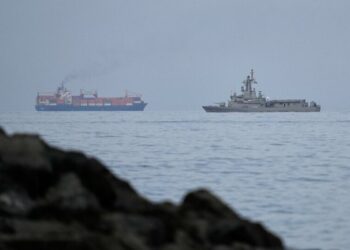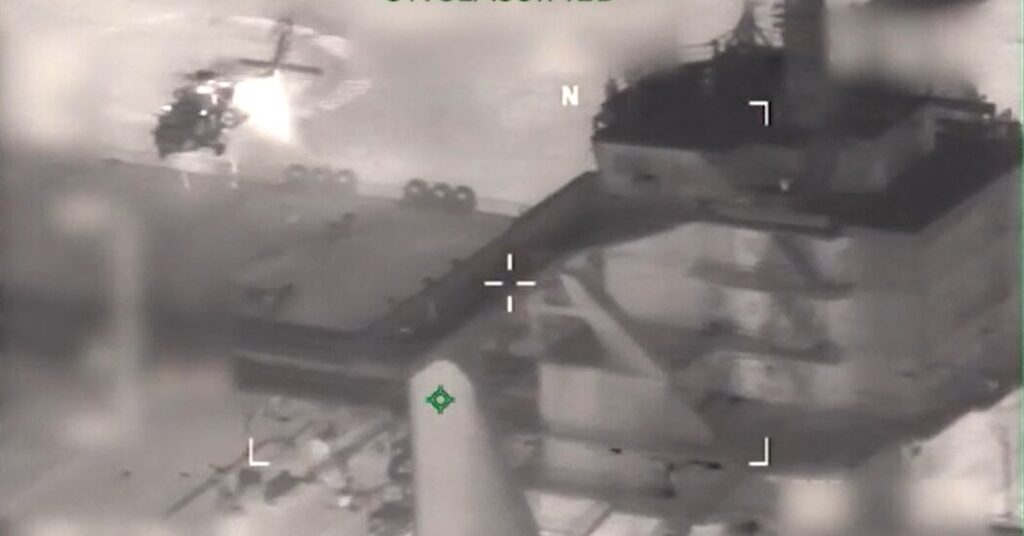
The United States on Wednesday seized two oil tankers, one of which had managed to evade U.S. forces for weeks, and the other of which was carrying up to two million barrels of Venezuelan crude, according to companies that track global oil shipments.
According to those companies, Kpler and TankerTrackers.com, both tankers are part of a so-called “ghost fleet” — vessels that surreptitiously transport oil for Russia, Iran or Venezuela in violation of sanctions imposed by the United States and other countries.
Alternatively known as a “dark fleet” or “shadow fleet,” ghost fleet ships employ a variety of deception tactics to get around shipping restrictions and blockades like the one the United States has imposed on oil tankers traveling to and from Venezuela. Here’s what to know about the ships.
How do ghost fleet ships evade detection?
Ghost fleet ships are often aging, dilapidated vessels with opaque ownership structures designed to muddy paper trails that could indicate the origins of the oil they’re carrying. The ships often obscure their identities at sea by broadcasting and painting fake vessel names on their hulls, as well as by flying false flags. They often change their names and their flags regularly.
Ghost fleet ships also hide their routes and locations, either by turning off their location transponders and going dark, or by falsifying, or spoofing, their locations to make it appear they are elsewhere.
The oil on ghost fleet ships often changes hands at sea, complicating efforts to track it. The ships may be denied entry to some ports because they lack traditional shipping insurance, so they sometimes transfer their oil to other vessels.
How many ghost fleet ships are there?
It’s hard to get a precise answer, because ghost fleets are loose-knit groups of ships whose operators intentionally make difficult to identify. Shipping and energy experts estimate that they constitute up to 20 percent of oil tankers.
Experts broadly agree that the number of ghost fleet ships has risen significantly since the United States, the European Union and others put sanctions on Russia, one of the world’s largest oil producers, after it invaded Ukraine in 2022.
S&P Global estimated that the fleet grew about 45 percent between May 2024 and May 2025, a rise that it said could be explained in part by new sanction efforts undertaken by the U.S. Treasury in 2024.
What were the two ships seized by the United States accused of?
One of the tankers seized by the United States on Wednesday, the Marinera, had been previously known as the Bella 1. A federal magistrate judge issued a warrant to seize the ship based on its history of transporting Iranian oil, which U.S. officials said had been sold to finance terrorism. After being stopped in the Caribbean on its way to pick up oil in Venezuela, the ship eluded the U.S. Coast Guard for weeks, at times going dark, changing its name, and flying the Russian flag in a last-ditch effort to avoid seizure.
The second tanker seized on Wednesday, the M Sophia, was a “stateless, sanctioned dark fleet motor tanker” that was conducting “illicit activities” when it was apprehended in the Caribbean, the U.S. military said. The ship was carrying about 1.8 to 2 million barrels of Venezuelan oil, according to Kpler and TankerTrackers.com. The M Sophia had previously spoofed its location signals to conceal its movements, making it appear as though it were off the coast of West Africa instead of near Venezuela. The tanker has carried Venezuelan oil for years, often sailing under the name of a decommissioned vessel, according to TankerTrackers.com. It has also carried Russian and Iranian oil to China, Kpler said.
Anushka Patil is a Times reporter covering breaking and developing news around the world.
The post What Are ‘Ghost Fleet’ Ships? appeared first on New York Times.