Doug LaMalfa, a Republican congressman from Northern California, died on Tuesday in Chico, Calif., his office said. He was 65.
The Butte County Sheriff’s Office said that it answered a 911 call from Mr. LaMalfa’s home in Richvale, Calif., on Monday evening. He was taken into surgery at a hospital in Chico, Calif., and died during the procedure, the sheriff’s office said, adding that there would be an investigation into the cause of death.
Mr. LaMalfa’s death diminished the Republicans’ narrow majority in the House, to 218-213, with four vacancies.
First elected to Congress in 2012, Mr. LaMalfa represented a solidly Republican district in northeastern California and was a reliably conservative vote. He was most recently re-elected in 2024, winning 65 percent of the vote.
President Trump on Tuesday called Mr. LaMalfa a “great, great, great member” of Congress who was passionate about water issues. “‘Release the water,’ he’d scream out,” Mr. Trump recalled.
Mr. LaMalfa, a rice farmer, portrayed himself as a voice for rural residents of the region. A new congressional map that cut off part of Mr. LaMalfa’s district and added a region with more liberal voters had been expected to seriously threaten Mr. LaMalfa’s hold on the seat in the 2026 election.
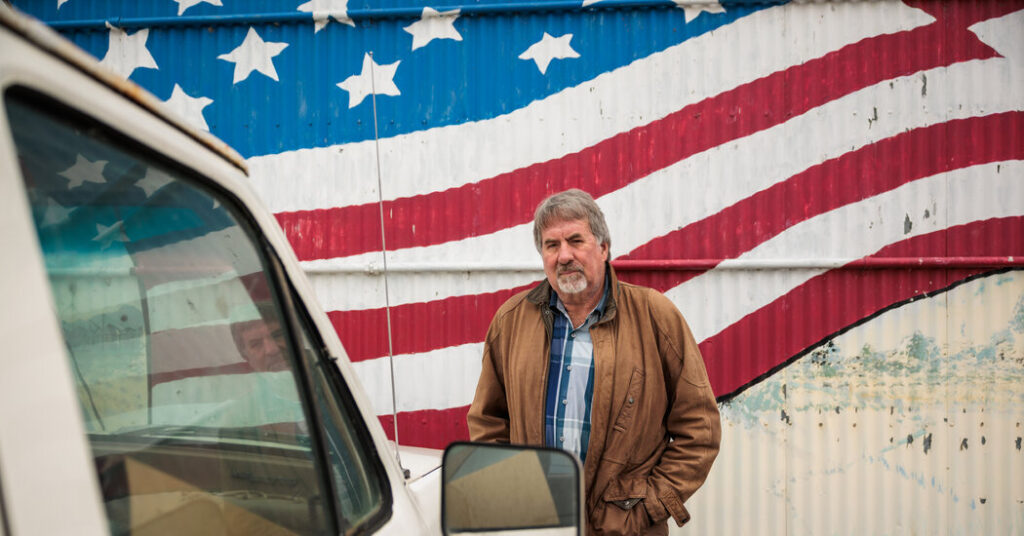
Mr. LaMalfa’s family had been growing rice in the Sacramento Valley region since his grandfather purchased a plot of land in 1931, he told The New York Times in an interview last month. Residents of the rural area said they viewed the congressman, who regularly donned a cowboy hat, tinkered with old cars and occasionally ate at a local cafe, as a defender of their small-town, agrarian values.
In early December, Mr. LaMalfa gave a Times reporter and photographer a tour of his 1,900-acre farm and discussed Proposition 50, the aggressive gerrymander that California voters approved in November designed to turn five Republican House seats Democratic this year. He drove past flooded rice fields in a 1974 Ford F-250 pickup truck, pointed out a nearby reservoir, and climbed the stairs leading to steel dryers holding that year’s product to demonstrate the process of harvesting and storing rice.
Mr. LaMalfa framed California’s rural-urban divide as a cultural clash, arguing that the state’s laborers and farmers were underappreciated by city dwellers.
“We’re just trying to produce stuff that people need, that people in the Bay Area want, people in L.A. want,” he said. “There’s not a whole lot that they make down there that I need.”
Mr. LaMalfa also vociferously opposed the redistricting ballot measure, criticizing California Democrats and Gov. Gavin Newsom, who championed it. “I’m furious, because I’ve had my people kidnapped from me,” he said.
“Their voice is being silenced on how they feel about the issues here, because Newsom and the three-to-one ratio of Democrats wanted to see if they could steal five seats,” he said. Democrats characterized the redistricting as a response to earlier moves to create more Republican seats in Texas.
Douglas Lee LaMalfa was born July 2, 1960, in Oroville, Calif. He graduated from California Polytechnic State University, San Luis Obispo, with a degree in agriculture and business.
His survivors include his wife, Jill; four children and one grandchild.
Before he was elected to Congress, Mr. LaMalfa served several years in the California State Legislature, where he built a reputation as an affable colleague. Even though his conservative positions, including on gun laws and L.G.B.T.Q. rights, put him at odds with Democrats who hold the majority in Sacramento, the capital, Mr. LaMalfa was known for his comity.
“He was very gentle in his manner and in the way he treated people,” said Darrell Steinberg, who was the Democratic leader of the State Senate when Mr. LaMalfa was a state senator. “He was not bombastic.”
Laurel Rosenhall contributed reporting.
Victor Mather, who has been a reporter and editor at The Times for 25 years, covers sports and breaking news.
The post Doug LaMalfa, Who Championed Rural California in Congress, Dies at 65 appeared first on New York Times.