A message to the world
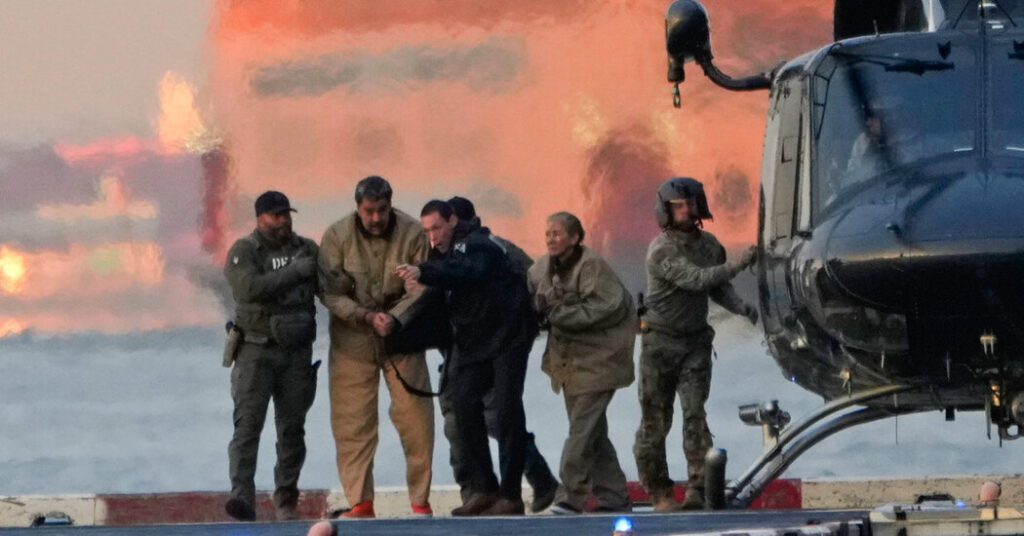
The world changed overnight for Venezuelans. An authoritarian leader despised by many was forcibly removed by the U.S. military to be put on trial in New York.
But the rest of the world is also waking up to a new reality, most obviously in Latin America and the Western Hemisphere, where the U.S. has sent a clear signal that it intends to impose its will. And it may — though this part is still uncertain — change the way other big powers behave in their own backyards.
We still don’t know how this is going to ultimately play out. But President Trump’s audacious nighttime raid in Venezuela sent a message: If you’re strong enough, you can attack a country, topple its leader and perhaps get access to the resources you’re after.
The leaders of China and Russia, who have long shared a vision that divides the world into spheres of influence dominated by major powers, will be drawing their own conclusions.
A virtual occupation
Trump attacked Venezuela and captured its leader, Nicolás Maduro, despite campaigning against interventionism abroad. Many in his base are opposed to Iraq-like foreign wars.
The way Trump is trying to square that circle is by avoiding a direct and potentially messy occupation. Instead, he’s going for what my colleague David Sanger called a “virtual occupation:” trying to install a pliant government while gaining access to oil fields — with 15,000 American troops parked nearby.
So far that equation may be working. As of Monday, Venezuela did not seem to be deteriorating into chaos. Maduro’s vice president, Delcy Rodríguez, has been sworn in as interim president. She initially protested Maduro’s seizure, but quickly became more conciliatory.
Her government seems to have control of the country, and doesn’t, so far at least, face major unrest. I spoke to my colleague Anatoly Kurmanaev, who is on the ground in Caracas. He described the mood as one of shock but also “cautious optimism.” It seems to be driven in part by the sense that anyone would be better than Maduro, but Rodríguez also seems to have a few things going for her. On her watch, the economy grew despite heavy sanctions and problems of corruption. People have noticed. And it has also won her the support of the business community, Anatoly told me. (You can watch his video from Caracas above.)
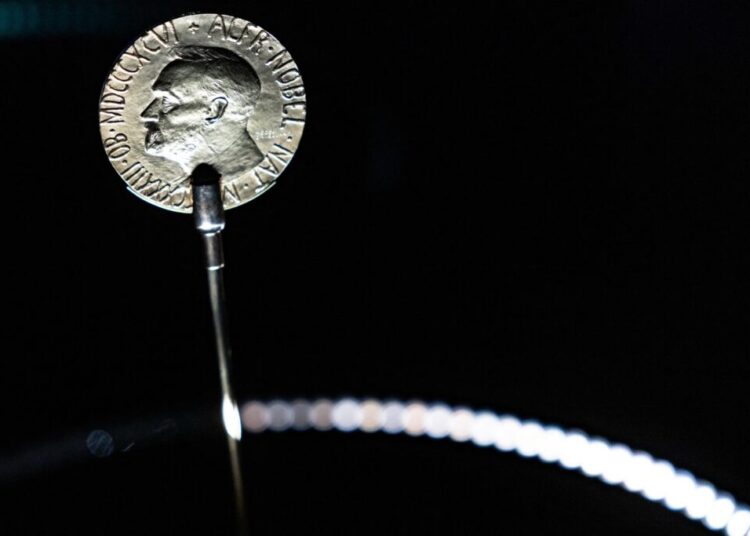
Venezuela’s opposition, led by Nobel laureate María Corina Machado, whose candidate was the legitimate winner of the 2024 presidential election, has been sidelined by Trump. Presumably because it could make the task of the U.S. easier: The administration has skipped the messiness of actual regime change, jettisoned any pretext of promoting democracy, and still seems poised to gain access to the oil it wanted.
A Venezuelan friend, who lives in the U.S., messaged me about an exchange with his mother in Venezuela. She told him dryly: “We now have the same president.”
Global ripples
So what does this mean for the rest of the world?
The ripple effects are being felt most starkly in the Western Hemisphere, which Trump has declared to be America’s rightful sphere of influence. Since toppling Maduro, Trump has already threatened Colombia with a similar fate, declared that Cuba was not even worth invading since “it’s ready to fall,” and reiterated that Greenland needed to come under American control. (You can read David’s analysis here.)
The moment shook Latin America perhaps more than any single event this century, my colleague Jack Nicas wrote. Leaders on the left and right viewed events in Venezuela through different lenses: Those on the left said it confirmed their view of U.S. imperialism and aggression; those on the right saw an operation that had liberated Venezuela from a leftist dictator.
One thing everyone can agree on, Jack wrote, “is that the intervention showed that the U.S. is once again the center of gravity in Latin America, for better or worse.” But thoughts around the globe quickly turned to what the U.S. capture of Maduro signaled to Russia and China.
China and Russia are watching
Trump has justified his intervention in Venezuela with the so-called Trump Corollary, which is laid out in his recently published National Security Strategy. (I wrote about it last year.) It asserts the right to “restore American pre-eminence in the Western Hemisphere.”
He has not said whether, if America claims the Western Hemisphere, China is free to do the same in Asia and Russia in Europe. But as David put it, “the precedent he has set, which is that larger powers move in on smaller powers and then command their resources, is something you could easily imagine Xi Jinping or Vladimir Putin exploiting in Taiwan or Ukraine.”
It’s early days. Things in Venezuela could get much messier. Resistance to the U.S. runs deep in the revolutionary movement founded by Hugo Chávez. Analysts told my colleagues that Rodríguez will have to appease powerful figures like the interior minister and the defense minister, who control the armed forces, the police, paramilitary cells and most of the intelligence services.
The Taiwan and Ukraine analogies have limitations. Russia has already shown its willingness to act both illegally and brazenly when it comes to Ukraine. And Taiwan is a vibrant democracy, not a corrupt authoritarian government — plus it makes the advanced microchips the U.S. relies on.
Still, Trump has blown up the global order that the U.S. helped create after World War II, in which international law at least theoretically sought to restrain raw power.
We live in a different world now.
For more:
-
During a court appearance in New York City, Maduro insisted that he was still president and had been “kidnapped.” He and his wife, Cilia Flores, pleaded not guilty to charges, including drug trafficking and other crimes.
-
At least 16 oil tankers targeted by U.S. sanctions appear to have made an attempt to evade a major American naval blockade over the last two days.
-
Oil stocks surged. Chevron, the only major American oil company that has continued to operate in Venezuela, rose 5.5 percent.
OTHER NEWS
-
After more than a week of protests, Iran’s government announced plans to provide every citizen with a monthly payment, worth about $7.
-
An arson attack caused a major power outage in Berlin. A far-left group took responsibility.
-
Ukraine named Chrystia Freeland, a former deputy prime minister of Canada, as an economic adviser.
-
Ten people were convicted of cyberbullying France’s first lady.
-
Israel criticized Mayor Zohran Mamdani of New York after he rescinded executive orders on antisemitism and boycotts.
-
The actor Ahn Sung Ki, a towering figure in South Korean film, died at 74.
SPORTS
Football: Manchester United fired their manager, Ruben Amorim.
Tennis: Novak Djokovic is stepping away from the Professional Tennis Players Association, which he co-founded.
HOMINID OF THE YEAR
Neanderthals
The archaic humans, who flourished across Eurasia for hundreds of thousands of years, had their moment in the scientific spotlight in 2025. High-profile studies explored many aspects of their existence, from their love lives (there’s new evidence they probably kissed Homo sapiens) to their art supplies (a 42,000-year-old yellow crayon).
MORNING READ
Pete Wells, our former restaurant critic, says the job turned him into “a mess.” His medical tests pointed to prediabetes, fatty liver disease, metabolic syndrome, sleep apnea, acid reflux and obesity. So he decided to teach himself how to eat again.
Now, almost two years later, with no medication except a daily blood-pressure pill, he’s recovered from an out-of-control diet. Each Monday, for the next four weeks, he and experts will suggest ways to reset your own food habits. “I’m no expert on nutrition,” he writes. “On the subject of overeating, though, my credentials are hard to beat.” Read more.
AROUND THE WORLD
A Russian town, minus the Russians
The town of Enhe in northern China has lots of birch trees, thick snow, Siberian-style log cabins, Cyrillic signs and vodka. What it does not have is actual Russians.
The Chinese government set up Enhe to protect the traditions and identity of China’s tiny Russian minority. But few residents speak anything other than Chinese.
Russians first started arriving there in large numbers in the 19th century. Under Xi Jinping’s push for ethnic unity, little remains beyond nostalgia and props for tourists. Read more.
THE WELL CHALLENGE
Welcome to Day 1 of our five-day brain health challenge! There are so many fascinating ways your daily behaviors affect your brain. Good sleep, for example, is associated with better memory and other cognitive abilities.
What other behaviors play a big role in brain health? For today’s challenge, test your knowledge with this pop quiz.
RECOMMENDATIONS
Watch: In “The Testament of Ann Lee,” Amanda Seyfried’s “body and voice seem ignited from within,” our dance critic writes.
Move: Here are five workouts for complete beginners.
Read: Start one of these books before they hit screens in 2026.
RECIPE
Döner, a staple street food that is beloved around the world, gets a home-friendly remix in this recipe. All you need are scrolls of parchment paper and a hot oven to achieve the hearty browning and thin slices you’d get from carving meat from a vertical spit.
WHERE IS THIS?
Where is this downtown skyline?
TIME TO PLAY
Here are today’s Spelling Bee, Mini Crossword, Wordle and Sudoku. Find all our games here.
You’re done for today. See you tomorrow! — Katrin
We welcome your feedback. Send us your suggestions at [email protected].
Katrin Bennhold is the host of The World, the flagship global newsletter of The New York Times.
The post Global Ripples From Venezuela appeared first on New York Times.