An agency under the U.S. Department of Health and Human Services endorsed an accessible alternative to the Pap smear on Monday, releasing new guidelines that say self-collection of samples is an acceptable way to test for the virus that causes cervical cancer. Most insurance providers will have to cover this method of testing starting Jan. 1, 2027.
The endorsement follows similar guidance made last month by the American Cancer Society. The U.S. Preventive Services Task Force, an advisory body that also determines what preventive services insurance companies must cover, endorsed self-collection in draft recommendations in 2024.
The updated guidelines reflect years of data and recent regulatory approvals recommending self-collection of vaginal samples that can be tested for human papillomavirus, the infection that causes almost all cases of cervical cancer.
More than a decade’s worth of literature has proved “the effectiveness of cervical self-sampling as a strategy for disease prevention and early detection,” said Erin Kobetz, the associate director for community outreach and engagement at the Sylvester Comprehensive Cancer Center in Florida.
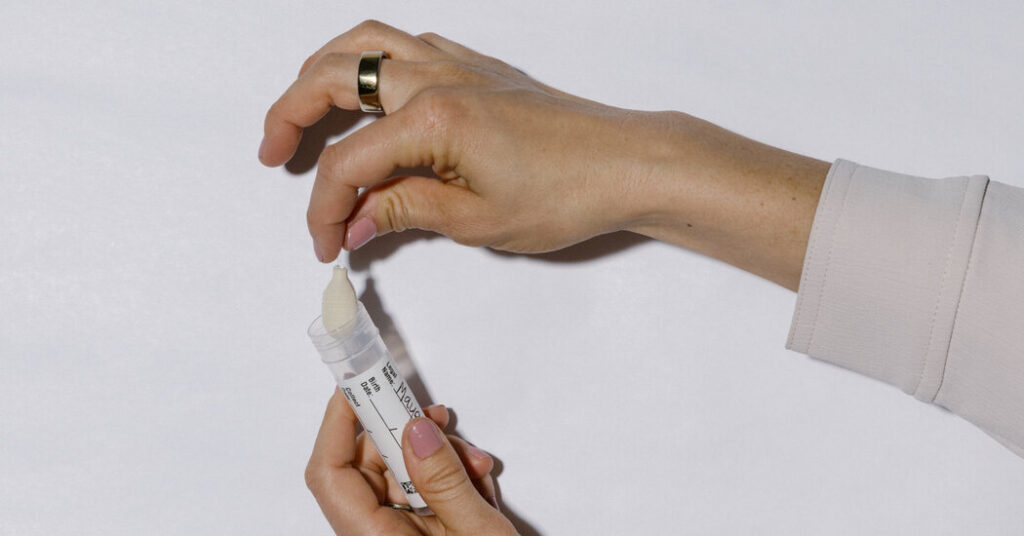
Most screening in the United States currently takes place in a clinical setting, with a provider who uses a speculum to collect cervical cells and test them for HPV, cell abnormalities or both. In self-collection a woman can use a swab or brush to collect a sample in private, either at a doctor’s office or at home.
Increasing screening through self-collection, in addition to increasing HPV vaccination, could help accomplish a major public health goal: ending cervical cancer in the United States.
Cervical cancer was once a leading cause of death from cancer among American women, but its incidence and mortality have dropped by more than half since the 1970s. That’s largely because of widespread screening through routine Pap smears and HPV testing and, more recently, prevention through HPV vaccination, said Robert Smith, the senior vice president of early cancer detection science at the American Cancer Society and senior author of the group’s guidelines.
But in the last decade cervical cancer incidence rates have stabilized; among women 30 to 44, they increased between 2013 and 2021.
The new guidelines were backed by the Health Resources and Services Administration, an agency under H.H.S. that works to improve access to health care for people who are geographically isolated or medically vulnerable.
They recommend that women ages 21 to 29 who are at average risk of cervical cancer be screened with a Pap smear every three years. Starting at age 30, women at average risk should be screened through HPV testing of self-collected or physician-collected samples every five years. Those who get a positive result should follow up with a clinician; the guidelines require insurance companies to fully cover additional testing that may be needed “to complete the screening process for malignancies.” (About 10 percent of women at average risk who are screened will test positive for HPV.)
Nationally, estimates of cervical cancer screening rates are fairly high — between 75 and 80 percent — but screening rates have declined slightly since 2005, and are lower among some groups, said Jasmin Tiro, the associate director of cancer prevention and population science at the University of Chicago Medicine Comprehensive Cancer Center.
In 2021, for example, only 55 percent of recent immigrants and 58 percent of uninsured women were current on their cervical cancer screening, according to the American Cancer Society. Barriers can include a history of sexual trauma or trauma in the doctor-patient setting, pain or discomfort with a pelvic exam, stigma related to cultural beliefs, and logistical difficulties, Dr. Tiro said.
Self-collection can address some of these barriers. People who live in a rural area, for example, can take advantage of home-based tests that can be returned to a lab by mail. People who face cultural barriers might find it more comfortable and private to collect a sample themselves, Dr. Tiro said.
And studies have shown that self-collection can improve screening rates. In a randomized trial across the Kaiser Permanente Washington health system, Dr. Tiro and other researchers found that mailed kits for self-collection increased screening among those who were due or overdue for their next screening by more than 14 percent, compared with people who only received educational materials and reminders for in-clinic screenings.
In Europe, self-collection has been more widely adopted. One study suggested that the percent of eligible people tested for HPV increased from 75 to 85 percent in one year after kits were mailed to eligible women in Stockholm during the Covid-19 pandemic.
According to Dr. Kobetz’s research, women have consistently reported that they found self-collection easy, preferred the method to provider-based screening, would do it again and would recommend it to family and friends.
The guidelines endorsed by H.H.S. did not go into detail about when people should discontinue screening, but the American Cancer Society recommended that women only do so after they have had two negative HPV tests, at 60 and 65, or three consecutive negative Pap smears every three years, with the final one at 65.
Screening rates often drop off as women age out of their reproductive years and stop regularly seeing an obstetrician or gynecologist, Dr. Smith said. But approximately 20 percent of cervical cancers are diagnosed in women 65 and older, and these women tend to have worse outcomes.
Self-collection provides an opportunity for more women to be more current with their screenings, at all stages of life.
“Cervical cancer is in fact a disease that we can eliminate in our lifetimes,” Dr. Kobetz said.
Nina Agrawal is a Times health reporter.
The post Health Dept. Endorses Pap Smear Alternative appeared first on New York Times.