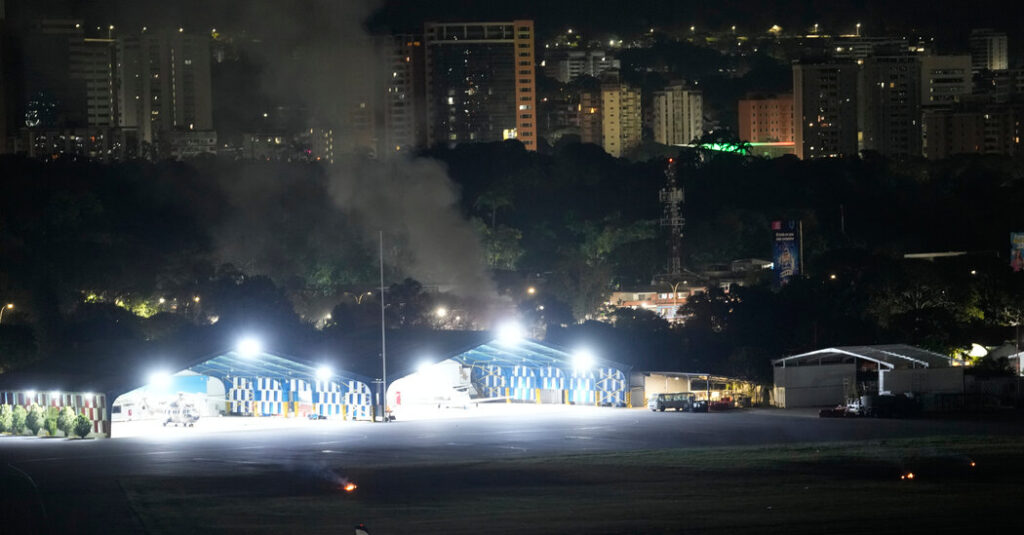
The raid in Venezuela Saturday morning in which President Trump said the United States had captured Nicolás Maduro, the country’s leader, capped off months of threats and accusations.
The Trump administration accused Mr. Maduro of drug smuggling, and the State Department has labeled him the head of a “narco-terrorist” state.
U.S. officials have said Mr. Maduro, a self-described socialist who has led Venezuela since 2013, is an illegitimate leader and have accused him of controlling criminal groups tied to drug trafficking — charges he denies.
The pressure campaign against Mr. Maduro has been building for years, through a series of indictments, sanctions and, recently, military actions.
In 2020, during the first Trump administration, Mr. Maduro was indicted in the United States on corruption, drug trafficking and other charges. Earlier this year, the United States raised the reward for information leading to Mr. Maduro’s capture to $50 million.
In recent months, top aides to Mr. Trump intensified a push to remove Mr. Maduro from power, as the Trump administration tried to recast the domestic war on drugs as an international terrorist threat.
Since late August, the Pentagon has amassed a dozen ships in the Caribbean Sea. With more than 15,000 military personnel in the region, the U.S. buildup is the largest in the region since the Cuban Missile Crisis in 1962.
The commando raid on Saturday, the riskiest known U.S. military operation of its kind since members of the Navy’s SEAL Team 6 killed Osama bin Laden in a safe house in Pakistan in 2011, comes amid a legally dubious military campaign in the waters around Latin America in an effort to raise pressure on Mr. Maduro.
That campaign has been marked by 35 known U.S. strikes that have killed at least 115 people on boats in the Caribbean and the eastern Pacific. Many legal experts say the strikes are illegal and that the military is killing civilians.
While some, possibly most, of the suspected drug runners are believed to be Venezuelan citizens, the targeted boats also carried some people from Colombia, Ecuador and Trinidad.
Unlike traditional counternarcotics operations that have targeted senior cartel leaders, the boat strikes were aimed at low-level operatives in illicit drug trafficking. In seizing Mr. Maduro, the administration will likely contend that it has captured the mastermind behind the alleged drug trafficking.
In reality, Venezuela is not a major source of drugs in the United States. The country does not produce fentanyl and the cocaine that passes through Venezuela is grown and produced in Colombia, and then moves on to Europe.
Mr. Trump has also repeatedly threatened to carry out land strikes in Venezuela. Last week, the C.I.A. conducted a drone strike on a port facility in Venezuela which the U.S. believed was housing narcotics from a Venezuelan gang, according to people briefed on the operation.
The raid to capture Mr. Maduro also constituted Mr. Trump’s latest unilateral exercise of power. He had no explicit authorization from Congress, where a bipartisan group in the Senate has been promoting legislation to try to rein in his authority to engage in hostilities inside Venezuela.
On Saturday, Senator Mike Lee of Utah said on social media that Secretary of State Marco Rubio told him in a phone call that Nicolás Maduro was “arrested by U.S. personnel to stand trial on criminal charges in the United States.”
In a social media post after Mr. Trump announced Maduro’s capture, Mr. Rubio reposted a message he wrote in July of last year, in what appeared to be an attempt to push back against concerns, including from Republican lawmakers, about the legality of the strikes and capture.
“Maduro is NOT the President of Venezuela and his regime is NOT the legitimate government,” Rubio wrote.
Mr. Lee said Mr. Rubio did not anticipate further action in Venezuela now that Mr. Maduro was in custody.
The Trump administration’s approach to Venezuela since earlier this year has been driven by three separate policy goals: Crippling Mr. Maduro, using military force against drug cartels and securing access to the country’s vast oil reserves for U.S. companies.
The goal to oust Mr. Maduro as the leader of Venezuela was an initiative that Mr. Rubio has championed.
On July 25, Mr. Trump signed a secret order for military action against the cartels, calling for maritime strikes. Administration officials referred to the boat attacks as “Phase One,” with SEAL Team 6 taking the lead.
Policymakers at the time also discussed a vague “Phase Two,” with Army Delta Force units possibly carrying out land operations.
In October, President Trump called off efforts to reach a diplomatic agreement with Mr. Maduro, after the Venezuelan leader refused to accede to U.S. demands to give up power voluntarily and as officials continued to insist that they had no part in drug trafficking.
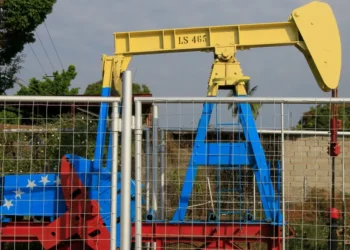
As the strikes against boats continued throughout the fall, Mr. Trump, Mr. Rubio and Stephen Miller, a top White House aide overseeing immigration policy, moved on to the next stage of the campaign against Mr. Maduro: seizing oil tankers to deprive Venezuela of revenue.
They insisted that Mr. Maduro must return oil and other assets “stolen” from the United States before they lift what Mr. Trump has referred to as a blockade.
In its first weeks, the tactic shook Venezuela’s economy by paralyzing its oil industry. Critics called it gunboat diplomacy or, as Mr. Maduro put it, “a warmongering and colonialist pretense.”
Reporting was contributed by Eric Schmitt, Tyler Pager and Carol Rosenberg.
Jonathan Wolfe is a Times reporter based in London, covering breaking news.
The post How Tensions Escalated Between the U.S. and Venezuela appeared first on New York Times.