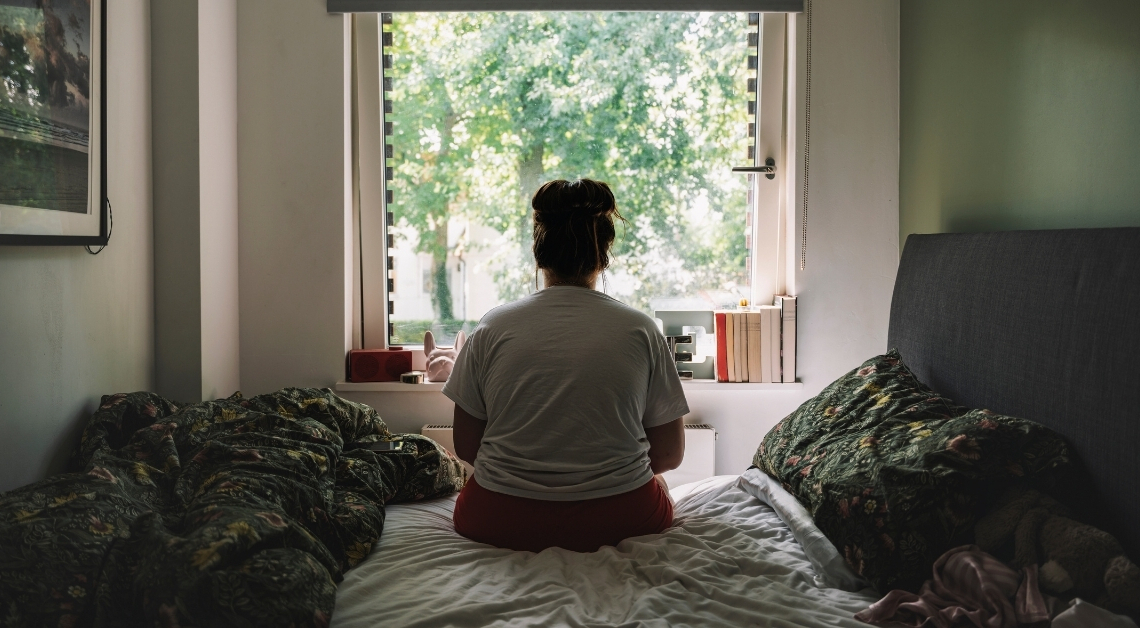
Most people don’t describe their problem as being indoors too much. They say they’re exhausted. Anxious. Wired at night and foggy during the day. Sleep doesn’t fix it. Rest doesn’t feel possible. According to Dr. John La Puma, that cluster of symptoms has a common root we’ve gotten very good at ignoring.
He calls it digital obesity. Not a productivity problem or a motivation failure, but a biological state.
“What’s getting overfed is the brain’s alerting system,” La Puma explained to VICE in an email. Screens, artificial light, constant novelty, and cognitive demand keep the nervous system switched on for most of the day. The inputs that normally allow it to recover, daylight, darkness at night, distance vision, and time outside, barely show up anymore.
Doomscrolling is the most concentrated version of this pattern. You stay alert without resolution. Clinically, La Puma sees it show up as lower heart rate variability, elevated evening cortisol, delayed melatonin, shallow sleep, impaired glucose control, and weight gain. People feel tired but wired. Anxious but unfocused. Rest stops restoring them.
The often-cited statistic backs it up. Americans spend about 87 percent of their time indoors and another six percent in vehicles, based on large time-use studies summarized by the U.S. Environmental Protection Agency. Office workers, remote workers, and students usually exceed that. La Puma says the exact number matters less than the mismatch. Human biology evolved around daily daylight, real darkness at night, movement, and time outdoors. Modern life removes most of those inputs.
His prescription is intentionally modest. Seven percent of your time outdoors. About 100 minutes a day, or two to five intentional hours per week. Not a lifestyle overhaul. A minimum effective dose.
“The benefits rise quickly at low doses and then level off,” he says. Sleep timing improves. Mood steadies. Focus sharpens. Metabolic markers move in the right direction. You don’t need to live outside. You need short, regular, purposeful exposure that actually delivers daylight, movement, and visual relief.
A Doctor Breaks Down What Spending 93% of Your Time Indoors Does to the Body
Light timing is the most important bit, especially in the morning. Being able to look farther than a screen gives the brain a break from constant close-up focus. Social time outdoors helps, and open sky or water can help settle attention. Using your phone outside still counts, but doomscrolling keeps the nervous system switched on, so you’re not getting the full benefit.
La Puma pushes back on the idea that this is soft science. The evidence spans sleep research, metabolic health, mental health, and cardiovascular disease. Small interventions like targeted daylight exposure can affect sleep within days. Internationally, nature-based prescriptions are standard care in places like Japan, South Korea, the UK, and much of Europe. In the U.S., the resistance isn’t scientific. It’s economic. You can’t patent sunlight.
He’s realistic about access and risk. On smoky days, keep outdoor time short. In extreme heat, go early or late. In polluted areas, green and blue spaces are often cleaner than traffic corridors. The advice isn’t to go outside no matter what. It’s to choose targeted outdoor time that fits real conditions.
“The tools are simple,” La Puma says. “The gap is awareness, not willpower.”
In a culture built around staying inside, that may be the hardest part.
The post Americans Spend 93% of Their Time Indoors. A Doctor Explained What That’s Doing to Us. appeared first on VICE.