Peter Harrell is a visiting scholar at Georgetown’s Institute for International Economic Law. He served on the National Security Council from 2021 to 2022 and at the State Department from 2009 to 2014.
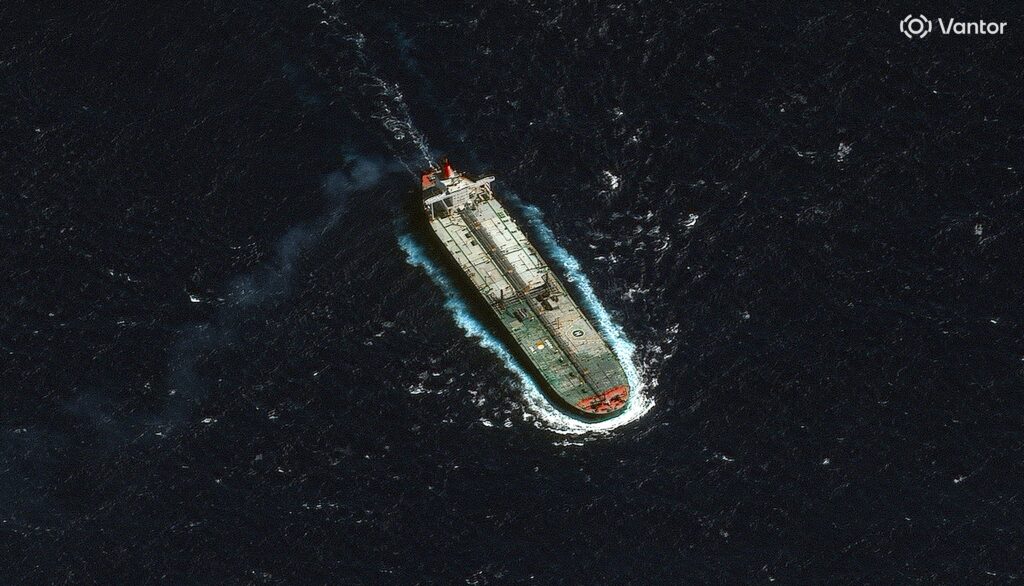
On Dec. 20, the United States seized a second Venezuelan oil tanker as part of President Donald Trump’s campaign to oust Venezuelan dictator Nicolás Maduro. But Trump’s seizure of the ships — and his promise to seize others — does not simply represent increased pressure on the Maduro regime. It is also a tacit admission that America’s longtime economic weapons of war — financial sanctions — may be beginning to lose their bite.
Presidents Barack Obama and Trump in his first term both used an expanding array of sanctions to reduce the oil exports of American adversaries. Obama used sanctions to drive Iranian oil exports down by 1.2 million barrels per day as part of his campaign to force Iran to agree to a nuclear deal in 2015. After Trump withdrew from the deal in 2017 and reimposed sanctions, the results were even more impressive, driving Iranian oil exports to just 450,000 barrels per day.
But in recent years, sanctions appear to have become less successful in removing oil volumes from global markets. Trump in February announced he would resume “maximum pressure” on Iran, but Iran has recently been exporting approximately 2 million barrels per day of crude — essentially what it exported in 2016 after Obama had lifted most sanctions. Venezuelan oil exports had been rising since the summer before Trump started seizing boats. Russian crude oil exports saw only a very modest dip in volumes after Trump imposed sanctions on two major Russian energy companies in October — and that dip may have been driven by Ukrainian military attacks on Russian energy infrastructure as much as sanctions.
The decline in sanctions’ efficacy has been building for several years.
Companies in Europe, the Middle East and Asia — such as banks, shippers, oil refiners, traders and insurers — have historically faced a choice when dealing with U.S. sanctions regimes. They could do business with a targeted country such as Iran and risk being sanctioned, effectively cutting them off from U.S. suppliers, banks, customers and all the wealth of U.S. markets. Or they could refrain from doing business with the world’s rogue states and retain their access to the U.S. economy. In the 2000s and 2010s, most companies chose the U.S. The risk of being cut off was just too great.
Today, however, a growing business ecosystem is taking the other side of that choice: They are willing to risk getting cut off from the U.S. because there is enough money to be made elsewhere. The U.S. and E.U. have now sanctioned more than 1,000 ships of all kinds. That sounds impressive. But it also means there are now 1,000 ships that have decided that there is enough money to be made spurning U.S. threats.
A number of small but important banks have made this choice as well. The U.S. sanctioned China’s Kunlun Bank in 2012 for processing payments with Iran. Kunlun, however, still exists and remains profitable today — and continues facilitating payments to rogue nations. Cryptocurrency is another lubricant of this ecosystem: Venezuela is reportedly being paid in crypto for its oil.
Sitting at the core of this business infrastructure is China, the ultimate recipient of 90 percent of Iran’s oil exports, 80 percent of Venezuela’s and half of Russia’s. The U.S. has tried to cut off these imports by sanctioning the companies involved, such as sanctions on a so-called “teapot” refiner in China that bought Iranian oil. But these companies do not really care if they are sanctioned. They can’t borrow in dollars or sell their products to the West, but the profits from importing heavily discounted Iranian, Venezuelan and Russian oil and selling the refined products into China’s vast domestic market outweigh those costs.
To be sure, large multinational companies continue to fear U.S. sanctions, and the U.S. continues to maintain significant economic leverage over China as a whole. The U.S. could start sanctioning the big Chinese banks or state-owned enterprises which continue to need access to the U.S. dollar and the U.S. market. But in the U.S.-China relationship, leverage is a two-way street. China could retaliate against any sanctions on its large companies by blowing up the recent trade war détente, jeopardizing U.S. economic interests.
From the perspective of the U.S., one lesson of the declining economic bite of U.S. sanctions is that diplomacy will become more important. If sanctions on individual ships and small refiners won’t prevent Iran and Venezuela from selling their crude, and if the U.S. is unwilling to sanction economically significant Chinese targets, the U.S. will have to persuade Beijing to stop buying oil from rogue nations. Indeed, China might agree to buy less Iranian and Venezuelan oil as part of trade negotiations with the U.S. and could even give Trump a win by promising to buy more U.S. energy to replace it. But if the U.S. wants to use trade talks to change China’s energy suppliers, Trump’s negotiating team will have to prioritize that issue. And some other issue might get shorter shrift.
A more global lesson is that the world’s economic splintering into geopolitical blocks may well make hard military power more relevant. During the 2010s, both Obama and Trump used sanctions as an alternative to military force — weaponizing global economic interdependence to put pressure on Iran and other targets rather than taking military action against them. What we’re seeing take place off the coast of Venezuela today may end up being much more common in the years ahead.
The post Trump’s seizure of Venezuela’s tankers is a tacit admission appeared first on Washington Post.