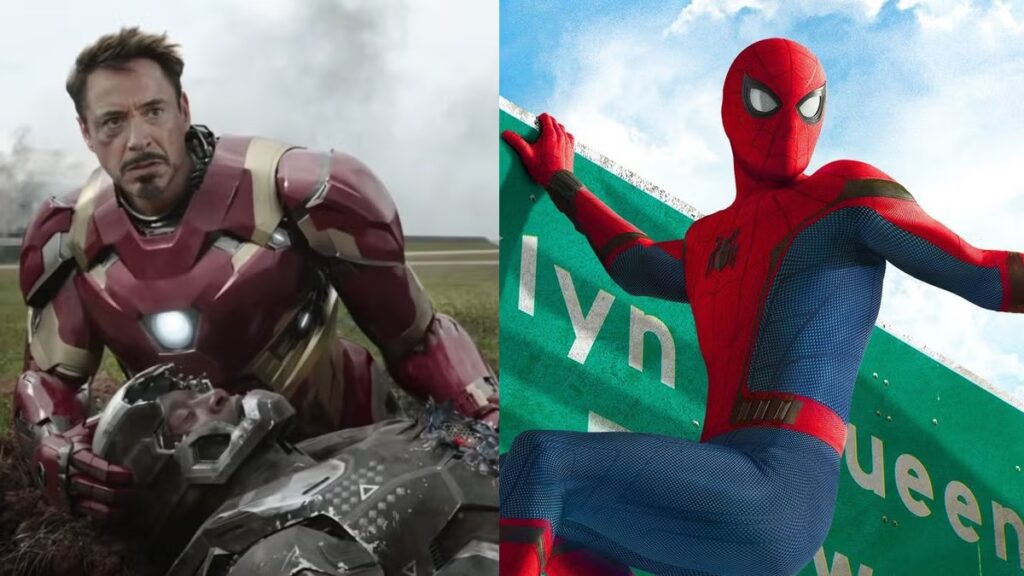

Back in 2019, the Marvel Cinematic Universe achieved the impossible: capping off a 22-film saga of interconnecting stories with a satisfying conclusion that garnered immense critical and commercial success. Many franchises tried to follow the model set by Kevin Feige and a sprawling group of creatives, but none have managed to reach the same heights as the heyday of the MCU.
Not even the MCU itself.
While the Infinity Saga grew into something that seemed culturally bulletproof, the numerous projects of the follow-up Multiverse Saga (barring a handful of critical successes and $1 billion-earners) were met with diminishing returns and critical unevenness — in part, a victim of the MCU’s own titanic expectations.
“I don’t think the success of Phase 3 is replicable,” said Dave Gonzales, co-author of the book “MCU: The Reign of Marvel Studios,” of the spate of films that started with “Captain America: Civil War” ($1.1 billion gross) and ended with “Avengers: Endgame” ($2.8 billion) and “Spider-Man: Far From Home” ($1.1 billion).
Now, all eyes are on 2026, with the MCU poised to release two of its biggest projects to date — “Spider-Man: Brand New Day” and “Avengers: Doomsday.” By giving audiences more of the franchise’s biggest characters, actors and directors, Feige and company are in pole position to make a comeback in a big way.
But while the return of “Spider-Man” and “Avengers,” two of the most successful franchises in cinema history, could put the MCU back on track, it could also spell doom if things go awry. Strong critical and commercial reception for the two films could prove to be the reset the MCU has been looking for, allowing it to gain momentum as it enters another new era. Failure, however, could derail plans even further, once again calling into question whether “superhero fatigue” has finally hit Marvel Studios.
“2026 may be the most important year for the MCU other than its inception,” said Paul Degarabedian, senior media analyst at Comscore. “Phase 6 is vitally important if there’s gonna be a Phase 7.”
How do you follow an “Endgame?”
“Avengers: Endgame,” a movie that should be considered an unparalleled success by any metric, made $2.8 billion, becoming the highest-grossing movie of all time for a period (before being overtaken by “Avatar” upon rerelease). Audiences and critics alike met “Endgame” with sweeping acclaim, granting the film a 94% on Rotten Tomatoes (the second-highest in the MCU, based on 552 reviews), a 3.9 on Letterboxd (based on nearly 3 million ratings) and a 78 on Metacritic (based on 78 reviews).
Critically and commercially, “Endgame” was an undeniable hit. “Spider-Man: Far from Home” followed hot on its heels, an Infinity Saga epilogue that made another $1.1 billion.
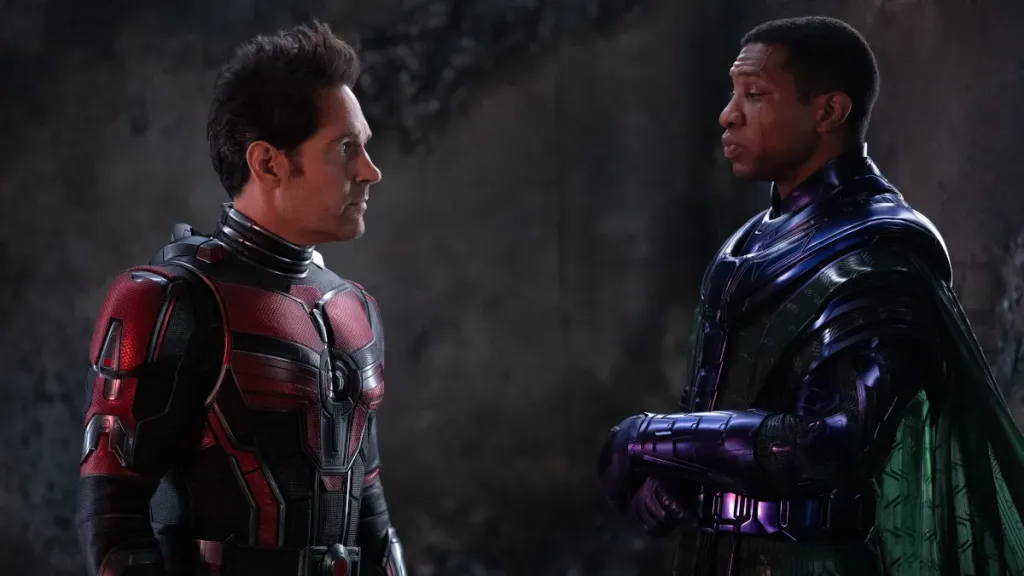
But things took a turn for the worse after the MCU transitioned from the Infinity Saga to the Multiverse Saga, connecting its disparate films through the existence of the multiverse and the looming threat of Kang the Conqueror (Jonathan Majors).
According to data from Comscore, the average worldwide gross of an Infinity Saga film was a staggering $982 million, with an average $135 million domestic opening and an average 55.58% second-weekend drop.
The Multiverse Saga, in comparison, has an average worldwide gross of $706 million, with an average domestic opening of $126 million and an average 63.66% second-weekend drop.
The song remains the same when you look at critical averages. On Rotten Tomatoes, Infinity Saga films carry an average critics’ score of 84.7% compared to the Multiverse Saga’s 72.9%. The fan-driven social media site Letterboxd places Infinity Saga films at an average rating of 3.33/5, while the Multiverse Saga films received an average of 3.07.
So the new phase of the MCU opens lower, drops faster, receives poorer reviews and earns less at the box office overall. By every metric, the glory days have passed.
Of course, a $700 million average is nothing to sneeze at (especially in the current box office climate), speaking to the sky-high expectations established by the Infinity Saga. But the ballooning budgets for these superhero extravaganzas means hitting that $700 million threshold may not earn the studio a profit after marketing costs and profit sharing.
“The budgets for these films set the bar so high for profitability that it’s insane,” Degarabedian said. “You can’t do these on the cheap.”
Small-screen stories, big-screen problems
What contributed to this decline?
On the box office side, it must be noted that the first several films hit theaters right out of the pandemic, with “Black Widow,” “Shang-Chi,” “Eternals” and “Spider-Man: No Way Home” all releasing in 2021. (“No Way Home” still managed to become one of the franchise’s top earners and critical performers with a worldwide gross of $1.92 billion and a Rotten Tomatoes score of 93%).
But the Infinity Saga still had hurdles of its own. Many of the early films, particularly from Phase 1, drag the first slate’s averages down because they were the start of something new. Audiences didn’t care about Iron Man, Captain America and Thor in the late 2000s and early 2010s like they do now, and those characters lacked the benefits of appearing in an established franchise or debuting in other heroes’ films.
An oft-cited component of this decline is the addition of MCU-branded television series on Disney+. While shows like “WandaVision,” “The Falcon and the Winter Soldier,” “Ms. Marvel” and many more started off seeming like a boon, the frequent criticism of fans finding these series to be a new set of “homework” arose. This accelerated the already-present fears of oversaturation and superhero fatigue.
“The post-‘Endgame’ era can best be characterized as I think ultimately damaged by the greater streaming wars that Disney found itself in,” Gonzales said. “I think there was sort of a degradation of trust in the brand and then a dilution of quality through having to output far too much product.”
“I think that’s where we started seeing some pushback from the fans,” Degarabedian said.
Feige himself told reporters at July press conference attended by TheWrap that he understood this concern, pointing to the massive amount of quantity over quality as Disney mandated content for Disney+.
“We made maybe 51 hours of stories between 2007 and 2019. So 12 or 13 years for 51 hours of stories,” he told the reporters. “In the six years since, we’ve had well over 100 hours of stories in half the time. That’s too much.”

In this sense, the MCU started to mirror Marvel Comics in an undesirable way. Many comic book readers dread the multi-annual concept of a comic book event, where characters’ various books are interrupted by interconnected storylines. Monthly readers then must ask themselves: will they buy all of the titles, buy none of them or take a break and pick the series back up later?
Increasingly, it seems like MCU audiences are willing to take that break. No longer does every Marvel film feel like a true “event,” one that can garner an automatic $600 million. In 2025, Marvel gave Sam Wilson (Anthony Mackie) his feature debut as Captain America and kickstarted two superhero teams with the New Avengers in “Thunderbolts*” and the Fantastic Four in “The Fantastic Four: First Steps.”
“Those were middle of the road Marvel films,” Exhibitor Relations analyst Jeff Bock told TheWrap. “That seems to be the going rate for Marvel endeavors these days.”
While “Captain America: Brave New World” was seen as both a critical and commercial disappointment, the other two MCU films in 2025 saw a largely positive reception, with “Thunderbolts*” being hailed as a return to form and “Fantastic Four” receiving praise (and even a production design nod at the Critics Choice Awards) for its retro-futurist approach.
Even so, “Fantastic Four” led the box office pack with $514 million — putting it behind even the first MCU film “Iron Man” at $585 million. This showed that even positive reviews, in the wake of such MCU disappointments as “Brave New World,” were not guaranteed to get fans back in the theater with as much fervor as before.
“Response by the fans and the box office dipped with ‘Captain America: Brave New World back in February this year,” Dergarabedian said. “I think ‘Thunderbolts’ and ‘Fantastic Four’ both did great, but again, we have to reset our expectations on what the MCU will deliver in today’s movie marketplace.”
Earth’s mightiest brands
But Marvel Studios has the chance to turn things back around in 2026. The new year will see the release of both “Spider-Man: Brand New Day” and “Avengers: Doomsday,” placing the franchise’s two most powerful brands at the forefront in a year to themselves.
Thus far, Feige and company have pulled out all the stops in making the next year feel like a true event for Marvel fans: bring back Robert Downey Jr., Chris Evans and the Russo Brothers, releasing weekly teaser trailers for the first month of “Avatar” screenings, rereleasing “Endgame” and doing a six-hour live stream (to 275 million views) of empty chairs to reveal the cast.
“Spider-Man: Brand New Day,” meanwhile, teases a back-to-basics approach for Tom Holland’s wall-crawler in his fourth solo feature. As shooting began, a video revealed the distinctly classic Spider-Man suit Holland will wear in the film, while other featurettes highlighted the practical effects present in Destin Daniel Cretton’s “Spider-Man” feature.
Both marketing campaigns yield a clear message: it’s time for any MCU fans who have taken a break to come back to the fold.
“The bread-and-butter Marvel films are hopefully making a big comeback because the titles that are on the calendar for the future look, at least on paper, incredibly strong and could once again mark a return to the glory days of the $1 billion global box office,” Dergarabedian said.
Despite recent struggles, only one MCU film with the word “Spider-Man” or “Avengers” in the title has failed to gross at least $1 billion (with Holland’s first feature, “Spider-Man: Homecoming,” capping at a still-massive $881 million). The seven films each earned a staggering average of $1.673 billion — $800 million above the average MCU gross.
But things sure aren’t what they used to be in Hollywood, whether you’re an MCU movie or not. It’s telling that, despite the fact that films like “Black Panther 3” and an “X-Men” movie are in development, Disney/Marvel has not announced release dates for films beyond “Avengers: Secret Wars” in December 2027.
They may be waiting to see how “Brand New Day” and “Doomsday” do before firming up their greenlights.
“The marketplace has changed. We’ve all seen that, and that has been reflected in the grosses, especially overseas, especially in China, places that used to routinely overplay. That just isn’t happening unless you’re ‘Zootopia 2,’” Bock said. “Marvel is on the outside looking in now.”
Bock encouraged tempered expectations amid the new normal of superhero movies, though the analyst believes that both “Doomsday” and particularly “Brand New Day” are in a good position to make $1.5 billion worldwide.
“I can’t see (“Spider-Man”) missing,” he said. “That, to me, is the biggest movie of the summer.”
Time for something all-new, all-different?
The Marvel Cinematic Universe used to be a kingmaker. In the heyday of the franchise, Marvel Studios could take characters from all levels of popularity and spin them into hits (think C-tier comic superhero group “Guardians of the Galaxy”) — films that anointed movie stars, made bank, received rave reviews. As Gonzales put it, Marvel was “good at convincing us these smaller stories were tentpoles” and taking already-popular characters even further.
“I saw a meme I think on Reddit that was like the superhero Mount Rushmore, and it was Captain America, Superman, Batman and Spider-Man, and it was very interesting to me because, back in the 90s when I was reading comic books, Captain America wouldn’t have been up there,” Gonzales recalled. “He was a leader of the Avengers, but there wasn’t anything cool about him … Marvel was really able to make that happen.”
Marvel Studios now must fight for box office share, with few “sure things” left in the tank. Only time will tell what success the Phase 6 culmination will bring and where the MCU can go in Phases 7 and beyond.
Gonzales’ advice? Leave the interconnectivity in the comics for a bit.
“Let the DCU … deal with that. Let James (Gunn) go and have that headache, since he seems to kind of enjoy it, and move back to embracing what makes each character interesting to you and to the audience,” he said. “I think there’s a lot of interesting places you could go with that because the Marvel Universe is vast.”
All three analysts shared similar sentiments, suggesting that a new, smaller approach would be necessary if “Doomsday” and “Brand New Day” fail to capture audiences in the same way as past “Avengers” and “Spider-Man” endeavors. While none predicted total failure out of these next films, all said underperformance would, this time, carry grave consequences.
Essentially, the MCU is in the endgame now.
“They’re really going all-in on the big brands, the tried-and-true sort of bulletproof brands,” Dergarabedian said. “But when you look at that, there’s no ‘Dog ate my homework’ excuse if those don’t perform.”
The post Why 2026 Could Be the Marvel Cinematic Universe’s Savior or Endgame appeared first on TheWrap.