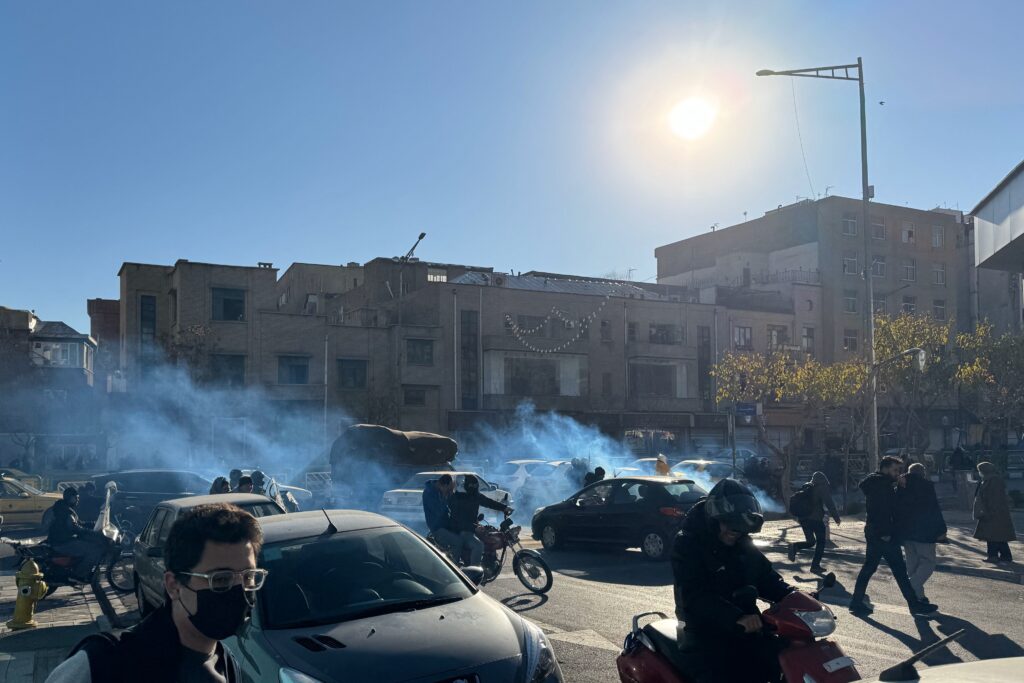
Iran’s nearly week-long protests, sparked by economic despair but quickly widening into demands for broad change, have turned deadly, with multiple human rights groups saying that several people had been killed by security forces.
President Donald Trump issued a warning to Iran on social media on Friday, writing that if Iran “violently kills peaceful protesters, which is their custom, the United States of America will come to their rescue. We are locked and loaded and ready to go.” The White House did not immediately respond to a request for comment on what kind of aid Trump was referring to.
The Center for Human Rights in Iran had tallied six killings by Friday, according to spokeswoman Bahar Ghandehari, while the Abdorrahman Boroumand Center for Human Rights in Iran said on social media that “at least five” protesters had been killed in direct shootings.
The Hengaw Organization for Human Rights, which focuses on Kurdish human rights issues, said that eight people have been killed so far, including a 15-year-old. Those reported killed were all male, mostly in their 20s and 30s.
Iranian authorities have acknowledged only one death thus far, Amirhesam Khodayarifard, who they claim was a member of the Basij militia force deployed to suppress unrest. A judiciary official in Lorestan province, where Khodayarifard was killed, said the government would “identify the perpetrators of this incident and deal with them in accordance with the law.”
But Hengaw said Khodayarifard was a protester and that authorities were pressuring his family to declare that their son was a member of the Basij, including by making the return of his body contingent on such a claim.
Fars News, affiliated with Iran’s Islamic Revolutionary Guard Corps, reported that two people had been killed in the city of Lordegan during “unrest” there.
Rights groups also reported the killing of a 37-year-old man, Dariush Ansari, in Fouladshahr, near the major city of Isfahan. Authorities also appeared to dispute the circumstances of that death, with Mehr News, a semiofficial outlet, reporting that he had died of injuries sustained during a fight in front of his house, and that investigations into his “murder” had commenced.
The deaths were reported to have occurred on Wednesday and Thursday, and were mostly clustered in Lordegan in southwest Iran and two cities in Lorestan province, in western Iran, where there appeared to have been intense clashes between protesters and security forces. A video verified by the BBC showed protesters in one Lorestan city, Azna, setting fire to the local police station.
The Washington Post could not independently verify any of the claims of killings, their circumstances or reports of government pressure on Khodayarifard’s family. Family members of people killed by state forces are often put under immense pressure by the government not to publicize the circumstances of their loved ones’ deaths or speak to reporters, making it difficult for journalists to verify claims.
Some videos have shown security forces shooting toward demonstrators, and such actions fit a documented pattern from past rounds of protest in Iran, especially in recent years. At least 321 Iranians were killed by security forces during mass protests in November 2019, according to Amnesty International. A United Nations fact-finding mission found that authorities had carried out “unnecessary and disproportionate use of lethal force” in response to protests in 2022 that were sparked by the killing of a woman in police custody.
Authorities’ response to the protests runs counter to the rhetoric of Iranian President Masoud Pezeshkian, who has said the protesters have legitimate demands and told reporters on Thursday that “if people are unhappy with us, we are the ones at fault.”
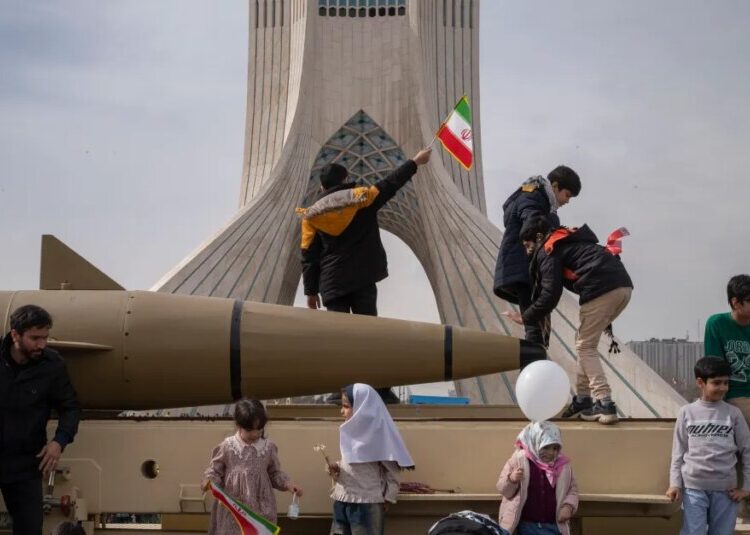
The most recent protests started Sunday with shopkeepers in Iran whose businesses have been wrecked by the sharp depreciation of the Iranian rial in recent weeks. The demonstrations then spread throughout Tehran and to cities across the country and drew in other elements of Iranian society, including university students.
Though the protests started with economic grievances, chants heard in videos showed protesters voicing more fundamental demands, as well as praise for Iran’s deposed monarchy.
The post Iran protests sparked by failing economy turn deadly appeared first on Washington Post.