From the first days of his second term, President Donald Trump has been taking bites out of the federal government.
Sweeping layoffs, the dismantling of entire agencies and dramatic restructuring at others, and steep funding cuts have chipped away at departments, their staff, and their funding streams since Trump returned to the White House in January.
[time-brightcove not-tgx=”true”]
As a result, the U.S. government enters 2026 with a much smaller workforce and a reoriented set of priorities that have shifted staffing and funds away from issues including foreign aid; diversity, equity, and inclusion; and vaccine development in line with Trump’s new agenda.
The changes have already affected millions of Americans—and millions more around the world—and their impact will continue to expand as further cuts take effect moving forward.
Here’s what to know about how Trump’s cuts have reshaped the federal government in 2025, and what’s still to come.
The federal workforce
The Trump Administration began taking steps to slash the federal workforce quickly after taking over in January. At the beginning of his second term, Trump signed an Executive Order creating the Department of Government Efficiency (DOGE), led by tech billionaire Elon Musk, which spearheaded mass buyouts and layoffs across the government.
On January 28, just over a week after Trump returned to office, the Office of Personnel Management (OPM) sent an email to roughly two million federal employees offering a Deferred Resignation Program, under which those who agreed to resign would be promised full pay and benefits through Sept. 30, 2025.
OPM then began issuing guidance for agencies to fire nearly all probationary employees—generally those who have been working for the federal government for less than one to two years—and ordered them to send plans for broader cuts to their workforces.
More than 150,000 federal workers ultimately took buyouts, according to OPM, and tens of thousands of others have been laid off, including several thousand during the government shutdown in the fall.
Some of the employees have since been asked to return to their jobs, and many of the layoffs have been embroiled in legal battles. But the nonprofit Partnership for Public Service estimates based on its tracking that overall, as a result of these moves by the Administration, the federal government is entering 2026 with around 212,000 fewer employees, roughly 9% of the civilian federal workforce of about 2.3 million workers.
OPM Director Scott Kupor projected even more extensive losses, saying in a statement last month that 317,000federal employees would have been shed by year’s end, and that the federal government hired 68,000 workers in 2025.
Some parts of the government have been hit harder by mass firings and buyouts than others. The Partnership for Public Service found that just three agencies account for more than half of the total staff reductions in 2025: the Defense Department, which has lost more than 60,000 employees; the Treasury Department, which has lost more than 30,000; and the Department of Agriculture, which has lost more than 20,000.
DOGE itself has been quietly slashed by the Administration, with Kupor saying that the initiative “doesn’t exist” in November, when it still had eight months left on its charter, and that most of its responsibilities had transferred to OPM.
Independent government watchdogs
Among the earliest of the dismissals, Trump fired at least 17 inspectors general from across federal agencies just days into his second term.
These independent watchdogs oversee waste, fraud, and abuse. Under the Inspector General Act of 1978, which former President Jimmy Carter signed into law following the Watergate scandal, the President is required to notify Congress at least 30 days before dismissing an inspector general with “substantive, case-specific” reasons for removing them.
In February, a group of the inspectors general sued for their jobs back. U.S. District Judge Ana C. Reyes ruled in September that it was “obvious” the dismissals violated the law, as Trump did not provide that 30-day notice or a rationale for his decision, but declined to reinstate the watchdogs given the President could later remove them lawfully.
Trump has since those initial January dismissals fired or demoted multiple other inspectors general. Most recently, he reportedly dismissed the inspector general at the Export-Import Bank of the U.S. during the government shutdown.
There are 74 inspectors general in total in the federal government, meaning that more than a quarter of the watchdogs have been removed from their posts since Trump returned to office.
Foreign aid
Foreign aid has been another major target for cuts under the second Trump Administration.
The Administration shut down the U.S. Agency for International Development (USAID), the primary organizer and provider of foreign aid from the country, terminating over 5,000 contracts and shifting the remaining portion to work within the State Department.
A study published in The Lancet over the summer forecasted that the shuttering of the agency could lead to roughly 14 million additional deaths by 2030, including 4.5 million among children and infants below the age of 5.
Shutting down USAID is already estimated to have contributed to hundreds of thousands of deaths, and is having a broader impact around the world.
“There’s a deeper story here, beyond the numbers, of an institutional breakdown,” says Fatema Sumar, an adjunct lecturer in public policy at the Harvard University’s Kennedy School. “So you’re seeing the destruction of supply chains, including for medical equipment, vaccinations, food supplies, greens that are sitting in storage that never got delivered or went bad. You see an entire economy that’s been disrupted.”
Sumar says that some of the hardest hit countries include Ukraine, the Democratic Republic of Congo, Ethiopia, and Syria.
The President also moved to implement a sweeping freeze on foreign aid soon after returning to office and has sought to rescind money already allocated for assistance. The Supreme Court in September allowed Trump to withhold over $4 billion in relief funds that had been approved by Congress. Earlier in the year, Trump also signed a rescissions package into law that rolled back about $7 billion in previously approved foreign aid funding.
Health agencies and programs
The Administration has made significant staff and funding cuts at the departments and agencies that support Americans’ health, provide access to medications and vaccines, and conduct key biomedical and public health research.
Roughly 24% of the employees at the Centers for Disease Control and Prevention (CDC), for instance, had been laid off in 2025 as of October through a combination of reduction-in-force notices dolled out during the record-long 43-day government shutdown, earlier layoffs, and voluntary early retirement offers, union officials said.
Dr. Angela Rasmussen, a virologist at the Vaccine and Infectious Disease Organization at the University of Saskatchewan in Canada, said as the Administration began carrying out layoffs during the shutdown that the agency was “not functional. It cannot carry out any of its mission. America has no national public health agency any more.”
Some of the layoffs came under a major restructuring plan that the Department of Health and Human Services (HHS), which houses the CDC, rolled out in March, which sought to take the department’s workforce from 82,000 to 62,000, cutting 20,000 full-time jobs—including 2,400 at the CDC. The restructuring also included plans to trim the department’s divisions from 28 to 15.
The same month, HHS cancelled around $12 billion in COVID-era federal grants to local and state health agencies that were used to track, prevent, and control infectious diseases, as well as monitor mental health services and fund addiction treatment.
“The COVID-19 pandemic is over, and HHS will no longer waste billions of taxpayer dollars responding to a non-existent pandemic that Americans moved on from years ago,” the department said at the time. Much of that funding helped treat other health related issues based on states’ specific needs, however, such as measles and bird flu.
The Administration also scaled back mRNA vaccine projects aimed at advancing the development of countermeasures for public health emergencies, halting 22 projects worth nearly $500 million that involved contracts with major pharmaceutical companies such as Moderna and Pfizer.
Dr. Michael Osterholm, the director of the Center for Infectious Disease Research and Policy at the University of Minnesota called the move to mRNA vaccine development “unequivocally” the “most dangerous public health decision I have ever seen made by a government body.”
Some of the health agency cuts have also been challenged in court. The Supreme Court in July weighed in on sweeping cuts to NIH grants, allowing the Administration to cancel grants amounting to hundreds of millions of dollars that were deemed to be related to diversity, equity, and inclusion (DEI), while at the same time declining to overturn a lower court ruling that threw out NIH policy guidance outlining changes to the agency’s priorities to align with Trump’s orders targeting DEI.
Trump’s Big Beautiful Bill, the sweeping tax and spending package that the President signed into law in July, also includes cuts to health care programs that are expected to result in millions of additional Americans becoming uninsured. Most significant among these are provisions that will make major changes to Medicaid, some of which have already started to take effect.
The Education Department
Trump vowed on the campaign trail that he would abolish the Education Department soon after returning to the White House and shift responsibility to the states if he were reelected, saying in a 2023 video that “we want them to run the education of our children because they’ll do a much better job of it.”
In March, Secretary of Education Linda McMahon announced a 50% reduction in the department’s workforce.
Later the same month, Trump signed an Executive Order to put his campaign pledge into practice, directing McMahon “to the maximum extent appropriate and permitted by law, take all necessary steps to facilitate the closure of the Department of Education and return authority over education to the States and local communities.”
Unlike USAID, the department has not yet been shut down. But the Administration has made significant moves to dismantle it and reallocate its resources and responsibilities. And though mass layoffs there were temporarily held up by court challenges, the Supreme Court in July allowed the Administration to proceed with cutting more than 1,000 staffers and gutting the department.
Diversity, equity, and inclusion programs
On his first back day in office, Trump signed an Executive Order titled “Ending Radical And Wasteful Government DEI Programs And Preferencing,” that directed the Office of Management and Budget (OMB) to coordinate the termination of all “discriminatory programs, including illegal DEI and ‘diversity, equity, inclusion, and accessibility’ (DEIA) mandates, policies, programs, preferences, and activities in the Federal Government,” as well as DEI, DEIA, and environmental justice offices, positions, and grants.
Several departments then moved to shutter DEI-related offices. The Social Security Administration, for instance, announced the closing of its Office of Civil Rights and Equal Opportunity, which managed the agency’s work on equal opportunity, harassment prevention, and disability services. The Labor Department laid off roughly 90% of employees at its Office of Federal Contract Compliance Programs, which sought to ensure workers were protected from race and gender-based discrimination.
Agencies also cancelled billions of dollars worth of grants, including the NIH grants the Supreme Court allowed the Administration to axe and environmental justice grants from the Environmental Protection Agency (EPA).
Clean energy and climate projects
Trump has also targeted programs and funding aimed at boosting clean energy and sustainability and otherwise addressing climate change, which he has called a “hoax.”
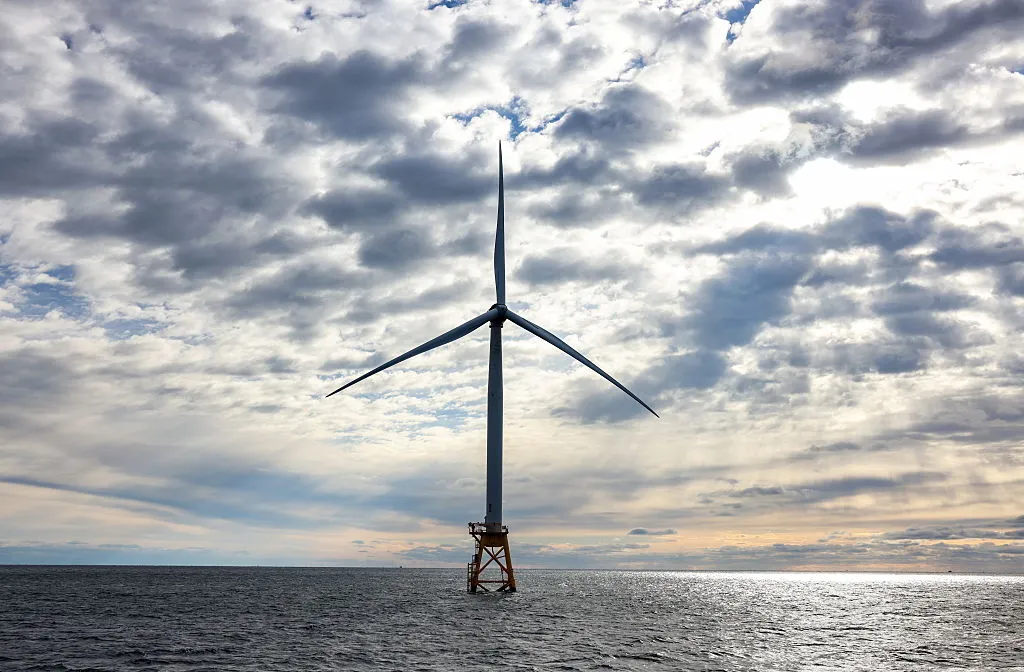
The President, who has for years vocally opposed wind power, signed an Executive Order the day he returned to office blocking wind energy projects, though a judge ruled the order unlawful in December. The Administration has also sought to halt wind projects that previously received permits, including through an order to pause the construction of five wind farms off the East Coast last week.
What would have been the largest solar power project in the United States—and one of the largest in the world—was also quietly cancelled by the Administration in the fall, while a number of other renewable energy projects that were previously approved have sat in limbo.
And in October, roughly $8 billion in grants funding clean energy projects in 16 Democratic states were cut.
Trump’s Big Beautiful Bill also made major cuts to clean energy incentives.
EPA Administrator Lee Zeldin earlier in the year announced the termination of $20 billion in “green bank” grant intended to fund projects seeking to reduce climate change that were established under the Inflation Reduction Act. The move has faced challenges in court, but nonprofits who were previously awarded the grants have said they have not been able to access the funds.
The EPA also said over the summer that it would shutter its Office of Research and Development, the scientific arm of the agency that conducts research on a range of environmental policy and regulation, as well as cutting thousands of EPA employees.
The Administration has also terminated more than 1,600 research grants from the the National Science Foundation (NSF), including for more than 100 projects related to climate change.
Public media
Public media has also been subjected to substantial cuts under the second Trump Administration. The same package signed into law by Trump in July that rolled back billions in foreign aid also rescinded $1.1 billion in funding for the Corporation for Public Broadcasting (CPB), a nonprofit that had backed public media outlets including NPR, PBS, and hundreds of public media stations for decades. The CPB announced it would be shutting down in light of the massive cuts.
The move is anticipated to present significant challenges for smaller networks operating in rural areas with fewer viewers, who long depended on CPB funds.
Trump has also sought to dismantle the United States Agency for Global Media, which oversees federally funded news group Voice of America and provides grants to a number of other news agencies, and eliminate hundreds of Voice of America jobs. Those moves have suffered setbacks in court, but the Trump Administration said late in the year that it was planning to close Voice of America’s overseas offices and radio stations despite a judge’s previous order.
What’s still to come?
The Administration’s moves to slash the federal government—and their impact—are set to continue into 2026 and beyond.
Some of the cuts included in Trump’s Big Beautiful Bill will be hitting in the coming months and years. For instance, the law is expected to cut federal spending on Medicaid—which provides coverage for roughly 70 million people around the country—by nearly $1 billion, or roughly 14%, over the course of a decade, health policy group KFF has estimated.
New restrictions on eligibility for the program will be rolled out, with immigrants’ eligibility for Medicaid—as well as the Children’s Health Insurance Programs (CHIP)—being limited to a narrower group of “legal permanent residents” on Oct. 1, 2026 and states being required implement new work requirements for Medicaid beginning on Jan. 1, 2027, among other changes.
The law will also reduce the availability of Supplemental Nutrition Assistance Program (SNAP) benefits, which help more than 42 million—or one in eight—Americans buy food each month. Federal funding for the program is set to be reduced by roughly $186 billion, amounting to around 20%, over 10 years, marking the largest cut in SNAP’s history.
Under the Big Beautiful Bill, states will be required to cover a higher share of administrative costs related to the program beginning in fiscal year 2027.
The law also will phase out multiple student loan repayment plans as well, including the Income-Contingent Repayment (ICR) Plan and the Pay as You Earn (PAYE) Plan, in the years ahead.
More reductions to the federal workforce also appear to be on the horizon this year. The Department of Veterans Affairs plans to eliminate up to 35,000 jobs in health care, the Washington Post reported, after losing nearly 30,000 employees in 2025. The positions to be eliminated include doctors and nurses and are mostly unfilled, according to the outlet.
The Consumer Financial Protection Bureau (CFPB) has also indicated it faces a funding cliff early this year that could force it to shutter. The agency, which is charged with supervising banks and other financial institutions to protect consumers from potential abuses, said in a court filing in November that the Administration has determined it cannot legally request money from the Federal Reserve, its main source of funding, and that it expected that it would be unable to continue operations after it depleted its remaining funding in the coming months.
The Administration also recently announced that it plans to break up the National Center for Atmospheric Research, which experts say could impact the ability to forecast for major events.
The post The Biggest Casualties of Trump’s Year of Government Cuts—and What to Expect in 2026 appeared first on TIME.