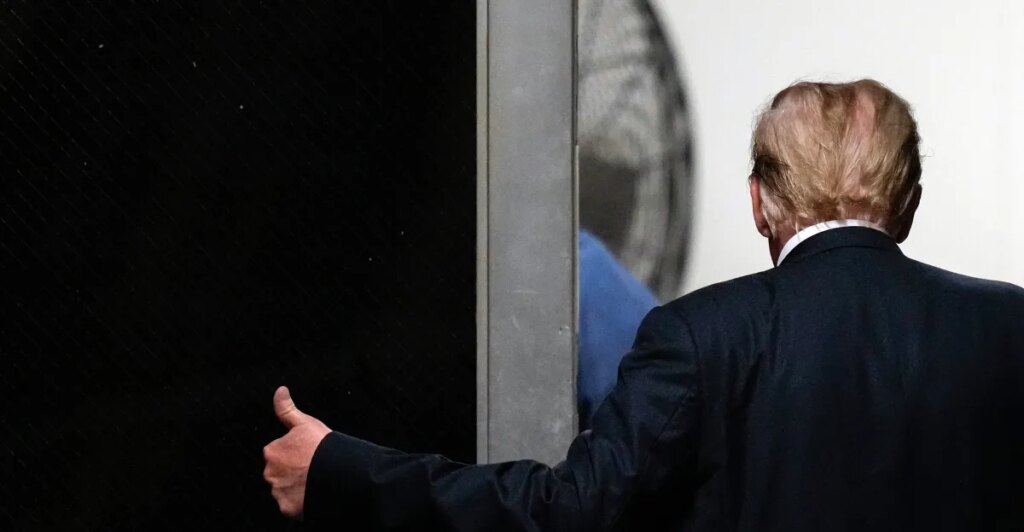
One of the biggest changes so far during President Donald Trump’s second term has been the steady degradation of basic data collection.
In some cases, moves have been driven by his ideological resistance to the numbers themselves; in others, by a desire to bury uncomfortable trends. And in many places, it’s simply the result of deep job and budget cuts that have left agencies unable to track the country they’re meant to govern.
Key takeaways
• The federal government is a key collector of vital data about the makeup of the country.
• President Donald Trump has long been hostile to data that contradicts his messaging and has presided over major rollbacks to data collection relating to the environment, public health, employment, demographics, and the weather.
• With less robust and accurate data, advances in science will slow down, Americans will have a murkier picture of the economy, and officials could miss important health trends. It will also further erode trust in public institutions.
Gathering basic data about the country is one of the key responsibilities of the federal government. After all, the census is mandated by the Constitution. Getting correct numbers about people, their health, the environment, and the economy is essential for taking an accurate snapshot of the country. These data are also the essential foundation for allocating resources and for sorting what works from what doesn’t.
Good numbers are a key accountability tool, and with the absence of data or lower-quality numbers driving decisions, it will be easier for leaders to mislead. Strip away the measurements and tallies, and the consequences pile up fast: Scientific research slows, early warnings about health threats get missed, economic policies become more volatile, and trust in institutions erodes even further.
Of course, good information can often have huge political consequences, which creates a strong temptation to fudge the figures.
But the Trump administration has gone far beyond its predecessors, cutting entire data-collection programs while putting ideologues in charge of fact-finding — all while pressuring agencies to support preordained conclusions. And if the White House has its way, even more rollbacks are in store.
Here are some of the most significant ways in which the White House has diminished our capacity to count and measure the country, and the world, this year:
1) Scaling back vital health surveys
Over the spring, the Trump administration laid off federal workers responsible for collecting basic information about people’s well-being and put in motion the process to overhaul federal surveys to eliminate the questions related to racial minorities and LGBTQ+ people.
We may not think of the federal government as one of the most important pollsters in the world, but it is: The best data we have about everything from teen smoking to increases in obesity rates to how many people have health insurance has come from the government.
Among the estimated 3,000 employees laid off from the Centers for Disease Control and Prevention were staffers who conduct surveys assessing everything from pregnancy risks to youth smoking to sexual violence. Without that data, the country will be flying blind when new health trends emerge. And as the administration moved to erase certain underrepresented communities from data collection, it will be harder to know whether depression or anxiety are particularly high among LGBTQ+ people or whether certain populations are becoming more susceptible to hypertension or diabetes.
The White House justified the cuts partly in the name of reducing government waste and partly as part of its ongoing crusade to erase any protections for and recognition of transgender or gender non-conforming people.
But that comes at a cost. The raw data that allows us to intervene and stop health problems are evaporating. —Dylan Scott, Vox senior health correspondent
2) Clawing back research grants
The National Institutes of Health, which awards upward of $40 billion in grants to scientific researchers every year, is the single biggest funder of independent scientific inquiry in the world.
But this year, the administration slashed its financial support for those research projects by an estimated $2.7 billion while proposing billions more in future cuts — cutting off another vital source of information about what’s driving changes in the population’s health and how any emerging problems might be fixed.
The list of canceled NIH projects, as documented by ProPublica, is long and varied. Scientists have been working for years to diversify their clinical trial participants, to collect better data that better reflects the wider population. One such project, to improve the recruitment for Alzheimer’s disease clinical trials, was being funded by an NIH grant — and it was cut by the Trump administration. Another grant uncovering new data on how contaminated drinking water affects fetal development — cut. New research into how discrimination affects the mental health of young Hispanic people, into the maternal health of Black women, into the driver of the disproportionate death rate from cervical cancer among Black women — cut, cut, and cut.
These are the kinds of nuanced scientific questions that the federal government’s surveys can’t answer on their own. That’s why the US has long provided support to independent researchers who can provide us with answers. This system has relied on the trust of the scientific process.
But not anymore. —Dylan Scott, Vox senior health correspondent
3) Overhauling the childhood vaccination schedule
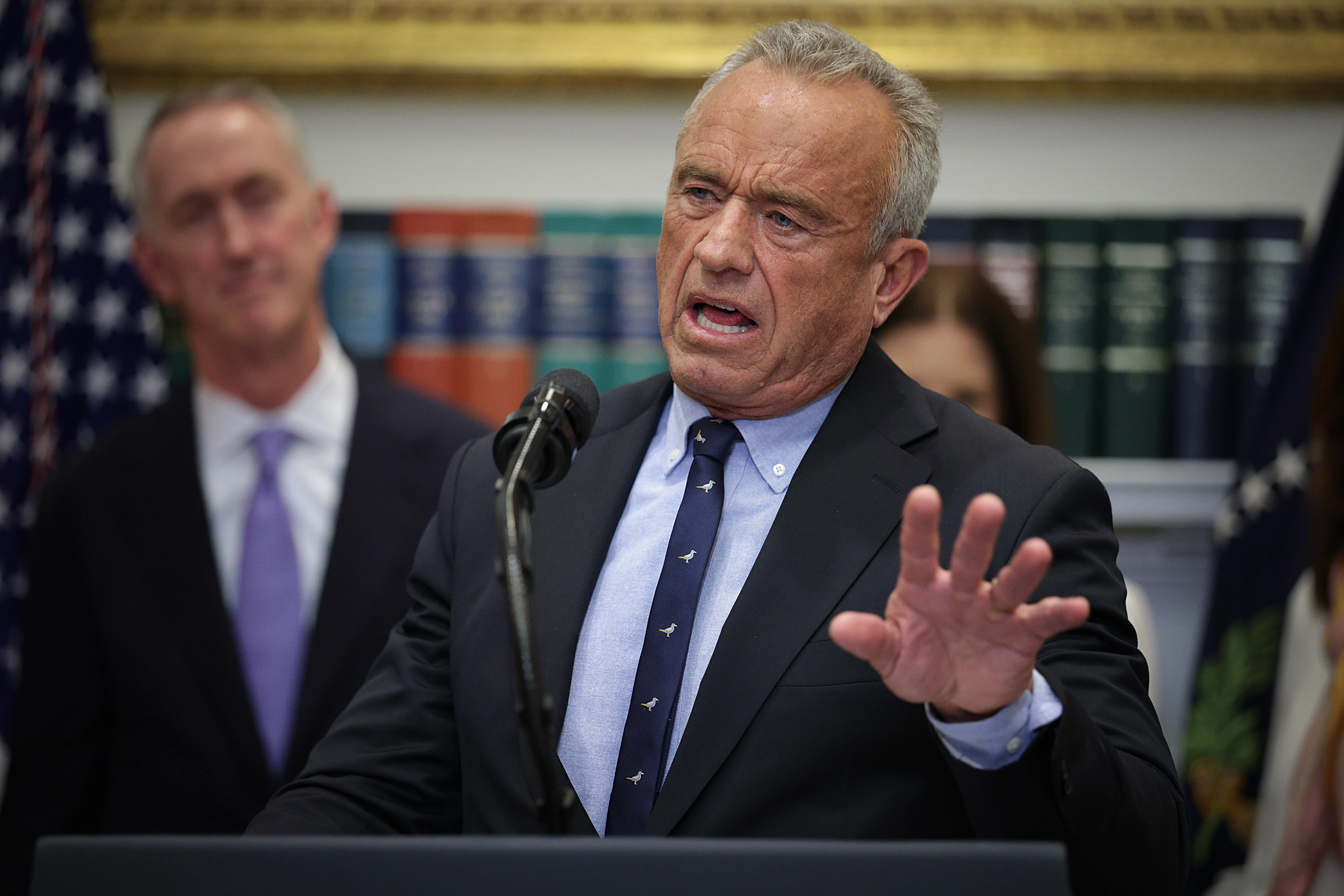
The administration has been busy overhauling the childhood vaccination schedule — based not so much on new facts but out of the deeply felt convictions of Health Secretary Robert F. Kennedy Jr. and his handpicked panel of vaccine-skeptical advisers that something must change given the declining public trust in vaccines.
For example, Kennedy’s vaccine advisers justified their decision to end the recommendation for a birth dose of the hepatitis B vaccine based in part on dubious data that they said suggested the vaccine’s immunity waned over time. But even some of the advisory committee’s own members, who were overruled on the final decision at a December meeting, questioned the evidence for the change.
“There is not a single case who is otherwise healthy who received the recommended schedule, of anyone who developed disease or is symptomatic or has chronic disease,” Cody Meissner, a Tufts University pediatrician and infectious disease specialist, said during the adviser meeting. “The evidence is very strong that there is lifelong immunity to hepatitis B.”
The new recommendations they approved did suggest, however, that if your child does not receive the birth dose, you should wait until they are at least two months old before giving it to them. At least two members of the committee argued that there was no scientific basis for the two-month recommendation, and no data had been presented to justify it.
“It’s unconscionable,” Hibblen said shortly before the final vote. Nevertheless, the change was approved.
As Wilbur Chen, an infectious disease physician at the University of Maryland, put it to me after watching the meeting: It calls to mind a magician with a sleight of hand. They were picking data, whatever it is that supports their argument.” —Dylan Scott, Vox senior health correspondent
4) Deleting climate change references
From the outset, the Trump administration has had federal climate change research in its crosshairs. Project 2025, the Heritage Foundation’s proposed agenda for Trump’s second term, said that the White House needs to “eradicate climate change references from absolutely everywhere.”
Trump has done much more than delete the words “climate change” though; his administration has taken climate-related tools, data, and reports offline.

The budget and staff cuts at agencies like NOAA — the main department monitoring weather and climate — have reduced data collection activities like weather balloon launches that are important for forecasting models. There have also been budget and personnel cuts to divisions that do key tasks for research and predictions like flying aircraft into hurricanes. The agency also retired its database of billion-dollar disasters, which had tracked the costliest extreme weather events across the country going back more than 40 years.
More recently, the US has withdrawn its last research ship from Antarctica, a key field site for climate research. And now Trump wants to dissolve the National Center for Atmospheric Research, an internationally renowned institution that White House budget director and Project 2025 author Russ Vought called “one of the largest sources of climate alarmism in the country.”
Climate research is about much more than understanding climate change; it’s a critical field for tracking evolving risks in the environment and threats to the economy. The federal government’s climate research work has long led the world, and its efforts will be hard to duplicate elsewhere. —Umair Irfan, climate correspondent
5) Handcuffing the EPA
The Environmental Protection Agency has a mandate to protect human health and the environment, but the Trump administration has been celebrating its efforts to constrain it. One of its strategies is to roll back efforts to monitor pollution and enforce regulations. For example, the One Big Beautiful Bill Act zeroed out fines for car manufacturers that violate vehicle fuel economy and pollution rules.
The EPA made it easier for industries to apply for exemptions to air pollution standards. The agency also scrapped grants for measuring pollutants in communities with industrial facilities.
This year, the EPA initiated the fewest lawsuits against polluters in 25 years. The Department of Justice’s environmental enforcement division, which handles EPA’s litigation, now has around half the number of lawyers it did at the start of the year. With declining enforcement, the government has fewer resources to monitor violations of pollution regulations, while industries face less pressure to track and reduce their impact on the environment.
The agency is cutting back on its scientific efforts as well. The EPA’s Office of Research and Development, which provides the scientific basis for its regulations for things like toxic chemicals and water contaminants, was shuttered over the summer. This includes the Human Studies Facility, one of the largest laboratories in the country, which studied how smog, smoke, and soot affect the human body.
Looking ahead, the White House wants to shut down existing satellites that track carbon dioxide and remove pollution monitoring capabilities from the next generation of weather satellites. And the EPA wants to end greenhouse gas reporting for major industrial polluters, which includes more than 8,000 facilities.
All of this means less visibility and accountability for the things that make our planet less livable. —Umair Irfan, climate correspondent
6) Assault on jobs data
If the Trump administration had had its way earlier this year, then we might not have known just how bad the job market is right now, with the unemployment rate now at its highest level in four years.
Over the summer, Trump — who has a history of rattling wildly inaccurate unemployment numbers — fired the head of the Bureau of Labor Statistics after the agency released revised jobs data that made the economy look bad. Trump’s first pick for a replacement, the chief economist of the Heritage Foundation, floated suspending the monthly jobs report altogether before bipartisan condemnation forced the White House to withdraw his nomination. The agency is currently being led by acting commissioner William Watrowski, a longtime civil servant, pending a new nominee from the Trump administration. So, for now, the jobs data appears safe. But with about one-third of leadership roles at the agency vacant, and a president still very much in denial about how the numbers work, it’s unclear if they will stay that way for long. —Sara Herschander, Future Perfect fellow
7) Trump takes aim at quarterly earnings reports
Since 1970, American companies have been required to report their earnings on a quarterly basis — a cache of data offering transparency about public companies that is considered to be among the most reliable in the world.
But Trump would like to change that.
In a September Truth Social post, he advocated for the Securities and Exchange Commission to make firms report on a semiannual rather than quarterly basis. This would, according to Trump, “save money and allow managers to focus on properly running their companies.”
He tried to push this through during his first term, although nothing materialized then. But now the SEC is actively looking into this, and if Trump is successful, this would put the US more in line with UK and EU practices. But many companies in the American market are growing significantly faster than their European counterparts, and investors benefit from more — not less — frequent information. —Shayna Korol, Future Perfect fellow
8) Shaking up the Census
The centuries-old census is a very big deal. Its results can redraw voting districts and control the fate of hundreds of billions of dollars of federal funds for schools, roads, and hospitals.
That’s why it’s so important that the Census Bureau, the country’s largest statistical agency, gets its counting right. Exactly how the census asks Americans about themselves has evolved dramatically over the decades. During President Joe Biden’s term, the administration required the 2030 Census to include, for the first time, new checkboxes for “Middle Eastern or North African” and “Hispanic or Latino” participants under a question about race and ethnicity. This is a crucial change because with more accurate data for those previously undercounted populations, the country will be able to more effectively allocate resources and enforce civil rights legislation.
Unless, of course, the Trump administration gets to it first. A White House official recently said that the administration is considering revoking those changes — which were made to better capture people’s racial identities — amid a broader war against anything even remotely tied to diversity, equity, or inclusion.
Trump has also repeatedly attempted to exclude undocumented people from the census, which would be an unprecedented change. If either of those things happen, the country will likely be one step further away from understanding itself — and undercounted American communities will suffer the consequences. —Sara Herschander, Future Perfect fellow
A race to save what’s left
This, of course, isn’t Trump’s first time in office, nor is it his first attempt to manipulate, ignore, or erase the numbers. And researchers, nonprofits, and activists have raised the alarm before about losing access to quality government data.
There are now multiple groups working to rescue and archive federal statistics and websites, as well as guides for finding information that has gone missing.
But there’s only so much companies, universities, and NGOs can do to match the US government’s data-gathering scale and depth. A concerted effort from the White House to diminish or manipulate the numbers behind policies will be hard to counteract, and the effects will linger for years to come.
The post Inside Trump’s “no data, just vibes” approach to science appeared first on Vox.