In the last decades of the 1800s, horses left millions of pounds of manure on Manhattan’s streets every day. Life expectancy sank to its lowest levels in U.S. history, and politics reached new heights of violence.
By the early 1900s, Americans were living longer than ever. Elections grew so peaceful that some worried about “apathy in political circles.” And gardeners in a cleaned-up New York were complaining that “well-rotted manure is becoming quite scarce.”
Something changed between the 19th and 20th centuries. The Gilded Age ended. Wouldn’t it be useful today — trapped deep in what many call a second Gilded Age — to understand the forces that produced and then restrained a similar era in our past?
How, exactly, do you end your era?
It’s not just baroque TV shows that make it feel as though the Gilded Age is back. If you track political polarization, income inequality, social distrust and many other metrics over the past 150 years, you get a U-shaped curve, charting the ways our nation went from a chaotic splintering in the 19th century to a rigid new order in the 20th to our disrupted present. It looks like a great national seesawing, as we toggled between eras of release and eras of restraint.
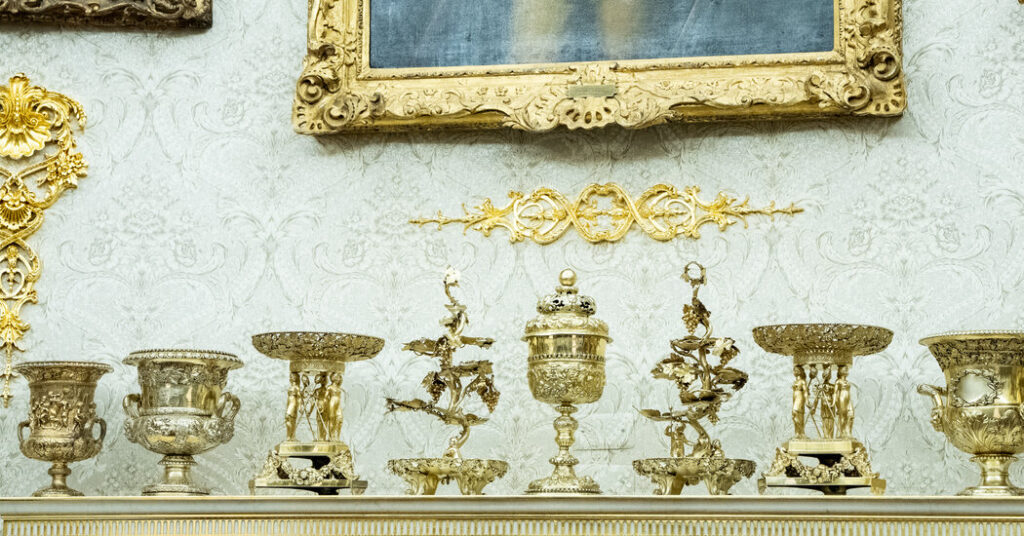
That sense of hurtling release best defines the first Gilded Age. It’s what Mark Twain meant when he coined the term in 1873 with his close friend Charles Dudley Warner. Instead of satirizing a society shiny on top but rotten beneath — as is often insisted — Twain was referring to Shakespeare’s line about King John, a monarch so gaudy that he would “gild refined gold.” Gilded Age society was not inherently awful to Twain, just so over-the-top that even gold got an extra sparkle.
Twain’s view suggests we stop seeing the Gilded Age as bad old days, solved by the 20th century. It’s too easy to think of these people as corseted and conservative and miss how revolutionary their lives were. From the 1820s to the 1860s, democracy and capitalism increasingly pushed citizens to consider what old structures might be torn down. The death of slavery in 1865 began an even more radical era. Not all hierarchies crumbled, but to be a freed slave or a factory girl or a homesteading immigrant was to feel emancipated, in different ways, from one’s ancestors’ bonds.
Release did not mean real freedom. It was more like an unleashing, liberating Americans from repressive hierarchies but cutting them off from old communities. “The secret of the history we are about to make is not that the world is poorer or worse,” explained the visionary muckraker Henry Demarest Lloyd. “It is richer and better. Its new wealth is too great for the old forms.”
Many cut loose. In one Wisconsin county, 89 percent of the teenage males present in 1860 were gone by 1870, and 90 percent of those present in 1870 were gone 10 years later. They clumped in new places. Chicago had 200 residents in 1832 and one million by 1890. Newcomers flooded in. From 1850 to 1914, one-quarter of Europe’s work force emigrated to the Americas.
At its best, these disruptions meant new prosperity and new freedoms. From 1860 to 1890, national wealth quintupled, and political turnout peaked. Gilded Age society often felt bold and innovative, blossoming with utopian visions, spiffy technologies and inventive cocktails.
But it came with a heartbreaking recklessness. America laid more railroad track than anywhere else in the world, but corporations rarely bothered to ensure safety on their lines. Nearly 200,0000 people died in train accidents from 1885 to 1900 alone.
In politics, power changed hands in the most corrupt, most violent elections in our history. In 40 years Americans witnessed the assassinations of three presidents and multiple governors, members of Congress, mayors and election officials, plus ethnic riots and racial terrorism from Manhattan to Memphis and beyond.
The very meaning of authority changed. Gilded Age leaders seized power, then wielded it to the hilt. Unlike traditional aristocrats, raised as caretakers of what they’d inherited, the new tycoons created and destroyed “without restraints of culture,” as Demarest Lloyd put it. America’s forgettable presidents were an exception, but the party bosses who ran things behind the scenes followed similar rules, employing dirty tricks and open crimes.
The fundamental issue was restraint. In such an environment, why not use all the leverage at your disposal? The Tammany district boss George Washington Plunkitt excused away decades of corruption, writing, “I seen my opportunities, and I took ’em.” Cornelius Vanderbilt thundered: “What do I care about the law? Hain’t I got the power?”
Reformers tried. Idealistic elites sermonized and editorialized, often looking smug and out of touch. Their vision of reform usually meant returning to an older way of life, dimly recalled from before the Civil War. As long as reform meant going backward, it lost at the ballot box, the stock exchange and the corner saloon.
It took a new generation, which could not remember this bygone age, to rein it all in. Men and women born around the Civil War had no better world to claw back. They knew only how unmoored society had become. After several generations of society doubling down on the same tendencies, around 1900 a generation chose to live in resistance to the world they knew.
Diverse movements pushed an unusual value in American history: limits. Socialists and capitalists, new immigrants and old blue bloods together called for boundaries. Many felt that without them, anarchy — and actual bomb-throwing anarchists — loomed. Again and again, they chose restraint as their ideal. Louis Brandeis, the future Supreme Court justice, explained that because democracy removed old political boundaries, it required new personal limitations: “It substitutes,” he wrote, “self-restraint for external restraint.”
The folksy populist presidential candidate William Jennings Bryan compared monopolies to hogs, rooting in America’s shared garden, in need of some government control. “We submit to restraint upon ourselves,” he shouted at a Chicago Labor Day rally, “in order that others may be restrained from injuring us.”
Framed as restraint, reform toughened up. Theodore Roosevelt made it look masculine and adventurous, costuming limits on Gilded Age excess in buckskin and fatigues. And all that manure clogging Manhattan’s streets? In 1895, Col. George Waring Jr. reimagined New York’s street cleaners as a grand army of cleanliness, sweeping the avenues in shining white uniforms.
Public life squeezed between new guardrails as the 20th century began. Election Day, once a rowdy ritual run out of saloons, faced sober regulation. Turnout crashed, even as violence decreased. Swaggering politicos shut up, replaced by quiet managers like Tammany Hall’s “Silent” Charlie Murphy. And Congress passed major reforms regulating business, democratizing elections and stabilizing finance.
Often, such Progressive legislation combined social justice with social control. The same government had an obligation, it was felt, to make sure food was clean and epidemics were contained, but could draft young men or sterilize young women. Rather than a left-leaning Progressive era followed by a right-leaning 1920s, the first decades of the 20th century showed a continuous binding. Jim Crow, Prohibition, eugenics and the rise of the F.B.I. all built on Progressive restraints.
Mary Harriman Rumsey — a daughter of a railroad-building, jiujitsu-enthusiast tycoon — put her family’s fortune toward immigration restriction and then the invention of Social Security. She saw no contradiction. What her swashbuckling father let loose, she was tightening up. Her kid brother the diplomat W. Averell Harriman became the epitome of a midcentury Georgetown political gatekeeper.
Restraint underpins so much that was distinctive about American culture from 1900 to 1960. White Anglo-Saxon Protestant elites codified a code of elite behavior — how to dress, eat, drink and play — out of disgust at the excess of Gilded Age arrivistes. The news business shifted, from the 19th century’s galaxy of aggressive, partisan newspapers into media empires preaching objectivity, deferring to advertisers and burying scandals. Best-selling histories about the 19th century reminded readers of the evils of social disruption. The Gilded Age gets such a uniformly bad rap because people who defined their civilization against it wrote the histories.
People began to talk about a new style: American cool. Employers, parenting experts and fashion columnists instructed Americans to control their emotions, in contrast to the Victorian love of bold passions. Instead of baroque sentences packed with complex clauses and grandiloquent vocabulary, people began to speak in a shorter, terser style. Literature, art and fashion shifted to a clean, stripped-down, modern aesthetic.
Americans lived within new bounds. Compared with the 19th-century world of risk and churn, many 20th-century citizens grew up in a standardized public school system, did a stint in the military and married and had children at the youngest ages in our history. Some stayed at their first job for life. In education, work, love, war and child rearing, they lived within guardrails that barely existed for their grandparents.
Just as the Gilded Age was killed off by a generation that could no longer remember any earlier order, by the 1960s a new generation had little memory of what came before. What were invented as guardrails in 1900 looked like selfish gatekeeping by 1965. On the left, activists preached social freedoms. On the right, a conservative movement found energy battling its party leadership.
What’s striking, for all the talk of culture wars, is how left and right spent the past half-century chopping at opposite sides of the same tree.
Every decade since has furthered the unraveling. On the plus side, Americans live with individual freedoms unimaginable to previous generations. But that freedom makes cohesion difficult. Social trust is a form of restraint, a willingness to set aside individual desires out of respect for some greater good. In so many realms — for better and for worse — Americans are no longer willing to exercise that check on themselves.
If the 20th-century order was built with restraint as its core value, is it any wonder that it feels as though the Gilded Age is back? Is there any value whose stock has sunk lower over the past lifetime, that sounds more regressive, less sexy? Can you think of a skill — personally, politically, technologically, environmentally — that we struggle with more than Brandeis’s “self-restraint”?
Isn’t restraint’s decline what we mean when we ask what happened to the grown-ups in the room?
So how to swing back? Most generations double down; few truly innovate. The challenging thing about living in a society that values disruption is that what looks transgressive is often more of the same, just louder. The secret of the cohort that ended its era around 1900 was that it was the most Gilded Age of all — so cut loose that it no longer pined for a bygone nation and so uninhibited that it was willing to experiment with a weird value, restraint, that had little precedent in American life.
The question today is: How long will a society double down before it tacks back? It might be Gen Z, or it might be Gen Alpha, but it stands to reason that someday a cohort will emerge, so saturated in its era, so sick of its recklessness, that it will take its own wild swing and do something about all the manure in the streets.
Jon Grinspan is a curator of political history at the Smithsonian’s National Museum of American History and the author of “The Age of Acrimony: How Americans Fought to Fix Their Democracy, 1865-1915” and “Wide Awake: The Forgotten Force That Elected Lincoln and Spurred the Civil War.”
The Times is committed to publishing a diversity of letters to the editor. We’d like to hear what you think about this or any of our articles. Here are some tips. And here’s our email: [email protected].
Follow the New York Times Opinion section on Facebook, Instagram, TikTok, Bluesky, WhatsApp and Threads.
The post There Is a Way Out of This Mess appeared first on New York Times.