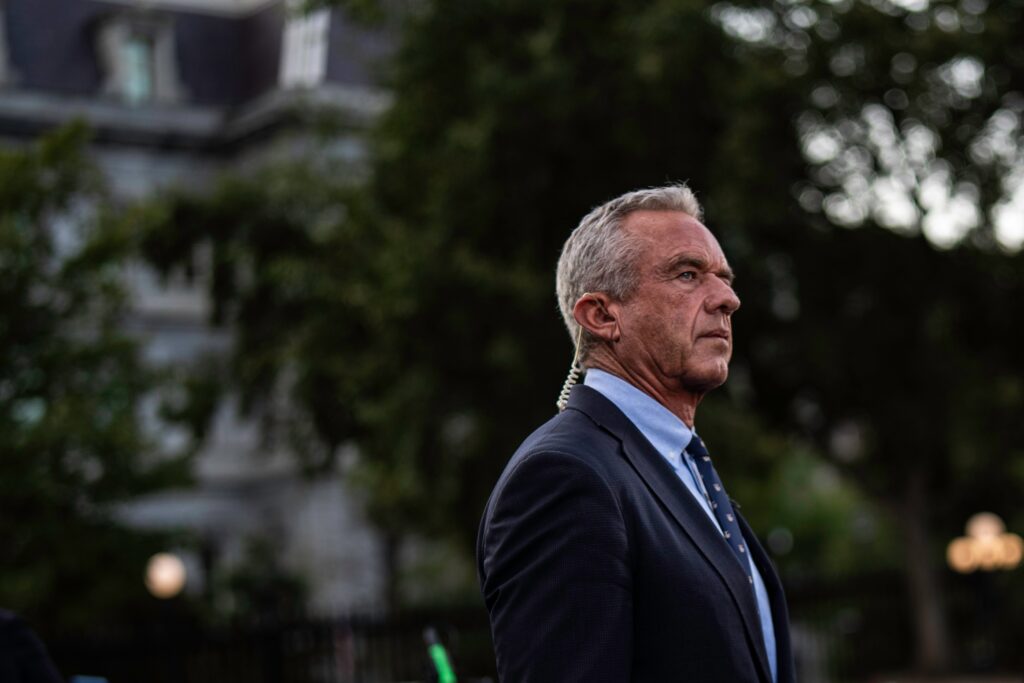
On his way to being confirmed as the nation’s top health official, Robert F. Kennedy Jr. promised lawmakers he would do nothing that “makes it difficult or discourages people from taking vaccines.”
Almost 100 days into the job, amid rising measles outbreaks and congressional scrutiny of his messaging on vaccines, Kennedy made clear behind the scenes that he wanted to reshape the nation’s immunization system.
Kennedy, the founder of a prominent anti-vaccine group, presented several top federal health officials with a new vision.
“Bobby has asked for the following changes,” Kennedy’s deputy chief of staff for policy at the time, Hannah Anderson, wrote to the officials in a May 19 email later reviewed by The Washington Post.
Among his requests was to replace the entire membership of an influential independent committee of experts that makes recommendations for how and when to vaccinate Americans. Kennedy also asked the panel to reconsider a long-standing recommendation that all newborns get a hepatitis B vaccine and revisit the use of multidose flu shot vials, which contain a mercury-based preservative.
Anti-vaccine activists have criticized those vaccines for years, claiming they unnecessarily endanger children. Career federal scientists who learned of Kennedy’s asks said they represented a sea change for shots that have been extensively studied and deemed safe.
“At that point we were just bracing for upheaval,” said Demetre Daskalakis, who was then the CDC’s top respiratory diseases and immunization official.
Kennedy would get what he wanted. The May 19 email reveals his previously undisclosed influence on some of these changes in a highly unusual way, according to legal experts and former and current health officials, showing how Kennedy has wielded government power to overhaul a public health system he has blasted as corrupt and ineffective.
Andrew Nixon, a spokesman for the Department of Health and Human Services, said of the email: “All this was was a suggestion.”
“This was a newly reconstituted committee, and the secretary was providing a North Star to make sure suggestions were communicated to the members for consideration,” Nixon said.
Over the course of the year, Kennedy’s actions have alarmed public health experts, medical associations and current and former health officials, who say he is eroding trust in science and dismantling confidence in long-standing public health measures.
“I do feel shocked by how quickly he has been able to implement these things that he has clearly been pretty passionate about for many years,” said Kerry Kennedy Meltzer, Kennedy’s niece and a physician who this year released email exchanges with her uncle in an attempt to foil his Senate confirmation to lead HHS.
Kennedy has challenged years of public health messaging on vaccines, including instructing the CDC to contradict the long-settled scientific conclusion that vaccines do not cause autism. His once-fringe views have moved to the center of the nation’s health strategy amid a growing distrust in the medical establishment after the coronavirus pandemic.
“It is now acceptable to talk about all these issues,” said Leslie Manookian, a leader in the “medical freedom” movement, which opposes vaccine mandates. “The person that we have most to thank for that is Bobby Kennedy, together with President Trump.”
Kennedy has maintained the backing of the White House and a warm relationship with President Donald Trump, whom he speaks to often, as the two aligned on their Make America Healthy Again initiative to encourage better nutrition and address chronic disease and childhood illness, according to two people familiar with the matter.
Besides his heavy focus on immunizations, Kennedy has also taken on the food industry. Next year will test, ahead of the midterms, whether he can deliver sweeping change on this more broadly popular agenda.
This account of Kennedy’s ascent and leadership since becoming HHS secretary is based on interviews with almost 100 current and former federal health officials, Kennedy allies, public health experts and others. Many spoke on the condition of anonymity to detail private conversations, internal deliberations or out of fear of retaliation.
In response to an interview request, Kennedy said in a text message: “Wapo has been more consistently unfair, biased, and inaccurate, and it’s reporting about me than any other major outlet. Im not inclined to validate that bias with an interview.”
He referred the request to Stefanie Spear, a top aide, who said Kennedy wanted to share a Substack article with a Post reporter that described the “invisibility of vaccine injury,” adding Kennedy could perhaps do an interview after the first of the year.
The HHS media relations office did not answer detailed questions for this article, but did comment on the email from Anderson and identified what Kennedy has done so far in a statement.
“Under Secretary Kennedy’s leadership, HHS is exercising its full authority to deliver results for the American people,” Nixon said.
“In 2025, the Department confronted long-standing public health challenges with transparency, courage, and gold-standard science — eliminating petroleum-based food dyes from the nation’s food supply, removing the black box warning for many menopause hormone therapies, lowering drug prices, advancing [Organ Procurement and Transplantation Network] reform, streamlining prior authorization, investing in rural health, accelerating biosimilars, doubling funding for childhood cancer research, launching an agency-wide AI strategy, and increasing transparency in drug advertising,” Nixon added. “HHS will carry this momentum into 2026 to strengthen accountability, put patients first, and protect public health.”
RFK Jr.’s rise to power
In August 2024, Kennedy strode onto a stage in Arizona to suspend his long-shot independent presidential bid. Flanked by American flags, he explained why the scion of a famous Democratic family was endorsing a Republican, Trump.
“I asked myself what choices must I make to maximize my chances to save America’s children and restore national health,” Kennedy said.
Kennedy quickly became viewed as one of the campaign’s top surrogates, bringing along some voters who might not have backed Trump. Before winning the presidency, Trump promised to let Kennedy “go wild on health.”
Although some Trump aides had weighed making Kennedy, a lawyer, a White House health czar, Kennedy told Trump he wanted to be considered as HHS Secretary, according to three people familiar with the matter. Donald Trump Jr. and Charlie Kirk, a conservative activist who was fatally shot this year, advised Kennedy that he needed to be in charge of an actual bureaucracy to make lasting change and avoid being sidelined, one person said. Trump Jr. and Turning Point USA, Kirk’s organization, did not respond to requests for comment.
Just over a week after Election Day, Trump tapped Kennedy to helm the nation’s sprawling health department, an almost $2 trillion portfolio responsible for administering health insurance, approving drugs and medical devices and responding to infectious-disease outbreaks.
The luxury Florida beach house of Mehmet Oz — a physician and the former daytime television star who is now the nation’s Medicare and Medicaid chief — quickly became ground zero for pushing MAHA’s agenda and securing Kennedy’s position in Washington, according to multiple attendees. Those weeks forged an alliance among some who challenged the medical establishment, including Del Bigtree, head of the anti-vaccine group Informed Consent Action Network (ICAN), and Spear, a longtime ally to Kennedy in his environmental and anti-vaccine advocacy, and newer people in Kennedy’s orbit, such as Calley Means, a health entrepreneur.
One night, several of those at the beach house bonded over listening to the Grateful Dead, according to Michael Caputo, who was Trump’s HHS spokesman in 2020. They viewed the best-selling book “Good Energy” written by now-surgeon general nominee Casey Means along with her brother Calley, that promotes healthy eating and exercise to optimize metabolic health — as MAHA’s bible, he said.
“Food expanded the movement overnight,” Bigtree, who was Kennedy’s communications director during his presidential campaign, said in an interview. “It was an easier topic to sell to moms across America.”
On Capitol Hill, Kennedy’s messaging pushing for healthier, less-processed foods proved far more popularthan his views on immunization.
Kennedy’s confirmation largely hinged on Sen. Bill Cassidy (R-Louisiana), a physician and chair of the Senate health committee who begged Kennedy to disavow his false claims linking vaccines and autism and raised concerns about Kennedy’s involvement in vaccine safety litigation.
“[Does a] 71-year-old man who has spent decades criticizing vaccines and who’s financially vested in finding fault with vaccines, can he change his attitudes and approach now that he’ll have the most important position influencing vaccine policy in the United States?” Cassidy asked during Kennedy’s confirmation hearing.
As Cassidy vacillated, Vice President JD Vance stepped in to help negotiate his eventual support, according to two people familiar with the matter.
In a speech on the Senate floor, Cassidy detailed the commitments he received from Kennedy in exchange for his vote, including to protect the nation’s vaccine infrastructure. All but one Republican voted yes: Sen. Mitch McConnell of Kentucky, a childhood polio survivor who said he would “not condone the re-litigation of proven cures.” A week later, McConnell announced he would not seek reelection.
Cassidy’s doubts proved prescient. Within months, Kennedy found ways to bypass some of his pledges.
A fierce critic becomes the boss
Kennedy has called for the ouster of what he describes as “corrupt, industry-captured” federal health officials, arguing the health department had failed to keep Americans healthy.
“I’m not scared to disrupt things,” Kennedy said at a recent event at George Washington University.
Since February, health agencies have been inundated by continuous waves of departures of more than 30 high-ranking senior career leaders — representing decades of experience on managing infectious-disease outbreaks, administering billions in research dollars and overseeing the nation’s drug supply, according to a Post review.
Thousands more staffers were laid off in what some called the “April Fools’ Day massacre,” a sweeping purge and proposed reorganization of the health agencies. Some including lead poisoning specialists and lab scientists were rehired, but many administrative support staff, communications and program officers are among those who remain laid off.
As secretary, Kennedy brought in fierce critics of the public health covid response and federal health agencies more broadly. Bigtree told The Post that candidates for top health roles were questioned to see whether they agreed with some of Kennedy’s longtime vaccine safety priorities.
Under Kennedy, prominent figures in the anti-vaccine movement have been working within the department on vaccine safety issues, including Lyn Redwood, a former leader of the anti-vaccine group Kennedy founded, Children’s Health Defense, and David Geier and Mark Blaxill, two longtime proponents of false claims that vaccines can cause autism. The three did not return requests for comment.
In a statement, White House spokesman Kush Desai said Kennedy and his team at HHS are restoring “Gold Standard Science and accountability to our public health bodies” after the medical establishment pushed “unscientific lockdowns and mask mandates” during the coronavirus pandemic.
Kennedy has accused public health agencies of being dishonest during the pandemic. He repeated that criticism, arguing the government overreached on covid vaccines, when a reporter asked how to avoid the violence the CDC witnessed in August, when a gunman incensed by coronavirus vaccines attacked the agency’s Atlanta campus.
Public health and medical experts say the turnover in staff and leadership has hollowed out the federal government’s scientific capacity to anticipate and respond to health threats.
“For people who are still left at the [CDC], there is chaos and confusion, and morale is at an all-time low,” Aryn Melton Backus said at a November rally in support of public health. She was a health communication specialist placed on administrative leave as part of pending layoffs from the CDC’s Office on Smoking and Health, which has funded state tobacco control programs.
The reduction of CDC staff and programs is being felt across the country. In Georgia, where smoking is the leading cause of preventable death, state officials cut a tobacco control and prevention program. An online concussion training that many school youth sports coaches must complete will no longer be updated with the latest research. Local officials who want to fluoridate their drinking water to improve oral health no longer have access to technical experts who can help calibrate the proper levels.
As Kennedy upended the public health workforce, he leaned into his more broadly popular messaging around overhauling the food industry. He has posted on social media more than twice as frequently about food than vaccines while in office, according to The Post’s analysis of his personal accounts and official HHS accounts. Last summer, almost 1 in 3 social media posts focused on food.
He often highlights posts about companies pledging to remove artificial dyes from food products, which has been one of his signature efforts.
Some in the food sector have been trying to accommodate Kennedy and downplay differences with his initiatives, in hopes of avoiding MAHA criticism, according to two people involved in the industry. That’s a stark shift for an industry accustomed to viewing the GOP as an ally.
“Wanting to eat simpler foods, more real foods, look at the ingredients, all of that is not a Democrat hippie thing anymore,” said Vani Hari, an author, activist and Kennedy ally who also writes under the name of the Food Babe. “It’s a Republican thing too now.”
Kennedy returns to his core issue: Vaccines
As Kennedy sought senators’ support to become health secretary, he told them he supported the childhood immunization schedule, including the shot for measles, which he had previously falsely describedas increasing the odds of spreading the virus.
In the past, Kennedy had decried the “exploding vaccine schedule,” claiming that the series of vaccines recommended to children is linked to the rise of autism, chronic disease and food allergies. Medical experts have argued these purported links have no basis in evidence and that the increase in vaccinations has successfully combated more disease. He wrote a book in 2014 calling for removal of the mercury-based preservative thimerosal from vaccines. He questioned why newborns should get the hepatitis B vaccine, which health authorities say is safe, claiming on an online showthat it “poisoned” kids.
Kennedy faced his first big test on vaccines soon into his tenure. A measles surge had started in an under-vaccinated region of Texas, driving the country’s largest annual case tally in at least 33 years and threatening to end the nation’s measles elimination status.
At first, Kennedy downplayed the severity of the outbreak and later, under pressure, acknowledged vaccines prevent the virus’s spread. But he muddled that message by also falsely claiming the vaccines were not safety tested and contained aborted fetal debris — a stark contrast from the first Trump administration’s unequivocal support for vaccination during a 2019 outbreak.
He repeatedly offered to send Texas vitamin A doses, an unproven measles treatment in the U.S. embraced by vaccine skeptics as an alternative to immunization, even though the vitamin is primarily used for malnourished children abroad and public health workers and doctors said their focus was vaccination, according to a top state health official, Jennifer Shuford.
In June, he fired every member of the Advisory Committee on Immunization Practices, which makes vaccine recommendations, setting in motion plans to remake the vaccine system. Kennedy argued the panel had become “little more than a rubber stamp for any vaccine” with members too closely tied to the pharmaceutical industry. He selected new members, some of whom had histories of criticizing vaccine guidance. The former CDC director, Susan Monarez, said she was fired in August for refusing to be a “rubber-stamp” to the new committee.
The panel has voted on some of Kennedy’s requests detailed in the May email from Anderson, who is no longer with HHS and did not respond to requests for comment.
The vaccine panel voted in June to remove thimerosal — which the CDC had concluded is safe but Kennedy and his allies have decried as unnecessarily exposing children to mercury — from the rare multidose flu shot vials that contain it. In that same meeting, they vowed to form a work group to look at vaccines that have not been subject to review in more than seven years, in line with Kennedy’s request.
The panel over several months grappled with how to revise the guidance for all newborns to receive a hepatitis B vaccine. It ultimately voted in December to stop recommending the shot when the mother tests negative and to instead encourage those parents to consult doctors about whether and when to begin vaccination.
José Romero, who began serving on ACIP in 2014 and chaired the panel from 2018 to mid-2021, described Kennedy’s asks to the committee as “extremely” unusual.
“The secretary is within his legal rights to make these suggestions or requests, but it’s unheard of as far as I know,” said Romero, who was a top health official in Arkansas during the pandemic and then at the CDC. He now consults for the pharmaceutical industry on vaccines and is a member of the American Academy of Pediatrics infectious diseases committee.
An HHS official, who spoke on the condition of anonymity because of legal concerns, said the career CDC official who oversees ACIP sets its agenda and that members of the committee are ultimately responsible for writing the questions they vote on.
In reference to the May email, the official said HHS officials worked with the CDC’s administrative officer for the vaccine panel to communicate the suggestions to the members, but those suggestions were not directives.
Joseph Hibbeln, a neuroscientist who has become a dissenting voice on the vaccine panel, said committee members have not been given clear answers when they have asked who is determining which vaccines they are scrutinizing.
Robert Malone, a prominent critic of coronavirus vaccines who is now the panel’s vice chair, said he did not know how the agenda items were developed but that there would be nothing “nefarious” about Kennedy or other top Trump administration officials “contributing” to agenda items because the panel’s job is to provide advice.
During the panel’s December meeting, Kirk Milhoan, chairman of the vaccine committee, was overheard telling another member that he felt “a little bit like puppets on a string as opposed to really being an independent advisory panel,” according to a transcript of the exchange captured by videoconferencing software and reviewed by The Post. He later told The Post he was referring to pressure from outside groups critical of changes to vaccine recommendations, not the administration.
‘Raise the risk, bury the benefits’
Kennedy and his aides have repeatedly said the Trump administration is not limiting access to vaccines for those who want them, but is instead working to help people make informed decisions. Critics say they are exaggerating the downsides and obfuscating the value of immunization.
“The secretary and his committee have stopped doing the hard job of balancing the risks and benefits of vaccines,” said Dan Jernigan, who oversaw the CDC’s vaccine safety office. He described their playbook as “raise the risk, bury the benefits, sow confusion, drive down use.”
In the late summer, Jernigan and two other high-ranking officials resigned in protest over what they called an unscientific and politicized approach to vaccines.
In one instance that alarmed career staff, Kennedy wanted Aaron Siri, a top lawyer for the anti-vaccine movement, and perhaps Paul Offit, a scientist who is a prominent proponent of vaccines and critic of Kennedy, to speak publicly during the June meeting of the new vaccine advisers, according to three former health officials familiar with a meeting where a CDC senior adviser relayed the secretary’s request. Siri has been involved in legal challenges to school vaccine mandates and petitioned the government to reconsider its approval of Sanofi’s stand-alone polio vaccine.
But the plan to invite Siri fell apart after objections from career CDC staff and legal advisers who raised concerns about providing a platform to a man who has repeatedly sued the agency seeking data about vaccine safety on behalf of ICAN, the anti-vaccine group. Kennedy was informed of those concerns, one of the officials said.
After almost six months and an exodus of CDC leaders, Siri was invited to the agency’s headquarters for the December meeting of the vaccine advisers and spent more than 90 minutesarguing that the history of childhood immunization in the U.S. is marred by insufficient research and improperly performed vaccine clinical trials. HHS did not answer questions from The Post about Siri’s appearance.
Siri said he has a “significant knowledge base” about vaccines based on his legal work, including regularly suing health authorities and deposing and cross-examining leading vaccinologists. “If you were standing in my office with me right now, you would be looking at a bookshelf that is filled with medical textbooks on vaccinology, immunology, infectious-disease and pediatrics,” he said.
Cassidy, the Republican senator, reacted with shock to Siri’s appearance at ACIP.
It was his latest frustration with the health department’s handling of vaccine issues under Kennedy, including the revisions to the CDC website language on autism. The page includes an asterisk after the header “Vaccines do not cause Autism,” explaining that the header was not removed as part of an agreement with Cassidy. But the revised webpage also claims the assertion that vaccines do not cause autism is not evidence based and that health authorities ignored studies supporting a link.
Cassidy’s office declined repeated requests for a formal interview. Approached at the Capitol and asked about Kennedy’s vaccine commitments, Cassidy said, “You can compare those actions to those commitments I enumerated in my floor speech, and I’ll let you draw your own conclusions.”
But what were his conclusions? “I’ll leave it at that,” he said.
The looming fight
Kennedy has spent much of this year laying the groundwork for bigger changes to the nation’s vaccine and food policy.
Investigations Kennedy commissioned into the causes of autism, safety of vaccines and whether fluoridated water harms children are expected to release findings.
The Trump administration is weighing plans to shift the federal government away from directly recommending most vaccines for children and to more closely align with Denmark’s immunization model of suggesting fewer shots, according to two people familiar with the matter.
Kennedy plans to release revised federal dietary guidelines for healthy eating habits early next year, which will be partly tied to when Americans are making New Year’s resolutions, according to a federal health official. Kennedy has said the guidelines will focus on eating whole foods.
The health department is also hoping to finalize a plan as soon as next year to require labels on the front of food and drink packages to alert Americans about unhealthy foods. Under Kennedy, health officials are working internally to determine the best approach to the labels first proposed in the Biden administration, according to two people familiar with the matter.
Meanwhile, Kennedy has crisscrossed the country to support governors who have restricted using food stamps to buy soda and candy and have signed bills to remove artificial dyes from school meals. Some MAHA proponents want to see another wave of policies next year that would promote nutrition education and also challenge long-standing public health practices such as vaccine mandates. The nonprofit advocacy group MAHA Action has met with almost 20 top state officials as it pushes for states to embrace the movement.
“Bobby Kennedy is doing the work he was put on the planet to do,” said Tony Lyons, president of MAHA Action.
Kennedy’s allies say he’s just getting started. They hope he’ll be secretary for eight years.
Caitlin Gilbert, Carolyn Y. Johnson, Paige Winfield Cunningham and David Ovalle contributed to this report.
The post How RFK Jr. upended the public health system appeared first on Washington Post.