I can’t tell you the exact moment every other woman on my TikTok feed decided they were “decentering men,” but I’ve never heard the phrase uttered more than this past year.
The term was originally coined in 2019 by content creator and author Charlie Taylor in her book Decentering Men: How to Decenter Men, but it seems to have caught on in 2025.
The term has inspired a lot of content on TikTok — women posting videos encouraging their female followers to deprioritize finding a mate or giving tips on how they can thrive outside of romantic relationships. For a while now, the phrase “divorce him” has also become the go-to advice for married women discussing even the smallest relationship issues online.
So, it wasn’t a shock when a Vogue column titled “Is Having a Boyfriend Embarrassing Now?” instantly blew up on TikTok in October. Chanté Joseph’s piece highlighted several influencers who were hesitant about posting their partners on social media, as having a boyfriend has been considered regressive, even “Republican” to some — sometimes, resulting in angry comments. We’re in a moment in which singlehood has never been more celebrated and heterosexual relationships have been deemed uncool — according to the internet, at least.
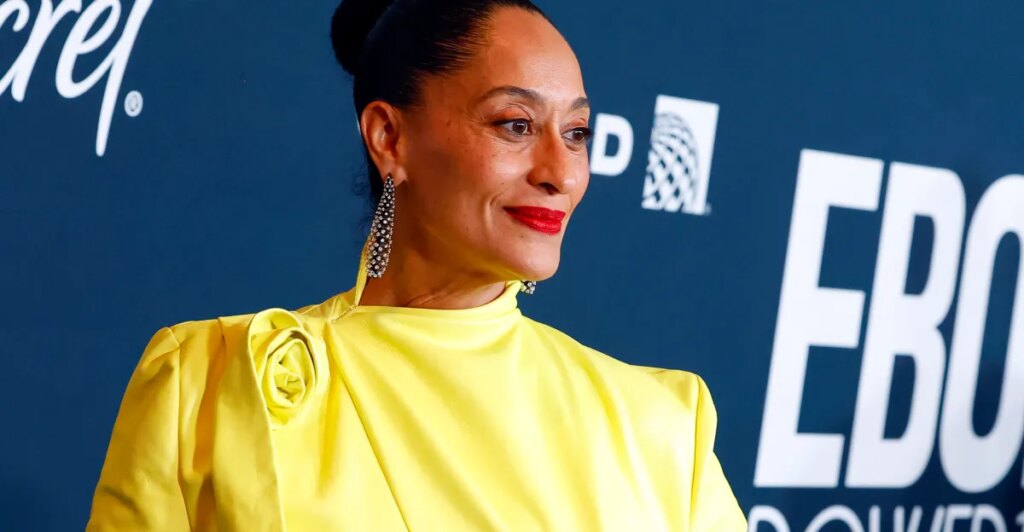
Elsewhere in pop culture, several famous women, like actresses Julia Fox and Charlize Theron, have been open about their experiences embracing singlehood. Ross, 53, has played a role in reversing reductive notions around the “spinster,” documenting her jetsetting lifestyle on the popular Roku series Solo Traveling With Tracee Ellis Ross and going viral for her thoughtful nuggets about single living. “Not having long relationships, not having children has allowed me to explore things of my own humanity,” Ellis said in one episode.
A radical (or reasonable) response to our current gender war
The “decentering men” trend has traces of South Korea’s 4B movement, which gained more exposure in the United States following Donald Trump’s reelection — and maybe, not a coincidence that the phrase has gained traction online this year. The Lysistrata-esque boycott requires that participants abstain from four social activities with men — marriage, dating, sex, and childbearing — to combat South Korea’s patriarchal social structure and oppressive beauty standards.
The niche but renowned protest was developed by feminist Twitter users in 2017 and 2018, around the time of South Korea’s #Me Too Movement. It’s notably more strict in its directives than anything the mainstream feminist movements in the US around that time suggested. One of the critiques of the US’s Me Too movement was that it didn’t have concrete political aims or agreed-upon methods to attain them. The fact that Google searches for “4B” spiked after the election exhibits a curiosity for a more radical and plain approach to achieving gender equality.
But “decentering men” also taps into other recent veins of criticism of so-called male-centered women and “pick me’s” — terms used to describe women whose entire existence is about attracting men.
It’s hard to view these anti-men sentiments as anything but a natural response to a tough dating landscape and a world increasingly influenced by misogynistic, far-right politicians and influencers. But, is it a bad thing to watch so many women descend into heterofatalism? Whatever one’s reasoning for “decentering men” might be, it’s striking that being a single adult woman is no longer a death sentence but an increasingly normalized lifestyle choice.
exit the tornado stage left #singletok #decenteringmen #dateyourself #decentermen #scottsdalearizona #almost30
For example, a 2023 Pew Research Center study found that only 34 percent of single women in the US are actively seeking romantic relationships, compared to 54 percent of single men. The notion of “decentering men” has become a useful way to discuss this more pessimistic approach to dating.
But, according to the term’s creator, it isn’t as radical or anti-relationship as it may look on paper. In a blog post titled “Decentering Men: Why You Need To Let Go of Men,” Taylor encourages to let go of the “idea of men” as the ultimate prize but says this doesn’t mean “forgo[ing] romantic relationships, pleasure, or touch because those things are essential for the human experience.” While the phrase has seemingly given women permission to live a life free from men, it literally just means not making men the center of your universe.
As modern dating has become more hellish, single living has gotten a makeover
Still, the idea of decentering men has provided some young women an exit ramp out of the dating world, which has proven to be particularly dire for Gen Z.
TikTok has essentially become a documentary about the horrors of heterosexual dating for young people. On any given scroll, you can find women recounting their awful dating experiences or sharing screenshots of their weird interactions on Hinge. It’s also become normal for users to expose people who they’ve caught cheating on the platform or expose men for talking to multiple women at the same time. There are also plenty of sentiments about Gen Z men and women sabotaging their own dating lives, with safety apps like Tea that are mostly used for gossip and arbitrary demands and red flags for potential partners.
The “decentering men” movement coincides with some studies that show some members of Gen Z simply have less romantic experience or desire to seriously date than previous generations.
Women are also opting against a relationship during a politically fraught time. For example, an NBC News poll in April found the partisan divide between men and women ages 18 to 29 to be wider than that of any other age range, with 53 percent of Gen Z women identifying as Democrats, compared to just 35 percent of Gen Z men. In addition to young men identifying as more conservative, they’re interacting with a digital landscape that’s pushing misogynistic content and has seen the mainstream rise of the “manosphere.”

As young women on TikTok proudly announce their voluntary singlehood, there doesn’t seem to be as much of a fear of being labeled an “old maid” or the “crazy cat lady” for not settling down with a man.
It’s a far cry from the days when Americans “feared for single women’s safety and psychological health when they chose to delay marriage or reject it altogether,” according to Albright College professor Katherine J. Lehman, who wrote the book Those Girls: Single Women in Sixties and Seventies Pop Culture.
“At least in post-World War II America, we have been taught to see the nuclear family as the primary social unit, and have encouraged women to prioritize marriage and motherhood for both their own well-being and societal stability,” Lehman says.
While some of this stigma has lessened over time, Lehman adds that “single women who pursue independence” are “still warned about losing their femininity or facing loneliness.”
For a lot of Gen Z, though, it seems like women have a collective understanding of finding a partner as a difficult and potentially humiliating pursuit.
Overall, this has allowed many young women to discover the more practical benefits of being a single person, including financial freedom and a lack of household responsibilities that can come with being partnered, says social scientist Bella DePaulo, author of the book Single at Heart. Most of all, there’s the endless possibilities of one’s time solely belonging to themselves.
“Contrary to stereotypes, single life, rather than being a smaller or lesser life, can be a more expansive and psychologically rich life,” she said. “Rather than putting a romantic partner at the center of your life and demoting everyone else, single people can spend as much time as they want with as many different people they want, without worrying that a romantic partner thinks that time belongs to them.”
The post The year of ‘decentering men’ appeared first on Vox.