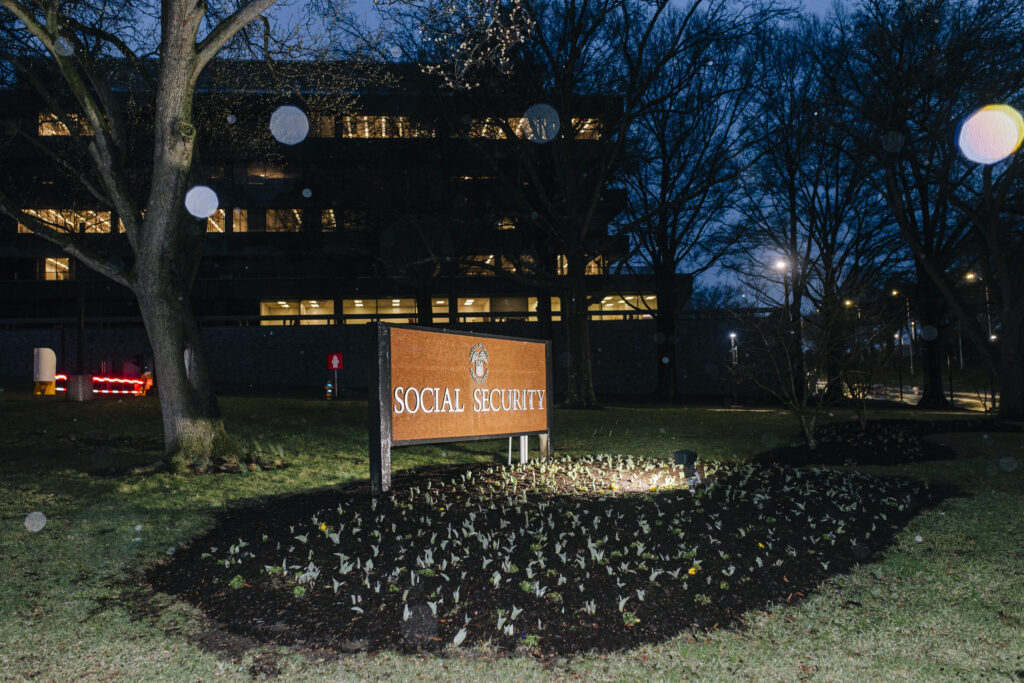
The Social Security Administration — the sprawling federal agency that delivers retirement, disability and survivor benefits to 74 million Americans — began the second Trump administration with a hostile takeover.
It ends the year in turmoil. A diminished workforce has struggled to respond to up to 6 million pending cases in its processing centers and 12 million transactions in its field offices — record backlogs that have delayed basic services to millions of customers, according to internal agency documents and dozens of interviews.
Long-strained customer services at Social Security have become worse by many key measures since President Donald Trump began his second term, agency data and interviews show, as thousands of employees were fired or quit and hasty policy changes and reassignments left inexperienced staff to handle the aftermath.
Exaggerated claims of fraud, for example, have led to new roadblocks for elderly beneficiaries, disabled people and legal immigrants, who are now required to complete some transactions in person or online rather than by phone. Even so, the number of calls to the agency for the year hit 93 million as of late September — a six-year high, data shows.
The troubled disability benefits system is also deteriorating after some improvement, with 66 percent of disability appointments scheduled within 28 days as of December — down from nearly 90 percent earlier in the year, data shows.
One notable exception is phone service, which improved in the second half of the year but is still subpar. Average hold times peaked at about 2½ hours in March, but dropped starting in July as employees were diverted from field office duties to fix what had become a public relations crisis. Average wait times for callbacks remain an hour or longer, however, while new delays have emerged elsewhere in the system, internal data shows.
“It was not good before, don’t get me wrong, but the cracks are more than beginning to show,” said John Pfannenstein, a claims specialist outside Seattle and president of Local 3937 of the American Federation of Government Employees, which represents most Social Security employees. “It is a great amount of stress on our employees that remain on the job, who haven’t jumped ship.”
Commissioner Frank Bisignano has authorized millions of dollars in overtime pay to employees in a race to clear the bottlenecks, which worsened dramatically after nearly 7,000 employees — 12 percent of the workforce — were squeezed out early in the year. The agency said it has made improvements: It reduced the processing center backlog by 1 million cases this fall, cut pending disability claims by a third and kept the website live 24/7 after a series of outages earlier this year.
The current crisis follows years of disinvestment by Congress and acting leadership, despite a surge in baby boomer retirements. Bisignano promised faster service and a leaner workforce with a digital identity that he says will automate simple retirement claims and other operations.
“In the coming year, we will continue our digital-first approach to further enhance customer service by introducing new service features and functionality across each of our service channels to better meet the needs of the more than 330 million Americans with Social Security numbers,” the commissioner said in a statement to The Washington Post.
But responsiveness and trust in the agency have suffered, according to current and former officials and public polling.
This account of the crisis at Social Security is based on internal documents and interviews with 41 current and former employees, advocates and customers, many of whom spoke on the condition of anonymity to speak candidly about their concerns.
Social Security officials declined to make Bisignano available for an interview, though he did respond to written questions.
Three days before Christmas, Brian Morrissey, 65, arrived at the field office in Silver Spring, Maryland, for an appointment to apply for Medicare. He had tried the “MySSA” website, “but navigating it was just really hard,” he said. Morrissey owns a home improvement business, he said.
“If they can make the process easier online, great, but right now it is not well designed,” he said. So his wife waited 30 minutes on hold to schedule a face-to-face appointment for him.
Aime Ledoux Tchameni, an immigrant from Cameroon, waited in line at the Silver Spring office to get an appointment time to fix his last name from being listed as his first name — a mistake that occurred when he came to the U.S. two years ago. He has a provisional driver’s license from Maryland and needs to clear up his name with Social Security by mid-January, he said. But his appointment is not until Feb. 9.
“This is really going to cause me problems, because I need my driver’s license to get to work,” Tchameni said in French. “I don’t understand why I have to wait so long.”
‘I flipped the switch’
The table was set in February by Elon Musk and his Department of Government Efficiency, or DOGE, which installed a loyal, mid-level data analyst with no management experience to lead the $15.4 billion agency.
That former analyst, Leland Dudek, insists that he saved Social Security from a worse fate under Musk’s cost-cutting team. “I flipped the switch,” he said in a recent interview, referring to his disruptive four-month tenure as acting commissioner. “The casualty of that is a smaller SSA, an SSA that is being, for the first time, subject to the whims of being a political organization, which it was never intended to be.”
Regional offices abruptly disappeared in a rushed reorganization. New policies to fight fraud were rolled out only to be canceled or changed, prompting confused customers to jam the phones and the website, which crashed repeatedly. Daily operations in some respects became an endless game of whack-a-mole as employees were pulled from one department to another.
Along the way, Social Security also became ground zero in the administration’s quest to gather Americans’ personal data — largely in service of its mass deportation campaign.
The chaos quickly became a political cudgel, as Democrats saw an opening to defend one of the country’s most popular entitlement programs. Senate Democrats, led by Sen. Elizabeth Warren (Massachusetts), set up a “war room,” holding rallies with former commissioners in both parties and issuing demands for more resources to keep the Trump administration on the defensive.
“We’ve kept up the pressure and held Donald Trump, Elon Musk and Frank Bisignano accountable for the chaos they’ve caused,” Warren said in an interview.
Many critics note that Bisignano, a Wall Street veteran who became commissioner in May, now wears a second hat as CEO of the Internal Revenue Service— another massive portfolio with a multibillion-dollar budget.
In a statement, Bisignano said his shared leadership of Social Security and the IRS “will drive a better outcome for the American public.” He said he envisions “a Social Security Administration that is easier to access, faster to respond, and better prepared to meet the challenges facing Americans.”
Bisignano also said he is working to improve morale and “have the right level of staffing to operate at peak efficiency and deliver best-in-class customer service to the American people.”
‘Work piles up’
By the time Bisignano was confirmed by the Senate, Social Security had been led by three acting commissioners in six months. He pledged to stabilize the upheaval.
But he confronted immediate challenges. Dudek had reassigned 2,000 employees in administrative, analytical and technical roles to jobs dealing with the public. Many accepted the switch under threat of firing if they refused. Some began working the phones. But the national toll-free number was still in crisis, so another 1,000 staffers were assigned to the phones in July. The employees were thrown in with minimal training, multiple employees said — and found themselves unable to answer much beyond basic questions. The phone staff was told to keep calls under seven minutes in what became a push for volume over quality, employees said.
Although officials have publicly claimed that wait times have improved to single digits in some cases, those numbers do not account for the time it takes for customers to be called back, according to internal metrics obtained by The Post.
An audit published by the Social Security inspector general’s office on Dec. 22 confirmed that millions of callers requesting callbacks were counted as zero-minute waits by the agency. The review concluded that the metrics themselves were accurate, however, and showed that customer service overall has improved.
Jenn Jones, AARP’s vice president of financial security, said the improved phone service numbers were “encouraging” but that “more work needs to be done.”
“Wait times for callbacks remain over an hour, and more than a quarter of callers are not being served — by getting disconnected or never receiving a callback, for instance,” Jones said in a statement.
Public outcry and pushback from congressional Democrats derailed the planned closure of dozens of field offices that DOGE had said were no longer needed.
Meanwhile, Dudek’s workforce cuts led field offices to shed 9 percent of their employees by spring due to early retirement and deferred resignation offers. Overtime was restricted and hiring was frozen, even as customer visits continued to climb.
Shortly after taking office, Bisignano’s field operations chief, Andy Sriubas, wrote in an email to the staff that field offices “are, and will always remain, our front line — our face in the community and the primary point of in-person contact.”
In the near term, though, the frontline staff were overwhelmed. Attrition was geographically uneven, with some offices losing a quarter of their employees to early retirement offers just as foot traffic grew, according to a staffing analysis by the AFGE’s research arm, the Strategic Organizing Center. The union calculated that there were about 4,000 beneficiaries for every field office employee from March 2024 to August of this year.
In several states that ratio is worse, the union found. Wyoming’s single field office, for example, has just 18 employees — or one for every 7,429 beneficiaries.
The shortages have created temporary office closures in many rural areas, some for days or months at a time. The office in Havre, Montana, has been closed for months, with the nearest one almost two hours away in Butte.
Today a majority of Social Security staffers who accepted reassignments have not been fully or properly trained, according to several employees with direct knowledge of the initiative. Instruction is often truncated so the staff can respond to customers. Officials said they provide training based on the employee’s level of experience and review the reassigned employees’ work.
“They offered minimal training and basically threw them in to sink or swim,” one veteran employee said of their transferred colleagues.
Training on the phone system and complicated claims and benefit programs lasted four hours for some reassigned workers when it should have taken six months, another employee said. As a result, some customers still can’t get basic questions answered or are given inaccurate information, according to a half-dozen staffers who answer the phones or work closely with employees who do.
The increased workload, hiring freeze and departures have made it harder for the staff to complete their daily tasks, said Jordan Harwell, a Butte, Montana, field office employee who is president of AFGE Local 4012. The staff used to find time between calls to process pay stubs, take in new disability applications and schedule appointments, but now “that work piles up,” he said.
DOGE officials, citing fraud concerns, also required direct deposit changes to be done in person or online — but getting online now calls for new identity verification measures that do not come easily to many elderly or disabled customers. Immigrants approved for green cards to work in the U.S. are now required to get Social Security cards in person under a Trump anti-fraud policy, producing a flood of new field office visits.
In one Indiana field office, one employee said she drags herself to work every day, dreading what will come next. Although she was hired as a claims specialist, she and her colleagues are being told to prioritize answering the phones, which never stop ringing now that her office is taking calls for both Indiana and parts of Illinois due to reorganizations and reductions.
That means she is forced to let other work pile up: calls from people asking about decisions in their cases, claims filed online and anyone who tries to submit forms to Social Security — like proof of marriage — through snail mail.
As the backlogs keep building, she is taking calls from 25 or so people every day, already knowing that she won’t be able to help five or six of them. These are elderly people, often poor or bedridden, who have no way to comply with the change requiring that direct deposit actions take place in person or online. Usually they’re calling because something has happened to their bank accounts and they need to alter their financial information. But they can’t access a computer, the employee said, and driving is out of the question.
She received a call this month from a 75-year-old man who suffered a massive stroke that left him unable to drive. He’d also had to switch banks and, as a result, hadn’t received Social Security checks for the last two or three months.
“I had to sit there on the phone and tell this guy, ‘You have to find someone to come in … or, do you have a relative with a computer who can help you or something like that?’” she recalled. “He was just like, ‘No, no, no.’”
She ended that call by telling the man to call his bank, hoping they might be able to help when her agency, hampered by administration policies, no longer could.
‘Everybody started laughing’
As the staff races to answer the phones, other tasks are backing up, including Medicare applications, disability claims that require initial vetting by field offices and other transactions that cannot be solved in one conversation. Any case falling in that category is redirected to a processing center, where the backlogs have been building all year.
These back-office operations, located across the country, often handle labor-intensive, highly complex cases that do not call for automated resolution. Among the tasks are issuing checks, including for back pay, to disabled people whose denial of benefits was reversed by an administrative law judge.
As Congress kept funding flat for Social Security over many years, the processing operations fell way behind, requiring headquarters employees to help handle the volume. But it was never as bad as it got this fall.
Many disability payments now take three to six months to process when they used to take weeks, advocates and employees said.
At the start of September, one benefits authorizer in a processing center was called into an all-staff meeting with her colleagues, she said. There, management explained that the backlog at the time — 6 million cases — was unacceptable and that everyone would have to work overtime in an attempt to drive it down to 2 million by Christmas.
“When they told us that, everybody started laughing,” she said. “Because there is just absolutely no way to get it down in that short period of time.”
Still, she and her colleagues have been hustling, she said, processing cases as fast as they can, even as they can see their haste sometimes causes errors. No time to fix them, she has decided: Best to just keep moving.
Meanwhile, another staffer, who answers phones at a national call center, said she has changed what she says to customers when she realizes their claim can’t be finished in one conversation and must be referred to a payment center.
“I’m supposed to reassure people it’s being worked on,” she said. “But now I avoid giving people a firm date they can expect it to be done by.”
Just before Thanksgiving, Bisignano said that starting next year, he hopes to slash field office visits by half. More than 31 million people visited field offices in the last fiscal year — or tried to. Critics say the change will dismantle the fail-safe for those who cannot use computers, no matter how imperfect.
At the same time, in recent weeks, hundreds of employees who transferred to customer service operations have been recalled to the roles they were originally hired to fill. Others have been reassigned to a new “digital engagement” office.
Social Security has told Congress it plans to put more resources toward IT, with an expected increase of $591 million this fiscal year compared to fiscal 2025, according to the agency’s budget justification. The agency also expects to pay $367 million less on payroll than it did the year before.
Social Security also plans to roll out a new program that will allow customers to book phone appointments with field offices throughout the country, no matter where they live, according to two people familiar with the plans.
The goal is to reduce the number of field office visits, though one field office employee said the change will probably lead to a greater workload for staff keeping up with queries from customers outside their area.
“They’ve created problems and now they are trying to fix problems they created,” the worker said.
During Christmas week, the grind continued for most frontline staff. After Trump signed an executive order last week closing most federal offices on Christmas Eve and Friday, Bisignano told his staff that field offices, teleservice centers, processing centers and more operations would remain open.
“In order to balance the needs of the public and our workforce, we will solicit interest from employees who would like to work on Wednesday and Friday,” he wrote.
The post How Social Security has gotten worse under Trump appeared first on Washington Post.