China intensified military exercises around Taiwan on Tuesday, firing long-range artillery into waters off the island. The People’s Liberation Army also sent out new amphibious assault ships while its vessels and aircraft practiced repelling an approaching enemy force, displaying its ability to isolate the island.
The exercises, called “Justice Mission 2025,” had started a day earlier, when Chinese bombers, fighter jets, warships, drones and missile units made a show of force that was accompanied by combative rhetoric and martial videos online. China has declared that its forces will conduct the exercises in seven zones on all sides of the island.
On Tuesday, China’s military said its destroyers, frigates and fighter-bombers had operated near the northern and southern ends of the Taiwan, where they tested their ability to spot and attack enemy aircraft, ships and submarines. It also warned ships and aircraft not involved in the drills to stay away from the seven live-fire zones, which were to be in force until the evening.
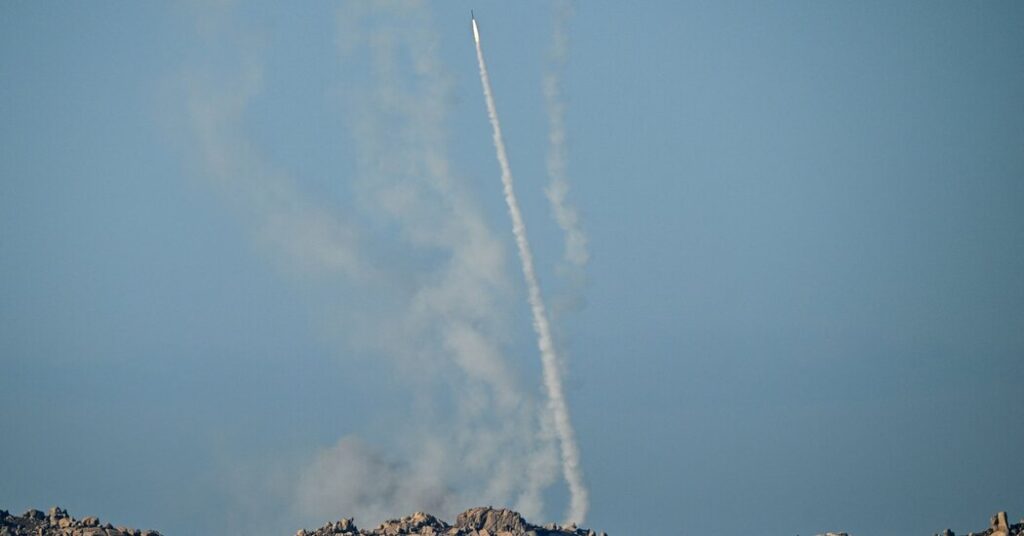
Taiwan’s Ministry of National Defense said that Chinese long-range artillery units in Fujian, the province opposite Taiwan, had fired into waters north of the island that were outside the 24-nautical mile boundary within which Taiwan enforces its laws. China’s military confirmed that it had fired to the north of Taiwan, and later said it had also fired long-range artillery into sea to the island’s south.
China’s military released a video that it said showed a mobile rocket launcher firing a volley of ammunition that landed in a patch of sea. The launcher appeared to be a PCH191 model, a nimble, relatively cheap weapon that China has made in larger numbers as an alternative to bigger, more costly missile launchers, experts said.
“They can fire basically anywhere along the coast to range most, if not all, of Taiwan,” Joshua Arostegui, the research director of the China Landpower Studies Center at the U.S. Army War College and author of a paper about the launcher, said in an earlier interview.
Taiwan’s defense ministry said that as of Tuesday morning, it had spotted 14 Chinese warships and 130 military aircraft, including fighter jets and bombers that flew along the eastern side of the island. This is the direction from which the United States or its allies might approach in an attempt to defend Taiwan.
China’s leaders have for decades said that Taiwan is their country’s lost territory, and that they may use armed force if prospects for peaceful unification evaporate. In recent years, China has staged exercises near Taiwan to demonstrate its anger at the island’s government, which has called Beijing a threat to the island’s democracy and self-rule.
The current exercises ended an eight-month stretch of relative calm in the Taiwan Strait. With the abrupt resumption of drills, China’s leader, Xi Jinping, is apparently offering a sharp reminder to Taiwan — as well as other countries and China’s own people — that the People’s Liberation Army stands ready to attack the island, if ordered.
However, they were also a training drill for a possible attack or blockade of the island, said Ben Lewis, the founder of P.L.A. Tracker, a website that monitors Chinese military activities. They came only a week after Mr. Xi appointed a new commander for the Chinese military’s Eastern Theater, the area that includes Taiwan.
“It seemed to me that the Eastern Theater Command wanted to test and also demonstrate its ability to rapidly surge forces forward in order to, as they described, seize comprehensive control of sea and air domains,” Mr. Lewis said in an interview. “They were able to very quickly shift from their kind of routine posture to an exercise or an attack posture.”
China also may be trying to intimidate Japan, where the new prime minister, Sanae Takaichi, has indicated that her country could come to Taiwan’s aid if China attacked it, and has stood firm despite China’s warnings and boycotts. The exercises also came after the U.S. administration released details of more than $11 billion in proposed arms sales to Taiwan.
A spokesman for the Chinese military indicated that the exercises were meant to warn off other countries that may offer support for the island-democracy.
“External forces have recently crossed the line repeatedly on the Taiwan issue, recklessly attempting to embolden and encourage ‘Taiwan independence’ separatist forces,” Zhang Xiaogang, a spokesman for China’s Ministry of National Defense, said in comments issued late on Monday.
Through the exercises Chinese leaders appeared to be trying to demonstrate “that Japan would and could do nothing” to defend Taiwan, said Yun Sun, the director of the China Program at the Stimson Center in Washington.
“I actually think the Japan angle is the primary driver of China’s decision on the military exercise,” she said. “China has backed itself into a corner by accepting nothing less than Takaichi’s formal withdrawal of her comment. That is not going to happen.”
China appears to have positioned three of its seven live-fire exercise zones to show it could block sea and air traffic between Taiwan and Japan, said Chieh Chung, a researcher at the Institute for National Defense and Security Research in Taipei, an organization supported by the Taiwanese ministry of defense. This “lines up precisely” with a goal of trying to block intervention in a possible conflict by Japanese forces or U.S. forces based in Japan, he said in written comments.
Mr. Xi also appears to have calculated that two days of exercises will not disrupt relations with President Trump ahead of a planned summit in April, said several experts. At the Beijing summit, Mr. Xi may try to persuade Mr. Trump to declare opposition to Taiwanese independence, or at least restate the longstanding U.S. position that its does not support moves toward independence, said Bonnie S. Glaser, the managing director of the Indo-Pacific program at the German Marshall Fund of the United States.
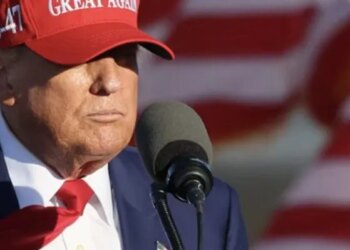
When asked about the exercises during a news conference on Monday, Mr. Trump appeared unperturbed.
“They’ve been doing that for 20, 25 years,” he said.
Chris Buckley, the chief China correspondent for The Times, reports on China and Taiwan from Taipei, focused on politics, social change and security and military issues.
The post With Live Artillery and New Warships, China Practices Blockading Taiwan appeared first on New York Times.