Privacy isn’t dead. Just ask Kristi Noem.
The Department of Homeland Security secretary has spent 2025 trying to convince the American public that identifying roving bands of masked federal agents is “doxing”—and that revealing these public servants’ identities is “violence.” Noem is wrong on both fronts, legal experts say, but her claims of doxing highlight a central conflict in the current era: Surveillance now goes both ways.
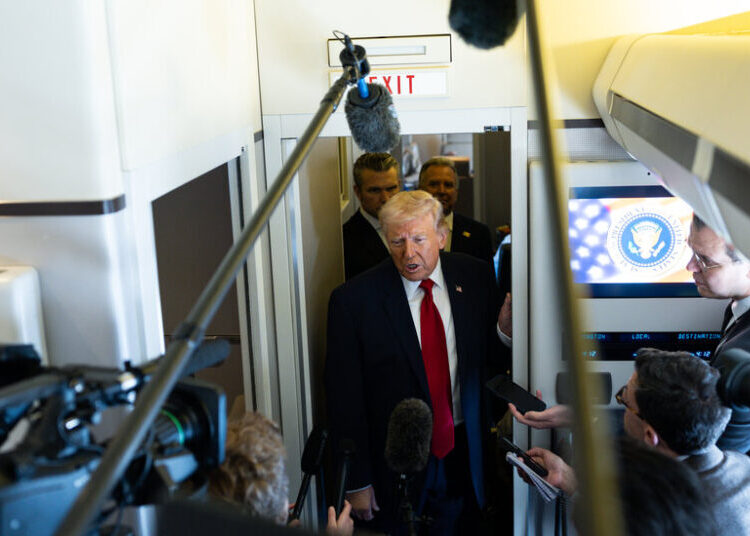
Over the nearly 12 months since President Donald Trump took office for a second time, life in the United States has been torn asunder by relentless arrests and raids by officers from Immigration and Customs Enforcement, Customs and Border Protection, and federal, state, and local authorities deputized to carry out immigration actions. Many of these agents are hiding their identities on the administration-approved basis that they are the ones at risk. US residents, in response, have ramped up their documentation of law enforcement activity to seemingly unprecedented levels.
expired: opposing surveillancetired:getting surveilled by the copswired: surveilling the cops
“ICE watch” groups have appeared across the country. Apps for tracking immigration enforcement activity have popped up on (then disappeared from) Apple and Google app stores. Social media feeds are awash in videos of unidentified agents tackling men in parking lots, throwing women to the ground, and ripping families apart. From Los Angeles to Chicago to Raleigh, North Carolina, neighbors and passersby have pulled out their phones to document members of their communities being arrested and vanishing into the Trump administration’s machinery.
That’s not to say it’s new, of course. Documenting law enforcement activity to counter the he said, he said imbalance of power between police and civilians is practically an American tradition, says Adam Schwartz, privacy litigation director at the Electronic Frontier Foundation, a civil liberties nonprofit. “This goes back at least as far as the 1968 Democratic Convention when journalists documented police officers rioting and beating up protesters—and lying about who was responsible for this,” he says.
Jennifer Granick, an attorney with the American Civil Liberties Union’s Speech, Privacy, and Technology Project, says the practice likely goes back “centuries.” Indeed, documenting police activity is likely as old as policing itself. “The difference [today] is that technology has made it so everybody has a video recorder with them at all times,” Granick says. “And then it’s very easy to get that recording out to the public.”
Non-journalists recording police activity entered the mainstream after a bystander, George Holliday, videotaped Los Angeles Police Department officers brutally beating Rodney King, a Black man, in March 1991 and shared the footage with local media. The video would set off a national reckoning over race and policing in modern America.
National unrest sparked again in 2020 after a teenager recorded a white Minnesota police officer, Derek Chauvin, kneeling on the neck of 46-year-old George Floyd. (Chauvin was later convicted of Floyd’s murder.) The Black Lives Matter movement that followed the death of Floyd and other Black Americans at the hands of police grew hot and fast that summer thanks to social media and the easy recording and sharing of video footage. In 2025, the practice of recording police on a systematic scale turned from an activity largely carried out by protesters and activists into a populist practice carried out by anyone who happens to be around.
“What we are seeing in the last year is an escalation by law enforcement of what they are doing in our communities, including sending armed, masked thugs onto our streets to detain people for no reason other than that they look like they are Mexican and subjecting them to humiliating, dangerous encounters,” says Schwartz. “And so, many Americans—as they have been doing for decades when they see the police officers on their streets acting like lawless rogue thugs—have pulled out their cameras and documented them.”
The Trump administration’s response has been swift and punitive, and it has met with mixed results. In September, a federal grand jury indicted three people for allegedly following an ICE agent home while “livestreaming his home address on Instagram.” The same month, DHS subpoenaed Instagram owner Meta in an attempt to unmask six Instagram accounts “pursuant to an official, criminal investigation regarding officer safety.” (In early December, the subpoena was withdrawn.) Escalating matters further, the FBI has reportedly launched “criminal and domestic terrorism investigations” into “threats against immigration enforcement activity” in at least 23 areas around the US, according to a bureau document obtained by The Guardian.
Doxing is not a legal term nor a formal criminal offense. But even that could change if Trump administration allies have their way. In June, Republican senator Marsha Blackburn introduced the Protecting Law Enforcement From Doxing Act. It has yet to receive any movement in Congress from Blackburn’s fellow lawmakers.
Outside legal avenues, Schwartz says, supporters of the Trump administration have been “jawboning” people on social media in an attempt to pressure them to remove the content that they’ve put up, or to get information about the people uploading that content from their social media profiles.
To be clear, the public generally has the right to record police in public, provided they’re not interfering with official business. As Schwartz put it, this kind of government accountability is “a basic paradigm under our Constitution.” Furthermore, Schwartz emphasizes that calling public accountability “surveillance” is the wrong way to think about it. “What the government owes to people is that the people get to be private,” Schwartz says. “What the government owes the public is transparency. The public gets to know what the government is doing.”
Granick agrees. “I don’t think that police or ICE agents have an expectation of privacy when they are out in public as government officials claiming to be doing the public’s business,” Granick says. “In those situations, the public has a right to know what they’re doing.”
The notion of privacy in America is ever-changing—an evolution supercharged by social media, data collection, and the post-9/11 surveillance state. Some may see the increase in populist accountability of ICE and other law enforcement as a further erosion of privacy overall. Granick, however, says it’s nothing compared to the government surveillance everyone is up against.
“The police have license plate readers, and camera networks, and warrants to get the content of our communications, and other legal means to get information about our communications,” Granick says. “The government so far outstrips the ability of regular people to find out what they’re doing. And when we’re talking about a distributed network of observers, it doesn’t compare to the level of privacy intrusion that the government not just is capable of, but takes advantage of all the time.”
The post The New Surveillance State Is You appeared first on Wired.