This story is taken from the fall 2025 issue of VICE magazine, THE BE QUIET AND DRIVE ISSUE, a Deftones special. We’ve sold out our copies, the only ones left are in stores—perhaps there’s one near you? Secure yourself the next 4 issues by subscribing.
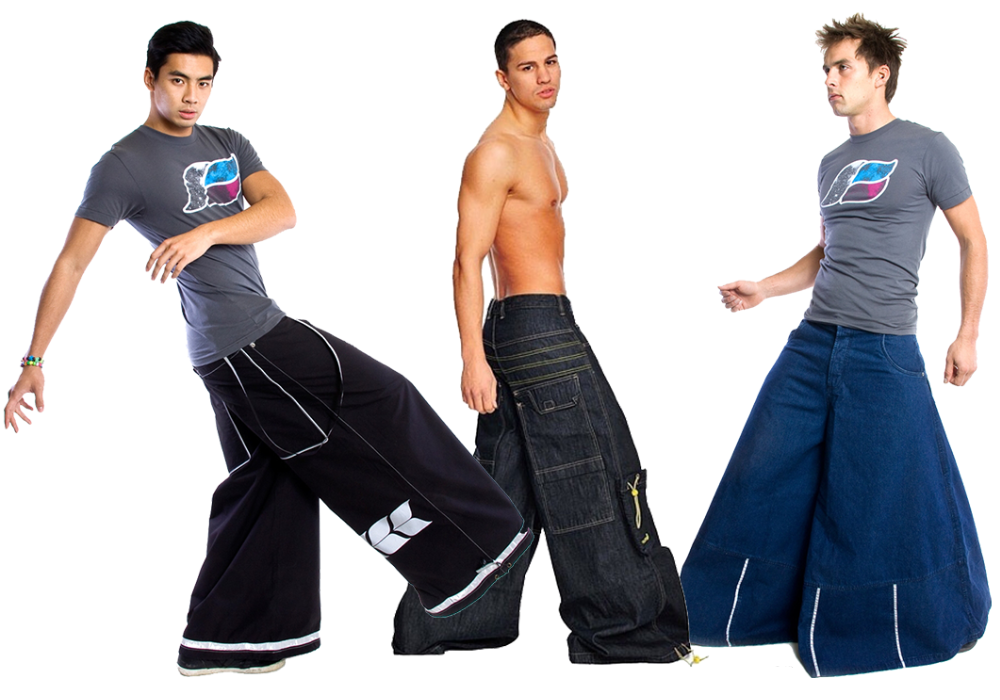
The robots that were meant to take over the housework are giving people psychosis, our democratic rights are being deleted to launder the reputation of history’s most tasteless colonial project, and the planet is so doomed we’re going to the moon. As the vibe of the 21st century continues to scare the hoes, it’s looking increasingly like the 1990s—age of dial-up internet, Disney’s The Hunchback of Notre Dame, and the enormous jean—were the closest we came to creating an earthly utopia. And maybe there’s a lesson in that.
Popular fashion is often a rejection of what came before, and baggy pants first emerged in the late 80s as a reaction to the skintight jeans that had defined cool for the better part of the decade. MC Hammer’s infamously large trousers eventually evolved into the baggy, low-slung denim worn by his proteges, Tupac and Biggie, and as hip-hop style seeped into the mainstream, the spray-on jeans of thrash metal bands found themselves thrashed into the dustbin of history.
Although heritage denim brands such as Levi’s, Wrangler, and Calvin Klein soon released looser styles in line with emerging trends, there is only one name that comes to mind when talking about enormous jeans: JNCO. Allegedly, this stands for “Judge None Choose One,” which sounds like one of those acronyms they make up afterwards until you realize the phrase is essentially meaningless and it’s impossible to say JNCO without sounding like you’re Dutch or sneezing. Founded in 1985 by the Moroccan-French Revah brothers, the trousers were inspired by the Latinos the recent arrivals saw walking around their new home in LA. The brothers cemented their pan-Latina belt credibility by commissioning local graffiti artist Joseph “Nuke” Montalvo to design their four-pronged crown logo. The look was quickly embraced by the rave crowd, with skaters and surfers soon following—not only for the aesthetic, but because the loose fit allowed for comfort and flexibility while doing kickflips, scaling fences, and so on.
In 1996, when JNCO’s distributor Merry-Go-Round—a retail chain and teen hangout—went bankrupt, the brothers brought in marketing mogul Steven Sternberg to reimagine the brand. Sternberg became responsible for “retool[ing] JNCO from an urban to a strictly suburban line,” as he put it in a 2015 interview with Racked. He recruited lame people that only provincial children would ever think of as cool—breakdancers, graffiti artists, DJs, Limp Bizkit—as proto-influencers, took out ads in Thrasher featuring underground skaters like Jimmy Moore and Sam Hintz, and began stocking the jeans in Hot Topic and PacSun. Many of the ads featured “JNCO girls,” who typically paired them with halter tops and thin straps in a silhouette that would foreshadow the “big pant tiny shirt” combo currently ubiquitous everywhere that people read this magazine.
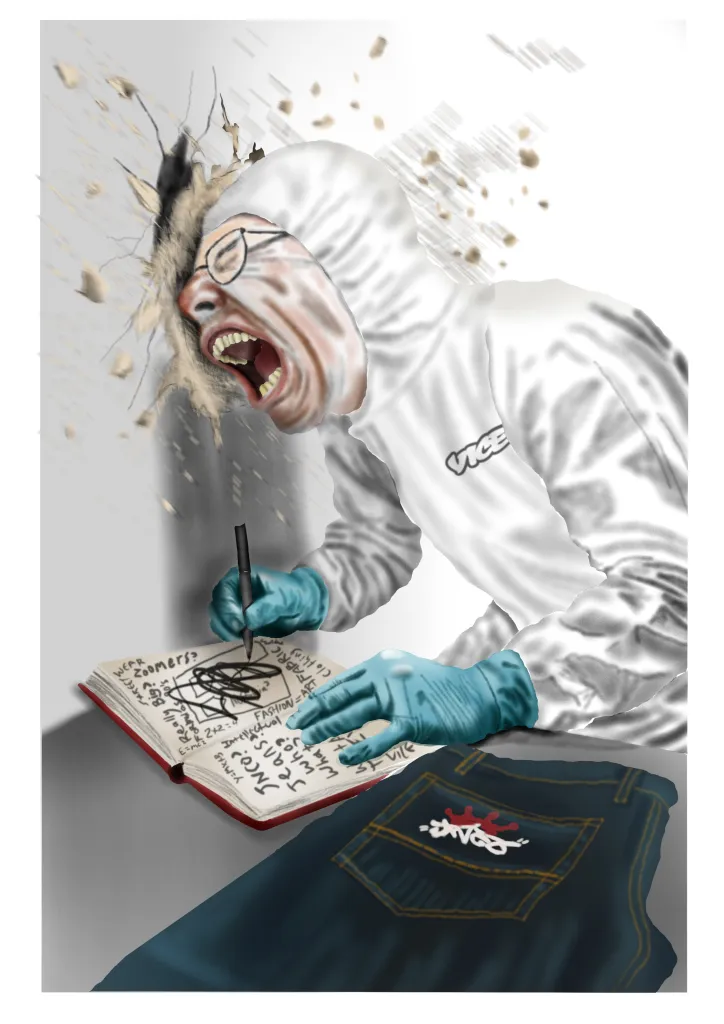
It worked. JNCOs became synonymous with the angsty, impetuous world of nu-metal, and soon enough they were the weapon of choice for slacker middle-class white kids hoping to piss off their parents by traipsing through the house with sodden trouser hems that had soaked up every last droplet of moisture and speck of dirt from the pavement. Schools in the U.S. flat-out banned them, deeming them a health hazard due to the risk of tripping, but also because they feared the 18-inch deep pockets could be used to conceal weapons. In reality, the massive pockets were merely being used to carry clunky Discmans with a Korn album inside. (The band themselves, for what it’s worth, were not directly involved in the trend: “I never wore JNCOs, I can honestly say I did not partake in it… who started that?” frontman Jonathan Davis asked in a 2019 interview with KISW FM.) Obviously, this moral panic immediately made the jeans a symbol of anti-establishment rebellion, and thus even more desirable to teenagers.
The brand peaked in 1998, raking in $186.9 million in yearly sales; by 1999 this had dropped by nearly half to $100 million, and a year later, they were forced to shut down their LA manufacturing facility. The jeans had gone mainstream (derogatory), and for women the Y2K trend cycle rocked on to low-rise and bootcut jeans worn by the rising crop of pop princesses. Still, JNCOs, and big pants in general, remained an alt-kid favorite for several more years, as evidenced by the vintage photos of Avril Lavigne, Juggalos, and teenagers in Deftones tees lost in the swamps of Ozzfest 2001.
“This moral panic immediately made the jeans a symbol of anti-establishment rebellion, and thus even more desirable to teenagers”
Streetwear wasn’t ready to let go of the extra legroom either. Brands like FUBU, Ecko, and Phat Farm kept rappers in loose, graffiti-motifed “three-quarter lengths” that actually swung around the ankles. Chingy wore an orange pair on the red carpet at the BET Awards as late as 2005, but the second coming of the skinny jean was just around the corner.
For the next decade or so, during what Instagram historians are now calling the “indie sleaze” era, the baggiest trouser silhouette you could find on the high street was the “boyfriend jean.” Jorts were consigned to the realms of dads on holiday, Adam Sandler, and the Twilight wolf pack. Levi’s cutoffs, Daisy Dukes, and tiny American Apparel hotpants (barely) covered arses during the summer, and in the winter they were paired with tights and sodden ballet flats.
Eventually, though, the ouroboros of fashion came full circle, along with a global pandemic and the reincarnation of Chingy (who, for legal reasons, I would like to clarify is still alive) in the body of a white teenage girl named Billie Eilish. Stuck at home rewatching RHOBH on the sofa, nobody wanted to wear anything that clung to their bodies or had a non-elasticated waistband. By the time it was safe to go outside again, skinny jeans had become the preserve of Love Island contestants, best accessorized with a mouthful of fluorescent teeth and a flash-on Instagram story of a tray of Apple Sourz.
Streetwear’s influence had seeped up into high fashion and back down to the high street once more, and baggy jeans adorned the legs of everyone from the male models on JW Anderson’s runway to Ganni girlies. Although JNCO haven’t quite managed to recapture the zeitgeist in the same way since relaunching in 2019, their influence is evident wherever you look.
“Schools in the U.S. flat-out banned them, fearing the 18-inch deep pockets could be used to conceal weapons”
Bella Hadid, her sister Gigi, EmRata, Kendall Jenner, and Hailey Bieber have all swapped denim cutoffs for loose, knee-length jorts. A growing desire for comfort, Y2K nostalgia, and a shift towards gender-neutral dressing took hold, and today the ‘vest and jorts with carabiner clip accessorized with an iced matcha latte’ has become a uniform for both masc lesbians and performative males who pretend to read feminist literature in public while swiping through Hinge. Jorts and their longer counterparts have also partly been embraced by Gen Z women as “anti-male gaze” dressing, and though I’m sorry to have to break the news that there is no way to successfully divert unwanted male attention through clothing, they are undeniably a cooler and more flattering option than the Mennonite-chic long skirt and headscarf combo that had London, New York, and rural Indiana in a chokehold last summer.
As the third summer of beautiful girls walking around unironically dressed as the replica Fred Durst back-up dancers from the “Rollin’” video comes to a close, it seems fashion’s love affair with the decade that gave us grunge, nu-metal, and 50-inch-circumference trouser hems isn’t going anywhere. But just in case trouser trends do change faster than expected and slim is back in by next year, some good news: JNCO sells skinny jeans now too.
Follow Niloufar Haidari on X: @niluthedamaja
This story is taken from the fall 2025 issue of VICE magazine, THE BE QUIET AND DRIVE ISSUE, a Deftones special. We’ve sold out our copies, the only ones left are in stores—perhaps there’s one near you? Secure yourself the next 4 issues by subscribing.
The post Jorts and All: A Cultural History of Enormous Jeans appeared first on VICE.