Jeanne Britton is curator of the Irvin Department of Rare Books and Special Collections at the University of South Carolina.
It’s the same old story again. The new “Frankenstein” film has reignited discussions of fidelity to the most commonly taught novel — so says Open Syllabus — at American universities.
Director Guillermo del Toro changes a lot, but for fans of Mary Shelley’s tale, his spectacular film also gets a lot right. Of course, filmmakers before him have all put their stamp on Shelley’s original. Rewriting “Frankenstein” is as old as the novel itself. Even Shelley rewrote her own work, which is available today in two very different versions.
As a curator in a rare books library and a scholar of the Romantic period, I don’t weigh the relative merits of “Frankenstein” directors (James Whale versus del Toro) or actors (Boris Karloff versus Jacob Elordi). Instead, the pressing comparison for me — and, it seems, for many on social media — is 1818 versus 1831.
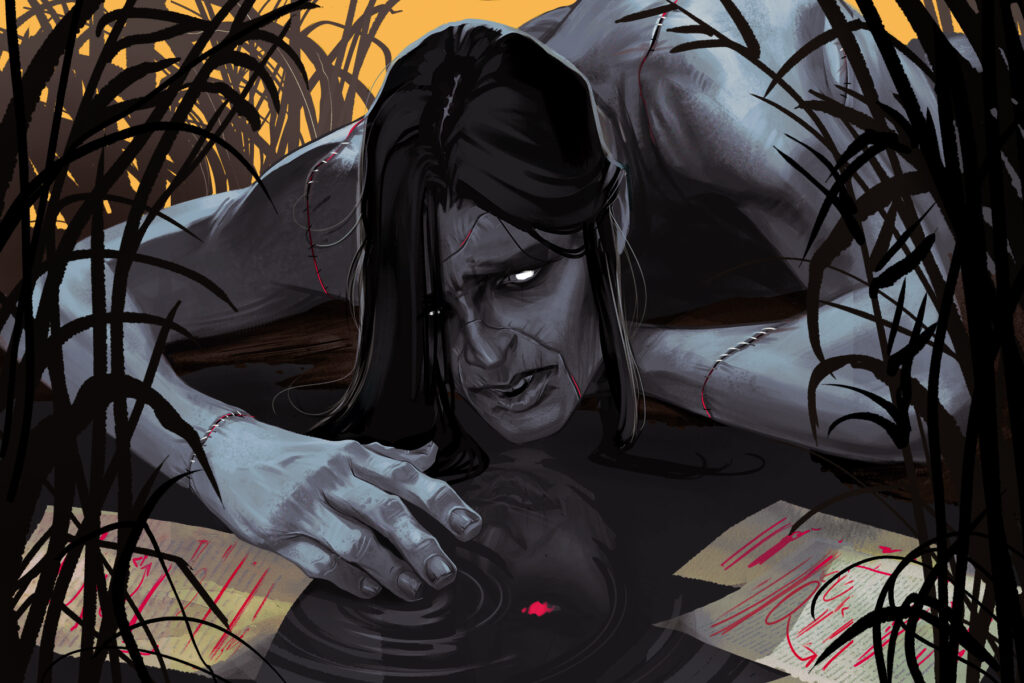
I work in a library that owns both editions. Setting them side by side is thrilling. The 1818 title page includes an epigraph from “Paradise Lost” and the neoclassical subtitle (“The New Prometheus”) but leaves out the author’s name. The 1831 edition displays Shelley’s name and an illustration of the creature staring down in shock at his muscular body before a background that includes a shadowy, skull-lined bookcase and a towering gothic window. Victor Frankenstein, meanwhile, casts a terrified glance over his shoulder as he sets out to do what he does for much of the novel — run away.
The story of Shelley’s inspiration is well known: Bad weather at their holiday villa in Switzerland trapped poets Percy Bysshe Shelley and Lord Byron, along with their companions, indoors, prompting a ghost story-writing competition. The tale of the novel’s revision is less well known: The 1831 edition is part of a series launched to showcase the best works of fiction as the novel gained respect as a form and to earn a profit for its publisher, Richard Bentley. With this opportunity to revise her work, Mary Shelley added a striking preface in which she described the genesis of the novel and bade her “hideous progeny” to go forth into the world.
Though she claimed that her changes were only stylistic, she transformed the novel’s contents. In the 1831 version, the creature is less sympathetic, Victor’s choices are often the product of “destiny,” and the ambiguous plot that questions whether a reanimated composite corpse might be humanized through family and sympathy is reborn as a more easily resolved case of good versus evil and the inevitability of fate.
And yet, the 1831 edition remains the most common, thanks largely to the conditions Bentley put in place. After feminist scholars rediscovered the works of Shelley and other Romantic-era women writers, the 1818 edition drew new attention and became more available. The Open Syllabus archive may make it clear that “Frankenstein” is the most widely taught work of fiction at American colleges and universities, but neither edition can claim that distinction.
The differences between the two versions are stark. In 1818, the creature accidentally kills Victor’s younger brother, William, while trying to silence his screams. In 1831, upon learning the boy’s name, the creature declares, “You shall be my first victim,” before intentionally murdering him.
In 1818, the creature accidentally frames Justine Moritz, the Frankenstein family servant, for William’s death when he slips a locket the boy was carrying into Justine’s pocket. In 1831, he watches Justine sleep, bitter that her “smiles are bestowed on all but me,” and deliberately places the locket in her dress because “the murder I have committed because I am for ever robbed of all that she could give me, she shall atone.”
Students in my classes have commented that the 1831 monster resembles an incel. Deciding between the editions means deciding between a monster who teeters on the edge of humanity, who might, with the sympathy he seeks, be a peaceful creature, and a conniving creep, abandoned by a creator who (to mention another revision) plans to marry either his biological cousin (1818) or his adoptive “more than sister” (1831).
Other differences in the 1831 version take the novel in interesting directions. Before he relates Victor’s tale, the original narrator, Robert Walton, describes the reanimating power of telling, and retelling, stories. He recalls and seems to revive the doctor in the act of relating his tale: “His full-toned voice swells in my ears; his lustrous eyes dwell on me with all their melancholy sweetness; I see his thin hand raised in animation, while the lineaments of his face are irradiated by the soul within.” With this addition, Shelley makes retelling a story an act of reanimation. Reading the 1818 edition against these and other differences creates a juxtaposition that — like the pairing of the two printed books — can be stunning.
Adaptations are uniquely part of the “Frankenstein” story. The best of them, like del Toro’s film, bring the original to life again. But if we’re to appreciate its reanimations fully, the edition to read is 1818.
The post Was Frankenstein’s monster an incel? Depends on which version you read. appeared first on Washington Post.