Key takeaways
- The abundance agenda means figuring out how Democratic governments can follow through on their promises to voters.
- Runaway housing costs and housing shortages are key issue for Democratic-led areas.
- “Abundance” doesn’t align with any particular lane of the Democratic Party. Both California Gov. Gavin Newsom and New York City Mayor-elect Zohran Mamdani have talked abundance — but the real test is whether they can deliver.
Do you remember where you were when you first heard about “abundance”?
In some circles, 2025 was the year that abundance became inescapable. The political framework — which essentially argues Democrats need to focus less on process and more on delivering for constituents — provided the title of Ezra Klein and Derek Thompson’s book in March. For, seemingly, the rest of the year, an endless stream of podcasts, X posts, and articles followed its publication.
The discourse has elevated Klein into something of a spiritual leader for the Democrats, a position he finds a bit uncomfortable.
“I see my job as trying to create good ideas built on an honest assessment of the world that will lead to things being better,” Klein told Today, Explained host Astead Herndon. “I would love it if that at this moment did not seem quite so partisan.”
Herndon talked to Klein about the tenets of abundance, the challenges prominent Democrats like Zohran Mamdani and Gavin Newsom face in delivering it, and what he hopes the legacy of his book will be.
Below is an excerpt of their conversation, edited for length and clarity. There’s much more in the full podcast, so listen to Today, Explained wherever you get podcasts, including Apple Podcasts, Pandora, and Spotify.
Define the abundance agenda for us.
So Abundance comes out of a series of pieces that me and my coauthor Derek Thompson wrote.
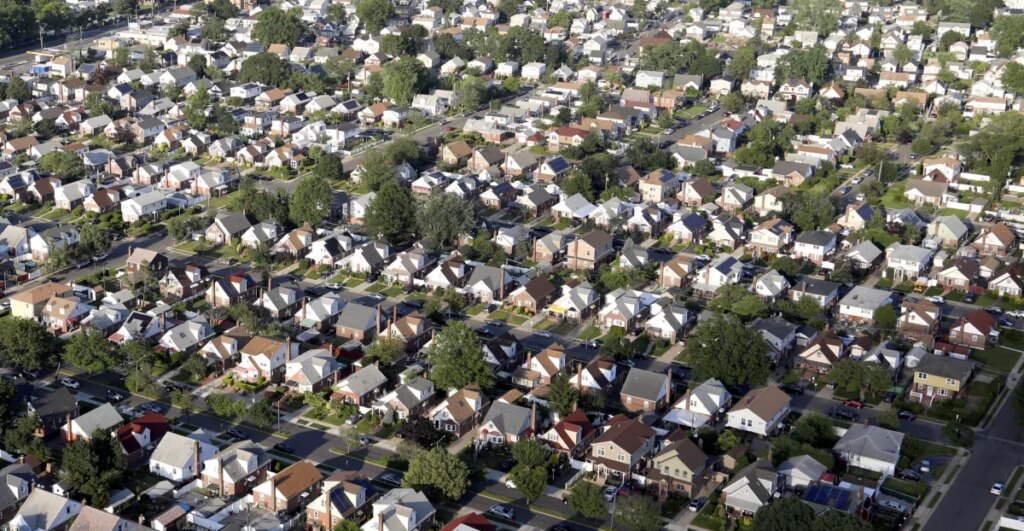
We were struggling with the reality that, in places where Democrats governed, you were not seeing enough of the things people need get built or produced — in places like California and New York, Massachusetts, just not enough housing. And that’s compared, by the way, to red states like Florida or Texas, which have an easier time producing it.
Under the Biden administration, we were seeing this huge push to decarbonization, but there was a lot standing in the way of building the transmission lines, electrical vehicle charger networks, the solar panels, the wind turbines.
And so this question of how can you have a liberalism that builds fast enough to achieve liberalism’s goals became, certainly for me, a somewhat obsessing question. How do you have government, particularly when Democrats are running it — the party that believes in government — that when they say we’re going to build high-speed rail or we’re going to build the 2nd Avenue subway, they get that done on time, on budget, quickly. And so people begin to see what government can do for them.
How do you set the conditions for government, particularly Democratic governments, to follow through.
Yes.
You recently wrote a column saying, “America’s housing problem is too much money chasing too few homes.” What is it you think about this issue specifically — housing costs, housing supply — that demonstrates the core argument of the abundance agenda?
So the thing where this issue I think causes particular heartache for Democrats is that there is no bigger part of a working family’s budget or a middle-class family’s budget than housing. And in the places where Democrats govern, housing costs have gone completely out of control. And that is honestly distinct from places where Republicans govern.
So I always say that there is this huge difference between what happens when people move to Austin or Houston and what happens when they move to San Francisco or Los Angeles. Austin and Houston build more homes for them, and, to a first approximation, SF and LA don’t. And that means it is much more affordable for many people to live in these red states.
In the period where we’re writing the book, you were seeing a big exodus, migration out of California, out of New York, out of Illinois, because it has become so unaffordable. So to me that is a real, on the part of Democrats, betrayal of the people they say they’re standing for.
I mean, I wrote a lot of the book when I was living in San Francisco and you have these yard signs where it says “No human being is illegal” and “Kindness is everything,” and everything is zoned for single-family housing and the homes cost more than a million dollars to buy. So yeah, it’s great to say no human being is illegal and kindness is everything, but if the human beings can’t afford to live there, then something’s gone really wrong.
And so the other thing that makes housing kind of interesting and complicated is that it’s actually very hard to solve. I mean, Democrats do want to solve it. Gavin Newsom, the governor of California, promised to build 3.5 million new homes over his tenure when he took office. He’s nowhere near on track for that, but it’s not like he hasn’t been trying, he’s suing local cities and he’s signed dozens of housing bills.
It’s actually really, really hard, when you have ended up in a government equilibrium which is about creating a lot of opportunities to say no, to then unwind that if you need to create the space to say yes to a lot of things rapidly.
Since the book has come out, we have seen some “Abundance” civic groups pop up, particularly in big cities that were mentioned in the book, places like New York City and out in California. I saw an “inclusive Abundance group” in my inbox the other week. There’s college groups. Did you expect this? Was this the point, did you think this was a political platform for Democrats?
We knew that there was electricity around this set of ideas because we’d seen it in the pieces that I started writing in 2021, and Derek, who wrote the initial piece naming it. I had the much less good term “supply-side progressivism.”
That doesn’t fit on the side of the book!
Yeah, you can see why “Abundance” won that one.
So we knew some of this was happening, some of the inclusive abundance groups were already there. So we knew that we were writing to a movement and a tendency that was already gaining force and prior to sort of us wrapping a series of ideas into this frame of abundance, the ideas themselves, YIMBY-ism, for instance, or that we need to build fast for decarbonization. So we are standing on the shoulders of giants of activists of policy, intellectuals and also of the past, right, like the New Deal, where they did a lot of things very, very fast.
Yeah. I also wanted to ask how you see your role. Do you see your job as helping Democrats win?
I see my job as trying to create good ideas, built on an honest assessment of the world that will lead to things being better. I would love it if that at this moment did not seem quite so partisan. There are other countries where say, thinking we should decarbonize is not a right-left issue.
Vivek Rameswamy just had a piece in the New York Times saying that he thinks abundance, if you didn’t have all these left-coded aesthetics and ideas, could actually be very helpful for Republicans.
So I don’t think every single idea is Democratic versus Republican.
What I will say is that I do think the Trump administration is uniquely lethal to liberal democracy. I think it is almost explicitly trying to create some kind of successor or I might say predecessor structure to it, a regime of deal-making and transaction and masked ICE agents. And so right now, I do believe that, for people who believe in not just a set of ideals that are in Abundance, but in a broader set of ideals about how we live here together and how we have a free and fair political system and country, creating movements that allow liberal democracy to deliver and be an effective counterweight to right-wing populism is part of how I see my work.
I was going to ask what you would want the legacy of Abundance to be as a book. Is it to reposition the Democratic Party, or liberal democracy, on delivering in cities?
Yeah, but it’s more. What I want the legacy of it to be is the affordable homes people need, is the high-speed rail they can ride, is the clean energy they can use and that makes their energy bills cheaper and that gives us more energy in total as a society…
We were talking about repositioning the Democratic Party, and I’ve had something running through my mind recently, which is something Ben Wikler, the former chair of the Wisconsin Democratic Party, said to me, which is he said that the Democratic Party is a party that makes government work for you.
And I remember thinking like, yeah, the Democratic Party, the party that wants government to work for you, that should be what it is. And then it should be ruthless about making that true. And that doesn’t just mean abundance. It means [opposing] corruption, right? I think at this point it probably means term limits and age limits, right? It means taking government working seriously, right? Not the way government works now. And this, to me, is a difficult space for the Democratic Party, which has to simultaneously be defending institutions and modernizing them. It’s a much harder position than the sort of Trumpist Republican Party right now.
That leads me to candidates like Zohran Mamdani or Katie Wilson, the mayor-elect in Seattle. When you see the kind of populist embrace of some abundance lanes, do you look at those candidates and think those are abundance Democrats? Or should I be thinking more folks a little closer to the center?
The Abundance Democrats are the Democrats who deliver abundance. So I am thrilled by the way I’ve seen Democrats of many different stripes and even a couple Republicans pick up some of the ideas and arguments of abundance. But the thing that is going to separate who’s real in this and who is not is whether they deliver.
So I am hopeful about Mamdani, but governing New York City is famously very, very difficult and building a lot more housing is going to be harder to do than implementing a rent freeze. I’m very hopeful he can do it. But I want to be very cautious myself, having watched a lot of politicians promise on this and fail, right?
As I said, Gavin Newsom talks about abundance a lot. He’s actually signed some incredible bills in my perspective in the last year or two, but he was not able to deliver the housing change he promised in California.
And abundance is in the end, not about what you say, it is about what you deliver. It is an argument that the Democratic Party should, that all government should, be judged by whether or not it is able to create — either directly or through creating the conditions for the private market to create it — the things people need.
The post Ezra Klein’s year of Abundance appeared first on Vox.