A not insignificant cohort of President Donald Trump’s advisers want the United States to abandon widespread commitments abroad and instead become a regional power focused on the Western Hemisphere. The president’s righteous strike against Islamic State targets in Nigeria is a reminder that America is capable of much more.
“MERRY CHRISTMAS to all, including the dead Terrorists, of which there will be many more if their slaughter of Christians continues,” Trump wrote on social media after targeting jihadists in the state of Sokoto, which has been a hot spot for kidnapping schoolkids. Egregious sectarian language aside, Washington responsibly conducted the operation in coordination with the Nigerian government.
It’s a welcome change in a part of the world that has always been little more than an afterthought for the president. The question is whether this is a one-off decision or the start of a more consistent and coherent policy.
We understand the desire to want to abandon the entire region. American and French forces had coordinated with governments in Niger and Mali but were pushed out as new leaders took power following coups. It can be hard to keep track of all the jihadist groups.
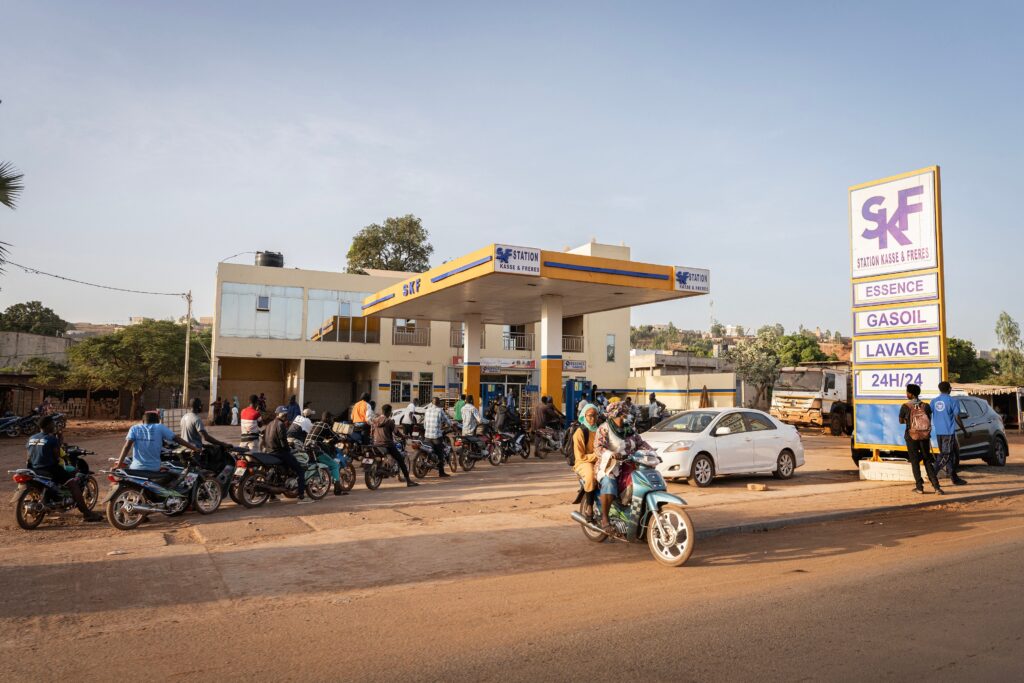
The U.S. strikes in Nigeria targeted the Islamic State’s Sahel Province branch, which has clashed violently in recent years for territory with JNIM, an al-Qaeda affiliate that is currently trying to seize control of Mali by blocking fuel from entering the capital city of Bamako. If Mali falls, it would mark the first takeover of a country by an anti-Western Islamic terrorist group since the Taliban took Afghanistan.
The Sahel region — stretching from Mauritania through Mali, Burkina Faso and Niger to Chad — has become the world’s biggest epicenter for global terrorism. Half of all terrorism deaths take place in that largely forgotten and neglected stretch. Having lost the territory they once controlled in Iraq and Syria, the terror groups have found fertile soil in West Africa.
The Islamic State’s history shows that when the group establishes a stable presence, it’s only a matter of time before it looks to wreak havoc around the world. It’s tempting to want to pretend that the chaos in West Africa isn’t an American problem, but the world isn’t that simple.
The U.S. once had a regional counterterrorism plan known as the Trans-Sahara Counterterrorism Partnership, but a recent audit found the program underfunded, leaderless and mostly ineffective. The Pentagon has also been considering merging Africa Command back into European Command, which it spun off from in 2008. This could mean fewer resources and less attention for the region. In addition to the security reasons for continued engagement, the U.S. would be foolish to cede the young and growing continent to China and Russia.
Nigeria, a relatively wealthy country in the region, is still battling insecurity on several fronts. The central government has been ineffective at restoring security. It’s good that Abuja is willing to work closely with Washington to stop the slaughter, and Trump would be wise to remain engaged.
The post Why West Africa is worth worrying about appeared first on Washington Post.