If you’re part of the 45-to-60ish crowd, chances are you grew up watching — and singing along to — “Schoolhouse Rock.”
The Saturday morning education series began airing in 1973 and was originally developed to help kids with math before expanding to other core subjects such as grammar and science. The three-minute vignettes earned a Grammy nomination and were embraced by educators as a supplemental learning tool. In celebration of America’s 200th birthday in 1976, the creative force behind “Rock” decided to focus on U.S. history and began its third season with the episode and song “No More Kings”:
The pilgrims sailed the sea To find a place to call their own. In their ship Mayflower, They hoped to find a better home. They finally knocked On Plymouth Rock And someone said, “We’re there.” It may not look like home But at this point I don’t care.
The only visual acknowledgment of the people who were already living on this land was during the three seconds it took us to sing the line “but at this point I don’t care.”
The catchy song spoke of prosperity and growth in the 13 colonies, but no mention of the transatlantic slave trade that drove the global economy for centuries. No acknowledgment of the kidnapped Africans working in the fields before and after the Mayflower’s arrival or the tribes and free Black people who fought alongside the colonizers during the Revolutionary War. Later episodes of “Rock” highlighted the construction of the railroad system during the California gold rush, but not the thousands of Chinese immigrants from the Canton Province who made up much of the workforce.
In 1976, some of the most powerful people in media decided to tell the next generation of Americans singalong fairy tales about who we are as opposed to the truth. And here we are — 50 years later, preparing to celebrate our 250th — and powerful people in media face the same test of integrity: tell the next generation the truth or double down on revisionist history.
“We have relegated DEI to the dustbin of history, which is exactly where it belongs,” Vice President JD Vance recently told the crowd at the Turning Point USA’s AmericaFest 2025 event in Phoenix, referring to diversity, equity and inclusion.
Of course diversity is what made this country possible.
The true threat to America has always been racial hierarchy and a white supremacist worldview that encourages commerce without virtue, something warned against by Montesquieu — the French philosopher whose book “The Spirit of the Laws” shaped the American founders’ view of society and provided the Constitution’s infrastructure.
“It is almost a general rule that, everywhere that there are gentle morals, there is commerce, and that everywhere that there is commerce, there are gentle morals,” he wrote.
This explains why Montesquieu was one of the strongest critics of slavery during the so-called Age of Enlightenment. He pointed out that it is unnatural for a human to dominate another and that enslavement encourages cruelty — not unity — in a society. His words were published 30 years before the American Revolution, more than a century after the first kidnapped Africans arrived in the English colony of Virginia.
The only way to justify writing “all men are created equal” while maintaining an economic system that represented the antithesis of Montesquieu’s teachings, was to tell future generations of Americans a fairy tale that people of color were savages without virtue — or even better, to convey that they didn’t even need to be acknowledged or considered.
That harmful worldview would underpin not only domestic policy but also foreign exploitation. For example, John Watson Foster, who was secretary of state for only eight months, led the U.S. to overthrow the monarchy in Hawaii in 1893, writing “the native inhabitants had proved themselves incapable of maintaining a respectable and responsible government.” The monarchy had been recognized internationally for nearly a century before a group of businessmen from the U.S. and Europe — with the backing of our military — wanted the land for sugar production. Instead of commerce for the benefit of all, a fairy tale was told to justify the cruelty.
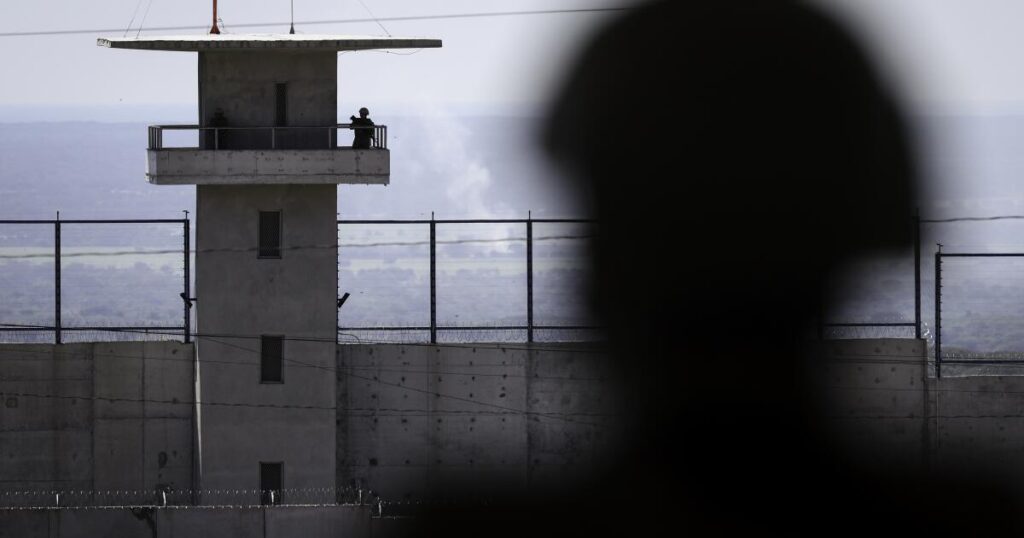
Fast forward to 2025, and we’re told by the current administration that the people of color being sent from the United States to El Salvador’s mega prison, CECOT, were all gang members, rapists and other criminals. Turns out that less than 10% had convictions for violent crime or property crime and that 80% had never been convicted of anything, even an immigration violation or a traffic infraction. The fairy tale of white supremacy — that poisoned mindset from our nation’s founding — does real harm to this day.
It is the same worldview that led to the overthrowing of democratically elected leaders in countries throughout the Caribbean and Central America and in Iran. It is the same worldview that worldview that has always kept America from its true promise.
Maybe for our 250th, instead of gifting ourselves parades, ballrooms and fairy tales, we should focus on telling the next generation the truth.
YouTube: @LZGrandersonShow
The post Will we tell the American story, or just the founders’ fairy tales? appeared first on Los Angeles Times.