In a different world, an electric vehicle would be just another car. But in today’s hyperpartisan climate, battery-powered cars carry not just passengers but a punishing load of political and cultural baggage.
Supporters may view electric cars as heroes, helping halt climate change or making American automakers more competitive around the world. But others see in them the heavy hand of government, pressuring consumers to ditch gasoline whether they are ready to or not. Throw in Elon Musk and his highly charged social media commentary, and even loyalists of his car company, Tesla, may no longer know whom or what to believe in.
“E.V.s have become such a partisan thing that they’re not defined as cars,” said Mike Murphy, a Republican strategist who leads the EV Politics Project and EVs for All America, which aim to make electric cars less political. “It’s like we’re having political fights over toasters.”
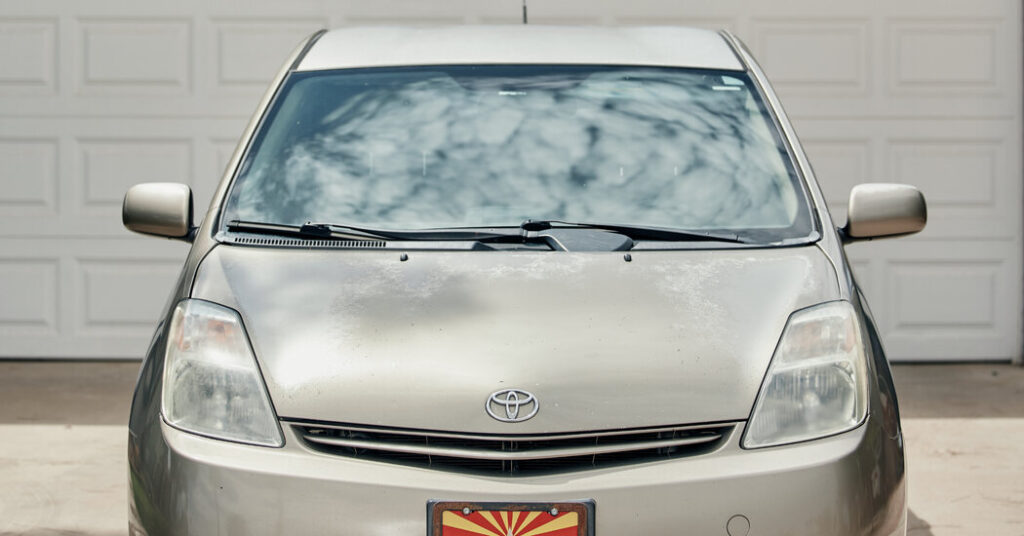
To industry experts, the seeds of this poisonous debate may have been planted inadvertently 25 years ago, with a humble, shoe-box-shaped sedan: the Toyota Prius. The groundbreaking 2001 Prius kicked off an era of gas-electric hybrids and built Toyota’s reputation as the global leader in green cars.
Mr. Murphy said Toyota had used marketing that implied that buying a Prius was a way to save the planet. That excited liberals, but drew a strong backlash from people less attuned to environmental issues. Nissan made a similar choice with the Leaf, its electric vehicle, in 2010, he said. In one Nissan TV ad, a polar bear hugged a Leaf owner.
“Climate shouldn’t be polarized, but in America it is,” said Mr. Murphy, who worked for Arnold Schwarzenegger and Mitt Romney. “So when you market vehicles for green virtues, others see it as pushy dogma. Then you’re stuck in politics.”
Imported from Japan, the 2001 Prius arrived when many Americans were switching to sport utility vehicles. Average fuel economy for the 2001 model year had fallen to a 21-year low, at 20.4 miles per gallon. The Prius came bearing a green olive branch; federal testing showed that it could travel 48 miles per gallon.
Margo Oge bought one of the first Priuses. Later, as an official at the Environmental Protection Agency, she would become the chief architect of fuel-economy standards enacted under the Obama administration in 2010.
“The Prius was just this cool little car to save you money and protect us from air pollution,” Ms. Oge said. “The government didn’t ask for or require Toyota to develop this tech. It wasn’t seen as a mandate as E.V.s later were.”
Unlike electric vehicles, which use no gasoline, Ms. Oge said, the hybrid Toyota should have been less threatening to industries like oil and ethanol, or to consumers.
Even so, some critics attacked Prius fans for engaging in virtue signaling, being hypocritical or wanting to impose nanny-state policies. In 2001, an article in Car and Driver magazine praised the Prius’s engineering, but noted that its testers managed to get only 35 miles per gallon.
“It can be no surprise that Toyota Motor Corp. enjoys its share of adulation from the Sierra Club, from Washington, D.C., windbags and from everyone else who conveniently forgets about the five models of sport utilities and two models of pickups also peddled in Toyota dealerships,” the article said.
Toyota played up testimonials from stars, such as Leonardo DiCaprio and Meryl Streep, who publicly adopted the Prius. Sales boomed from 5,500 in 2001 to a peak of 236,000 in 2012.
Red-carpet appearances helped make the Prius a hit, Mr. Murphy said, but at a lingering cost. To some, hybrids and electric cars became vehicles for coastal liberals and do-gooders, not “mainstream” Americans. In 2006, “South Park” called hybrids the nation’s “leading cause of smug.”
But if the Prius attracted gibes, the Chevrolet Volt became a certified punching bag.
That model, a plug-in hybrid sedan, won top car awards. It also became inextricably linked to federal aid for General Motors. To some, the Volt was a four-wheeled symbol for “Government Motors” or “Obama Motors.” President Barack Obama sat in a Volt at its Detroit factory in 2010 and said he would buy one after he left office.
Mr. Obama and his E.P.A. also sought to double the fuel economy of the average new car to about 50 miles per gallon. Politicians assailed the Volt as a socialist scheme to force Americans into electric cars.
Representative Darrell Issa, Republican of California, accused the National Highway Traffic Safety Administration of conspiring to hide a Volt defect.
“I’m a free-enterprise guy,” Mr. Issa said. “And the Volt insults a lot of us with being a demo project funded by edict.”
Robert Lutz, a former Marine fighter pilot and the outspoken vice chairman of G.M. — who once derided global warming — publicly defended the car.
“The problem with conservatives is getting them to accept that an electric car is not necessarily a left-wing environmental plot,” Mr. Lutz, a Republican, said in 2012 before Mr. Obama was re-elected. “We’ll probably see the Volt as a political football through November, and then it’ll go away.”
If only. Electric vehicles became even more political as Tesla began its rise with the release of the Model S in 2012.
Though Mr. Musk, the chief executive of Tesla, is now a conservative star, many on the right previously attacked his company for earning billions by selling climate credits to other automakers, a windfall enabled by government policy. The company also received a federal loan, which it paid back early.
Of course, many businesses receive government support. Oil and gas companies enjoy many tax breaks, some going back decades.
Mr. Lutz, now retired, said he knew many “staunch Republicans” who drove and loved electric cars. The end of federal policies to encourage their sales and discourage the use of gasoline, he said, can ease some objections. Shorter charging times, he said, more than politics, may persuade more drivers to chose electric cars.
“E.V.s will progress more slowly now, but they will just continue to gain market share until they are by far the dominant technology,” he said.
Mr. Lutz, 93, owns a pair of electric Cadillacs, the Lyriq and the Escalade IQ. He recently got a Corvette ZR1, a gasoline sports car with 1,064 horsepower and a 233 mile-per-hour top speed. Yet Mr. Lutz believes internal-combustion engines, after 120 years of development, have nearly reached their technical peak. Electric cars are just getting started.
“When you drive them, there’s just no contest,” he said. “They’re better, they’re faster, they’re quieter, with fewer moving parts.”
In a bitter turn for Toyota, Tesla’s ascent turned the Japanese company, once an environmental hero, into an ostensible villain. Toyota, Ms. Oge noted, lobbied against pro-electric vehicle policies in several countries.
Now, as sales of electric cars have cooled, Toyota and its hybrids are back in vogue. Other automakers are rushing to offer more hybrids, and the cars are rarely attacked by politicians or in popular culture.
Tesla did not respond to a request for comment. Toyota and G.M. declined to comment.
The decades of pitched battles have culminated in President Trump’s fulsome attacks against electric cars. That includes a bid to unwind former President Joseph R. Biden Jr.’s signature climate and energy legislation and regulations. The Biden administration’s policies would have effectively required automakers to sharply increase sales of electric and hybrid cars in the coming years.
Mr. Biden’s policies, which included a $7,500 federal tax credit for the purchase or lease of electric vehicles, helped lift sales. But Ms. Oge said his fuel economy and emission regulations were a “political overreach” that turned many car owners, not just Republicans, against them.
“The Biden administration lost control of that message, completely,” she said. “It became ‘The government wants you to buy this car.’”
But if the Biden administration’s rules were too ambitious, Ms. Oge said, the Trump administration is aiming to make them even weaker than those put in place by Mr. Obama 15 years ago.
With political temperatures hot enough to fry a battery, Mr. Murphy said he advised automakers to eschew controversy. They should not tout electric cars’ environmental benefits, he said, because people either know about them or don’t base buying decisions on them. Automakers should instead lead with the models’ zesty performance, hushed interiors, energy savings, easy maintenance or new technology.
“These cars can win a fair fight as vehicles for most people,” he said.
In his groups’ November survey of the public’s views about electric vehicles, 48 percent of self-identified Republicans held an unfavorable view of these cars, versus 22 percent of independents and 14 percent of Democrats. Conservative opposition has softened somewhat, Mr. Murphy said. He added that 40 percent of respondents identified as Republican.
“So if automakers can’t crack the Republican consumer market,” he said, “E.V.s will never become as big as we need.”
The post Before Electric Vehicles Became Political, There Was the Toyota Prius appeared first on New York Times.