Student loans have long been perceived as impossible to cast off in bankruptcy. Few borrowers dare to even try.
To do so, borrowers must file a separate lawsuit, enduring a costly, stressful process that came with no guarantees. In some parts of the country, they had to prove that their financial lives were “hopeless” before a judge would be willing to wipe their student debts away.
But a recent analysis has uncovered a significant shift: The vast majority of student debtors who seek discharges in bankruptcy are getting them, in large part because of a simpler legal process that was introduced three years ago.
Borrowers have an 87 percent success rate in dismissing most or all of their loans in bankruptcy, according to the study by Jason Iuliano, a professor at the University of Utah’s S.J. Quinney College of Law. That is up from 61 percent in 2017 and more than than double the rate nearly two decades ago.
“That’s strikingly high when you think about the narrative being it’s impossible to discharge,” said Professor Iuliano, whose analysis was published this month in The American Bankruptcy Law Journal and who has been studying the issue for 15 years.
Though success rates had slowly improved over previous years, the latest increase can be largely attributed to a Biden-era change adopted by the Justice and Education Departments, which provided clearer guidelines on what types of cases would result in a loan dismissal. It also enabled borrowers to present their cases on a simplified 15-page attestation form.
Student loans aren’t discharged in bankruptcy as easily as other consumer loans, like credit cards or medical debt. Debtors need to file a separate lawsuit, known as an adversary proceeding, which many lawyers haven’t been inclined to take on.
The three-year-old process has tried to streamline all of that. And the recent analysis indicates — at least for roughly 650 completed cases filed from mid-October 2022 through mid-November 2023 — it has been working.
‘A Scary Process but Worth the Gamble’
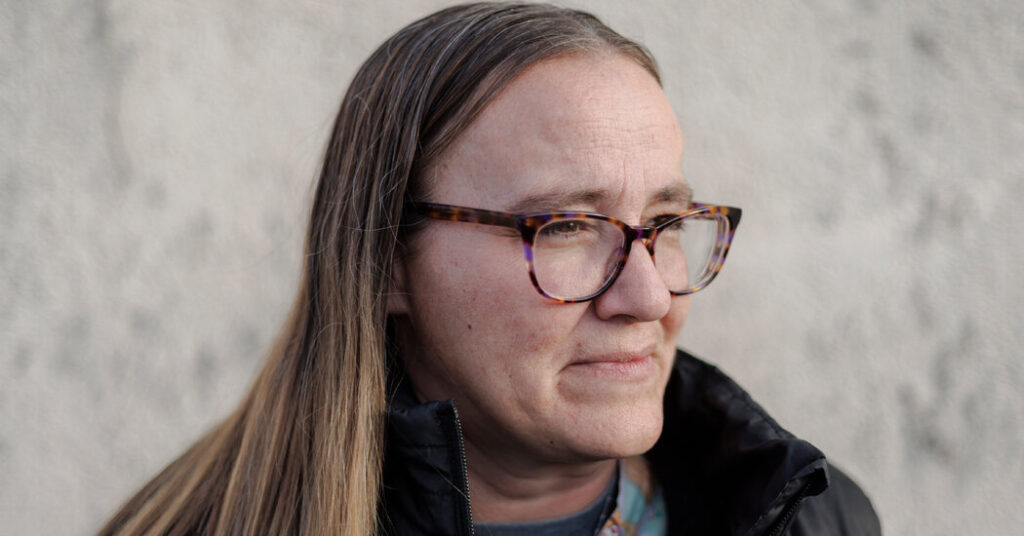
Amy Howdyshell, a 43-year-old licensed practical nurse, recently won the dismissal of more than $78,000 in federal student debt, largely accumulated at a for-profit college for a business degree she never received.
She and her husband, a warehouse forklift operator, filed for bankruptcy in 2023 after he suffered extensive medical issues, including a heart attack. But Ms. Howdyshell was referred to another lawyer, Malissa Giles, who had more experience with student loans, and she thought that Ms. Howdyshell was a solid candidate. They filed their case last year.
Ms. Howdyshell, who lives in Virginia, said the school had mismanaged her financial aid and wouldn’t let her enroll during her last semester or release her transcript. She abandoned her earned credits, but she later attended a different school and became a licensed practical nurse, paying out of pocket and through employer programs.
But her old debt had cast a long shadow over her family’s finances, making it impossible to save for a down payment on a home or make progress on retirement savings.
“Now I have the financial freedom to pursue my dreams of homeownership,” Ms. Howdyshell said. “It was a scary process but worth the gamble.”
She is just one among the small fraction of borrowers who file adversary proceedings. In Professor Iuliano’s view, the newer process hasn’t yet encouraged enough debtors, or perhaps their legal advisers, to try.
Based on prior research, he estimated that 99 percent of student loan debtors who filed for bankruptcy didn’t even ask the judge to consider discharging their loans.
“That is a big problem,” he added.
But a shift could be beginning. This year, 1,693 student loan debtors have filed adversary proceedings, up 12 percent from 2024 and more than 92 percent higher than in 2023, according to an analysis of public records by Stretto, a legal services and technology firm.
In Professor Iuliano’s analysis sample, the majority of student debtors were women. The typical borrower was 47 years old and owed $115,000 in student loans, with her expenses exceeding her income by $200 each month.
In a traditional adversary proceeding, borrowers must show that their student loans are an “undue hardship,” a legal standard that Congress never defined and that courts across the country have interpreted differently. As a result, borrowers have received uneven outcomes.
Satisfying the Test, and the Judges
Many jurisdictions define undue hardship using a rigid framework known as the Brunner test.
Under Brunner, debtors must answer three questions before their debt can be dismissed: Can they currently pay the loans and maintain a minimal standard of living? Is their situation likely to persist for a significant portion of the repayment period? And have they made a good-faith effort to repay the loans?
Under the newer approach, each piece of the test becomes easier to pass if the debtor can check certain boxes. For example, if a debtor’s allowed expenses equal or exceed his or her income, that may satisfy the first question. Being over 65, or having loans in repayment status for at least 10 years, for example, would fulfill the second question.
If the federal government’s analysis finds that a borrower has satisfied the test, the Justice Department lawyers can recommend a discharge to a bankruptcy judge.
In the vast majority of cases, the judges do exactly that. But in at least two cases, the judges did not immediately usher a discharge through, even though the government had determined it was appropriate.
“Some judges are taking a more aggressive stance and not just rubber-stamping these settlements,” said Stanley Tate, a consumer lawyer who specializes in student loans.
In one case, a 68-year-old retired teacher who had heart problems and a dying partner was carrying nearly $125,000 in debt — an amount that had ballooned from the $36,000 he borrowed to attend the University of North Carolina at Chapel Hill, court documents show.
Given his limited income and circumstances, it was clear — to his lawyer and to the federal government — that he was not able to pay the loan back. But the judge could not get past the fact that the borrower had repaid only $9,000; he had applied for forbearance or deferments 38 times and tried to enroll in a payment plan that would tie his payment size to his income.
“It doesn’t smell right to me,” Judge David M. Warren of U.S. Bankruptcy Court for the Eastern District of North Carolina said during a hearing last winter. “I don’t like it, and I don’t think it’s an appropriate use of the judicial system.”
The judge wanted to hold a hearing to learn more, but the Education Department ultimately recounted the borrower’s payments, which allowed it to provide an administrative discharge in 2024 through the Public Service Loan Forgiveness program, his lawyer said. That meant the borrower received relief outside court.
The legal community questioned whether the Trump administration, which has an aggressive plan to dismantle the Education Department, would want to eliminate the guidance.
A spokeswoman for the Education Department said there were no plans to change the program at this time. “The department is currently focused on helping borrowers back into repayment and improving the state of the portfolio,” said Ellen Keast, the press secretary for higher education at the department.
The Justice Department, which often represents and works with the Education Department in bankruptcy cases involving federal student loans, did not immediately respond to an inquiry seeking comment.
Though the legal guidelines were introduced during the Biden administration, the first Trump administration had acknowledged that discharging debts in bankruptcy wasn’t easy: The Education Department sought public input in 2018 about the high legal standard and sought to explore whether borrowers were being “inadvertently discouraged” from pursuing relief.
Igor Roitburg, senior managing director at Stretto, which also helps lawyers screen student loan debtors and prepare documents for those who may qualify for discharges, said he didn’t expect the Trump administration to abandon the policy. Cases continue to wind their way through the system, and he expects the number of filings to grow.
“It’s also really important to understand what this process does — it is a thorough review on a case-by-case basis,” Mr. Roitburg added. Not all distressed borrowers will qualify for bankruptcy, nor will all filers be eligible for a student loan discharge, but it provides an important safety net for those who do.
More borrowers are teetering on the edge. The student loan landscape is in upheaval because of legal challenges that will end the Biden-era SAVE repayment plan, the most affordable option. Congress’s reconciliation bill this summer also dismantles the current repayment program menu and creates a new one. And forced collections and wage garnishment for federal student loans in default are ramping up again, after an extended pandemic-related pause.
The most vulnerable borrowers will be searching for alternatives.
Latife Neu, a lawyer in Seattle who has filed about 16 cases using the streamlined process, with several more in the pipeline, said she was hearing from more people seeking options, including many borrowers approaching or in retirement.
“The anxiety level among borrowers is really high right now,” she said.
Kirsten Noyes and Susan C. Beachy contributed research.
Tara Siegel Bernard writes about personal finance for The Times, from saving for college to paying for retirement and everything in between.
The post More Student Loan Borrowers Are Shedding Debts in Bankruptcy appeared first on New York Times.