We’ve known for certain, for quite some time, that the day Mount Vesuvius famously erupted, blanketing the Roman city of Pompeii in ash, killing everyone in this blast zone, entombing them for eternity, happened on August 24, 79 CE. And yet, new research suggests that the people who died that day were dressed for colder conditions than you’d usually experience in southern Italy at the tail end of summer.
So, what gives? Why were these people who are about to be slathered in ash all bundled up, but there was a nip in the air?
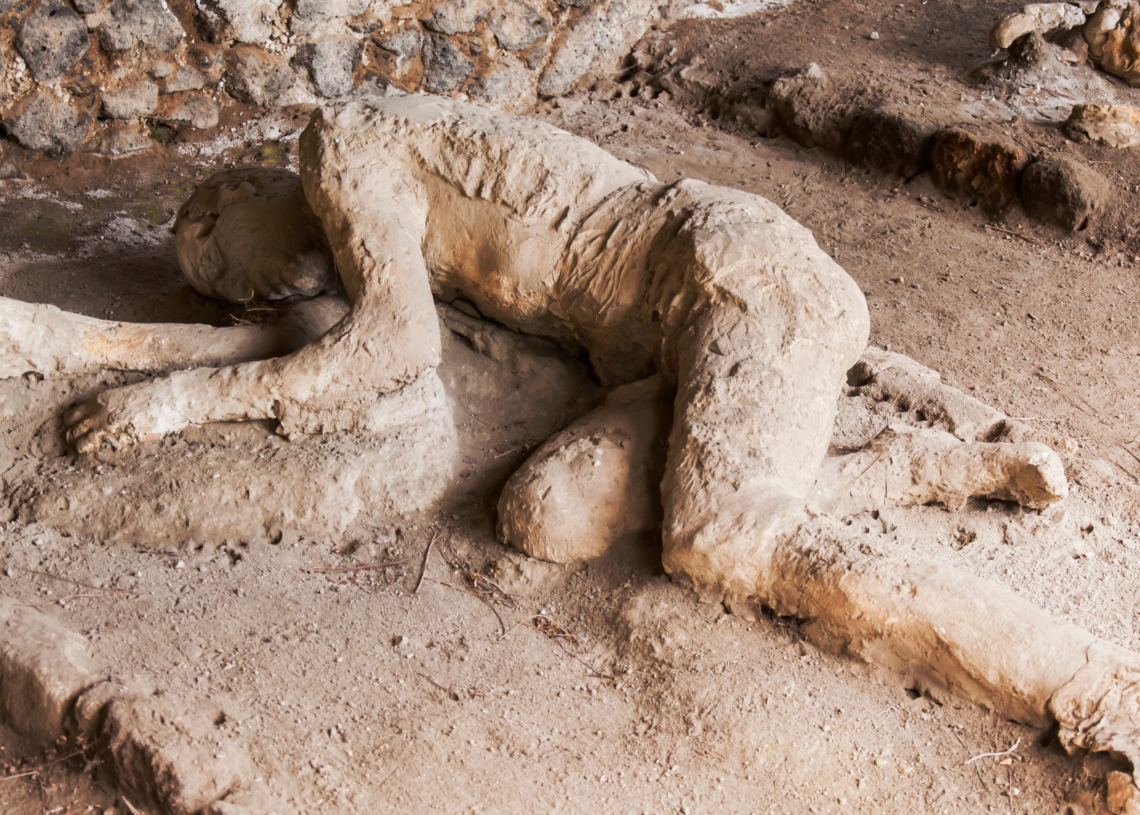
Researchers from the University of Valencia’s ÁTROPOS group, which studies death in ancient cultures, analyzed 14 plaster casts of Pompeii victims. The casts were created by pouring plaster into voids left by decomposed bodies. They are detailed enough to preserve impressions of clothing, right down to the type of fabric it was knitted with and even the weave patterns. In four separate cases, the researchers could clearly identify clothing made of thick, heavy wool; the kind of stuff you only wear in the winter.
Wool was common in Roman life, but wearing layered wool tunics and cloaks in late August would have left the wearer a miserable, sweaty mess at that time of year. Yet, a lot of the unfortunate souls lost that day in Pompeii dressed that way both indoors and outdoors, which suggests to researchers that this was probably standard clothing.
According to archaeologist and anthropologist Llorenç Alapont, who presented the findings at an international conference, the garments indicate either that the weather was unusually cool for late summer or that there was something dangerous about the environment that people felt like they needed some protection from. The thick weave of the fabric points to clothing designed for insulation. Some of these folks were the ancient equivalent of the edgy loner teen who wears black hoodies in the summer. Unfortunately for them, the thick wool was not thick enough to protect against a blanket of volcanic ash.
All of this is prompting researchers to reconsider the long-held debate over when Vesuvius erupted. It was a bit nippy, enough to throw on a thick wool cover, then maybe those archaeologists in the past two had previously noted the presence of fall fruits, heating braziers with ember remains, and other signs that the folks of Pompeii were shifting toward sweater weather season might have been onto something all this time. The Valencia team’s findings suggest that the eruption could have occurred later in the year, possibly as late as October.
The post Pompeii Clothing Suggests We’re Wrong About When Vesuvius Erupted appeared first on VICE.