Hollywood isn’t traditionally known as a fount of innovation. But with the rise of artificial intelligence driving new ways of thinking, that’s changing.
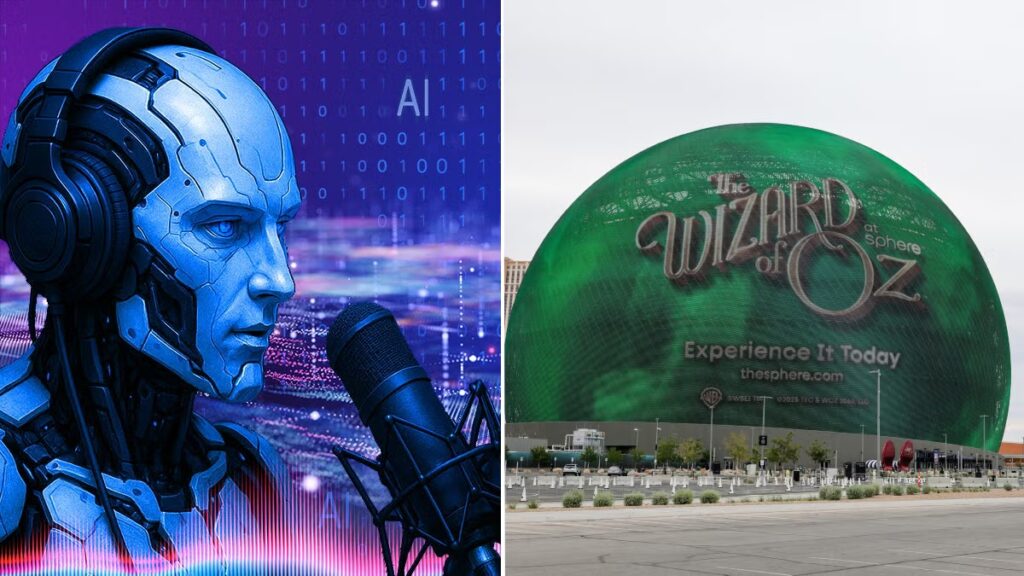
The year saw the industry take some big swings, like the Las Vegas Sphere getting into the theatrical business with an enhanced version of “The Wizard of Oz,” or the revival of a long-dead format for cinephiles.
Then there’s AI, a technology that Hollywood is still coming to grips with given its potential to disrupt, well, everything. You can check out how it’ll impact the broader industry in our AI preview (link to Roger’s story when it’s live). It played a key role in a few items on this list.
Without further ado, here are some of media and entertainment’s biggest innovations in 2025.
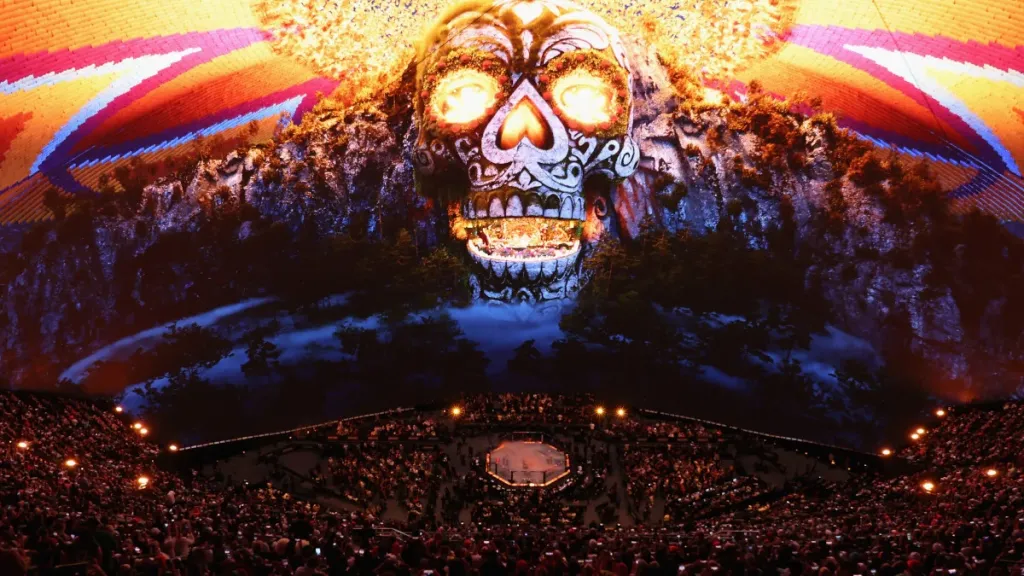
The Las Vegas Sphere enters the movie business
The Las Vegas Sphere made headlines in late August when it entered the movie business with a new cinematic model, starting with the 1930s Americana classic “The Wizard of Oz.” The Sphere used digital effects artists and artificial intelligence to remaster the Victor Fleming classic for its unique wraparound screen, adding environmental elements (such as simulated wind during the tornado sequence) to make the experience more immersive. Artificial intelligence helps expand the film, showing characters and environments that were previously off-screen in various shots.
Financially, the experiential screening became a quick success, nearly selling out its opening weekend with an approximate $650,000 per-show average. In early September, “The Wizard of Oz at Sphere” was found to be generating up to $2 million per day, placing future potential film adaptations on the table. CEO James Dolan also noted plans to add more Sphere locations — another sign that “The Wizard of Oz’s” revamp likely won’t be a cinematic one-and-done.
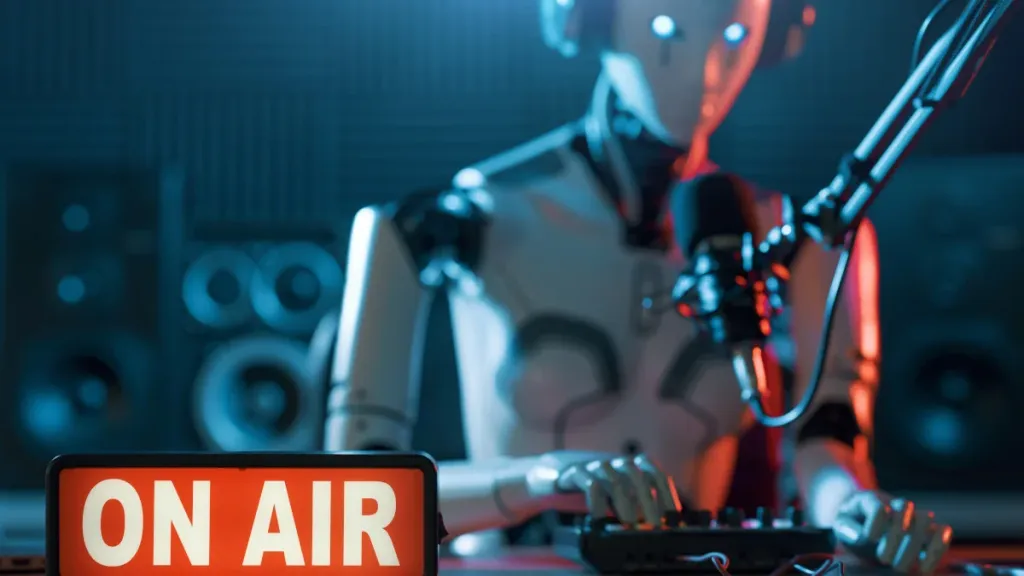
AI Enters the Podcasting Space
2025 saw AI take on an increased presence across various places in the entertainment industry, with artificial intelligence already firmly established in the worlds of film and music. One of the more surprising developments was the advent of AI podcasting. The eight-employee startup Inception Point AI had already created more than 175,000 AI-generated podcasts as of Tess Patton’s Nov. 17 reporting in TheWrap, with the company adding 3,000 podcasts to its number each week. These podcasts cover a wide range of topics, with AI mimicking different hosts and personalities to serve as “edutainment” comparable to an “audio version of Reddit or Wikipedia.”
These podcasts aren’t just being added into the void, either. Quiet Please, a network used by Inception Point AI, saw 12 million lifetime episode downloads and 400,000 subscribers as of mid-November. At a cost of only $1 per episode, Inception Point CEO Jeanine Wright said she sees a lot of value in creating such a massive supply of easy-to-produce pods on various topics. Wright added that this ability to cover wide varieties without employing writers, editor or real hosts allows them to target hyper-specific groups without worrying about landing on the top of the charts.
“Riches are in the niches, for sure,” Wright told Patton. “My friends in the podcasting industry, they’ll ask, ‘Do you have any show that’s in the top 10? How are your shows charting?’ We don’t even think about it like that.”
The development comes at a crucial time in the podcasting space, with Riverside reporting in October that more than 584 million people listened to podcasts in 2025, with an expected 619 million listeners by 2026. Riverside also projected podcasting to be a $17.59 billion by 2030. Meanwhile, even companies like Netflix are hopping further onto the podcasting train, with the streamer announcing Tuesday that it was partnering with iHeartMedia in an exclusive video podcasting deal. This isn’t the first such deal the streamer has made in 2025, with a similar partnership between Netflix and The Ringer on the way for video podcasts in 2026.
Letterboxd gives undistributed festival films a home
Popular cinema-based social media service Letterboxd announced that it would launch its own streaming service: The Letterboxd Video Store. Rather than housing a massive library, however, Letterboxd aims to offer its customers films that are largely under seen, offering a collection of hidden gems that may otherwise be hard to find.
At launch, four festival titles made their way onto the service with a $20 PVOD price point: “It Ends,” “Kennedy,” “The Mysterious Gaze of the Flamingo” and “Sore: A Wife From the Future.” There were also five older films featured in the Video Store’s Lost and Found section for “Underseen underdogs with stellar star ratings.” These rentals ranged between $4 and $10.
This notably includes films that received positive reception on the festival circuit but failed to find proper distribution. The service could prove to be a life raft for low-budget filmmakers, giving them a broader opportunity to get their films shown to wide audiences once their film festival run has completed. Letterboxd couldn’t have launched this at a better time, with Sundance Film Festival facing record-low sales in 2025.
The service has already started paying off for the creators. Just over a week after the Letterboxd Video Store launched, Neon announced that it had picked up “It Ends” for theatrical distribution in 2026.
Sora 2 makes waves in Hollywood
While ChatGPT’s Sora video generation tool went wide in late 2024, Sora 2 launched in September 2025 complete with a new TikTok-like social media platform, raising a new set of concerns for Hollywood. The text-to-video AI generator experienced immediate pushback when it forced film studios and IP owners opt out of their property being featured in the video situations rather than allowing them to opt in. With Hollywood already on edge about ethical questions over copyright, ownership and employee rights raised by AI, Sora 2 quickly worsened concerns.
Disney was one company that quickly took the improved text-to-video service to task.
“OpenAI’s copying, distribution, public display, and/or public performance of Disney’s copyrighted works and characters without authorization is copyright infringement, and Disney is not required to ‘opt out’ of inclusion of its works in Sora/Sora 2 or any other OAI system to preserve or pursue its rights under copyright law,” a letter from Disney read.
Disney’s relationship with Sora 2 changed, however, when the company in mid-December made a $1 billion investment in OpenAI. Disney also struck a three-year deal allowing Sora users access to more than 200 characters owned by a company for use in AI-generated short-form social media videos. This deal, which will go into effect in early 2026, came at a time when Sora’s popularity was reportedly on the decline — with Disney potentially legitimizing the further use of Hollywood property in AI videos.
“One Battle After Another” revives a long-dead film format
At the tail end of 2024, Brady Corbet’s “The Brutalist” made headlines for being the first film in decades to be largely shot in the old VistaVision format. Prior to this, the last movie shot mostly in VistaVision was Marlon Brando’s “One-Eyed Jacks” — a film that released in 1961.
VistaVision is a high-resolution, widescreen format dating back to the 1950s. Films shot in VistaVision would place 35mm negatives horizontally rather than vertically, thus allowing for higher quality prints. This came up at the same time as formats like CinemaScope and Cinerama, part of a Hollywood push to create new kinds of exhibition in a bid to attract audiences. VistaVision largely disappeared for decades as other fine-grained options became industry standard. It remained in use for visual effects work and stray scenes, but never as the primary method of shooting for a film.
However, “The Brutalist” would not be the first film this century to be both shot and projected in VistaVision. That honor would have to wait until the release of Paul Thomas Anderson’s 2025 Oscars contender “One Battle After Another.” Only four commercial locations in the world were capable of screening “One Battle After Another” in this format: the Quentin Tarantino-owned Vista Theatre in Los Angeles, the Regal Union Square 17 in New York, the Coolidge Corner Theater in Boston and the Odeon Leicester Square in London.
These theaters experienced frequent sellouts for VistaVision screenings of the PTA film which has grossed more than $200 million. Other films shot in VistaVision are on the way, including Emerald Fennell’s “Wuthering Heights,” Greta Gerwig’s first “Narnia” film and the next feature from director Alejandro G. Iñárritu. Yorgos Lanthimos’ 2025 film “Bugonia” was also shot in the format.
The return of VistaVision highlights a trend of premium film formats becoming a big selling point for a significant niche of moviegoers. Earlier this year, Ryan Coogler’s “Sinners” found itself at the center of a similar phenomenon, selling out the few theaters in the country capable of projecting the movie in the IMAX 70mm film format. “Sinners” has since been rereleased in IMAX 70mm more than once.
YouTube gives creators an AI assist
While creatives across industries are concerned about the ramifications of AI’s continued advancement, there remains the opportunity for the technology to make everyday grueling tasks a little easier. In September, YouTube rolled out more than 30 distinct tools to help creators, several of which involved AI in some form or another.
One of the most notable tools in this rollout was Ask Studio, a native AI chatbot that helps YouTube creators parse through data and metrics to better understand how to best serve their channels. Ask Studio cuts through a mountain of information to give creators up-to-date information such as audience and device demographics, suggest types of content and much more.
“One of the wonderful things about being a creator is that you have a lot of information, and you can acknowledge the audience’s preferences and comments,” Colin Rosenblum, co-host of creator advice podcast “Colin and Samir,” told TheWrap’s Kayla Cobb. “I found in the limited time that we’ve played with Ask Studio, we can understand our audience a lot better.”
Ask Studio is but one of many innovations YouTube unveiled in 2025 meant to assist creators in an ever-changing industry. The service also gave its users the ability to change what sponsorships appear in long-form videos after their release. This allows creators greater revenue opportunities as they can dynamically plug new sponsorships into old videos rather than having one advertisement live on forever.
The post Media and Entertainment’s Biggest Innovations of 2025 appeared first on TheWrap.