Courage is not the exclusive domain of caped crusaders and first responders. When it comes to taking a stand, it’s often young people, with their starry eyes and stubborn wills, who prevail over grown-up cynicism and doubt. In two newly published children’s books — one an English translation of an Italian classic and the other an exploration of the tragic consequences of the Nazi occupation of France — bravery arrives in a pint-size package and is all the better for it.
Heroes are made, not grown — unless you happen to be a salty little onion, the titular star of the Italian children’s author Gianni Rodari’s farcical novel of vegetable rebellion, THE ADVENTURES OF CIPOLLINO (Enchanted Lion, 248 pp., $29.99, ages 9 and up), originally published in 1951 and translated into English for the first time by Antony Shugaar.
When his father is unjustly imprisoned by the imperious Cavalier Tomato, young Cipollino embarks on a hero’s quest to free him. Along the way he makes friends, like Strawberryette, a housemaid working for Cavalier Tomato who serves as Cipollino’s loyal spy, and evades foes, like the bumbling Mr. Babycarrot, a detective so incompetent that he requires three compasses to go to sleep: “one to find the stairs, one to find the door to his room and the third to find his bed.”
Stem by stem, Cipollino builds a small guerrilla army of produce bent on uprooting Cavalier Tomato and his boss, the vainglorious Prince Lemon. This includes the silly company of Radish, Potatochip and Stringbean, along with Viscount Maraschino, a disillusioned young royal who has joined the ranks of the dissidents. (A detailed character list at the beginning will help readers keep their leeks and gourds straight.)
Rodari’s zany war between fruits and vegetables doesn’t always make a great deal of sense, but it doesn’t have to as the vivid character names, Dasha Tolstikova’s lush watercolor illustrations and the prominent theme of freewheeling underdogs triumphing over a stuffy bureaucracy will carry young readers effortlessly through this anthropomorphic adventure.
In Sara Pennypacker’s THE LIONS’ RUN (Balzer + Bray, 288 pp., $18.99, ages 8 to 12), fortitude takes a more somber form. It is the spring of 1944 in Lamorlaye, France, and the German occupation lies “like a filthy, heavy blanket over the town.”
Lucas DuBois, a 13-year-old orphan, has been nicknamed “Petit Éclair” by schoolyard bullies because of his tendency to look after the younger children and stray kittens. Like everyone else, Lucas, who lives in the town’s Catholic abbey and works as a delivery boy for the local greengrocers, is weary of wartime deprivations and restrictions: “Lately, his life felt like a coat that was too small, so tight he could barely move.” But when Lucas becomes privy to a number of life-threatening secrets, that coat begins to rip at the seams.
Determined to shed his cowardly reputation, Lucas seizes an unexpected opportunity to courier coded messages for the French Resistance. He’s also helping a wealthy English girl named Alice shelter her horse from Nazi requisition, and serves as confidant to Claire, a lonely young woman who lives with her baby at the maternity home where he delivers groceries. Each time he carries a message, helps Alice care for her hidden filly or offers a comforting ear to Claire, his fear shrinks while his moxie grows: “Maybe bravery was like a muscle, something you trained little by little to strengthen.”
But then Lucas learns that the maternity home is not the safe haven that it appears. It is actually part of the Nazis’ “Lebensborn” program, created by the SS leader Heinrich Himmler to increase the German population. Local teenage girls found to be carrying the babies of Nazi soldiers are provided with luxurious accommodations and fresh food, with the understanding that they will surrender their infants at birth to be raised by German families.
“To be accepted, the pregnant girls must pass all these tests,” Alice explains to Lucas. “It’s called ‘Aryan,’ what they’re breeding for.”
It’s hard for him to believe — until Claire confirms Alice’s account. Lucas frets. Could he be doing more? Is he just “a tender pastry” after all? As rumors swirl about a possible Allied invasion and tensions build between the community and their occupiers, Lucas suddenly realizes he has the means to rescue at least one life from the Nazis and, if he’s lucky, more.
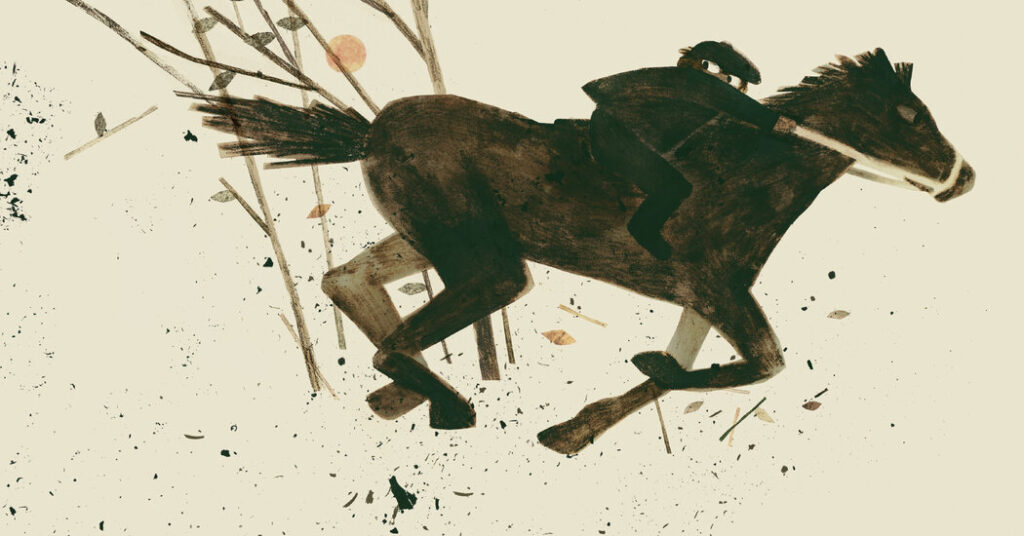
Observant readers will find Lucas’s fate foreshadowed in the illustrator Jon Klassen’s dramatic, kinetic cover of a horse and a boy racing away to … freedom? Capture? No matter what the outcome, Pennypacker’s illuminating and stirring historical fiction will leave middle grade readers feeling deeply inspired, righteously angry and firmly resolved.
Sister Marie-Agnes, a nun at the abbey, often tells Lucas and the other boys, “Little termites taking tiny bites can bring down a cathedral.” Whether a termite, an onion or a brave boy, the only true measure of any hero is the size of one’s heart.
The post In These Tales of Bravery and Rebellion, Heroes Come in All Sizes appeared first on New York Times.