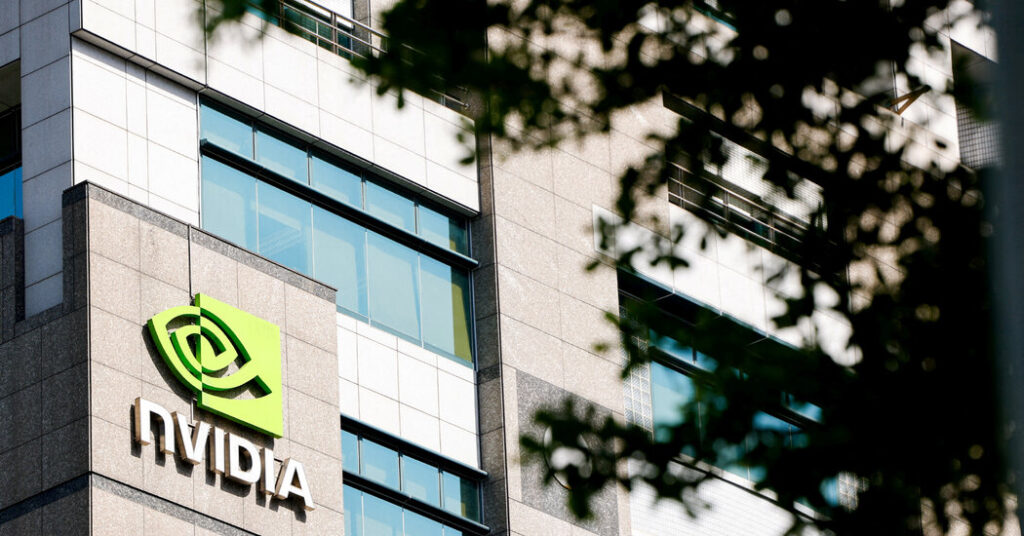
Nvidia, the maker of artificial intelligence chips and the world’s most valuable public company, agreed to license the technology of the chip start-up Groq and hire its top executives.
In an announcement on Wednesday, Groq called the deal with Nvidia a “nonexclusive licensing agreement” and said Jonathan Ross, its founder and chief executive, and other employees would join the chip giant. What remains of Groq will continue operating as an independent company, the start-up added.
Groq’s chips were custom-built for running A.I., a process known as inference. As that type of computing expanded with the growth of chatbots, Nvidia became interested in incorporating some of Groq’s abilities into future products, a person with knowledge of the deal said.
Nvidia, which has become increasingly influential because of its dominance in A.I. chips and has a market capitalization of nearly $4.6 trillion, has been making big investment bets. In September, it said it would invest $100 billion in OpenAI, a deal that allows OpenAI, the start-up behind ChatGPT, to use Nvidia’s A.I. semiconductors inside its data centers.
Representatives from Nvidia and Groq confirmed the licensing agreement but declined to comment further.
In recent years, Silicon Valley giants — which typically buy start-ups outright — have turned to a more complicated deal structure for young A.I. companies. It involves licensing their technology and hiring their top employees, effectively swallowing the start-ups and their main assets without owning the firms.
These transactions are generally driven by the big tech companies’ desire to sidestep regulatory scrutiny, people familiar with such deals have said. Nvidia, Amazon, Apple, Google, Meta and Microsoft have all faced regulatory scrutiny over the past few years.
Nvidia’s A.I. chips account for more than 90 percent of the market. Authorities in the European Union, Britain and China have asked the company for information about its chips sales as well as its allocation of supplies and investments in other companies, according to Nvidia’s financial filings.
Groq, which was founded in 2016, has raised more than $3 billion, most recently at a valuation of nearly $7 billion, according to PitchBook, which tracks start-ups. Its investors include Samsung, BlackRock and 1789 Capital, which counts Donald Trump Jr. as a partner, as well as Chamath Palihapitiya, a venture capitalist and co-host of a tech podcast called “All-In.”
In February 2024, Mr. Palihapitiya said of Groq that “essentially, we had no customers,” but that the company had picked up 300,000 customers after revealing some of the speed and performance metrics of its chips that month. He said customers were “stress-testing us and finding that we are meaningfully, meaningfully faster and cheaper than any Nvidia solution.”
Ryan Mac covers corporate accountability across the global technology industry.
The post Nvidia Strikes a Deal With Groq, an A.I. Chip Start-Up appeared first on New York Times.