Reflecting on England during World War I, the poet Philip Larkin wrote, “Never such innocence again.”
His words spring to mind while watching “The Choral,” written by Alan Bennett and directed by Nicholas Hytner. One infers that Larkin’s words were close at hand as Bennett wrote the screenplay for “The Choral,” a moving account of music as a way of coping with war, as well as keeping it at bay.
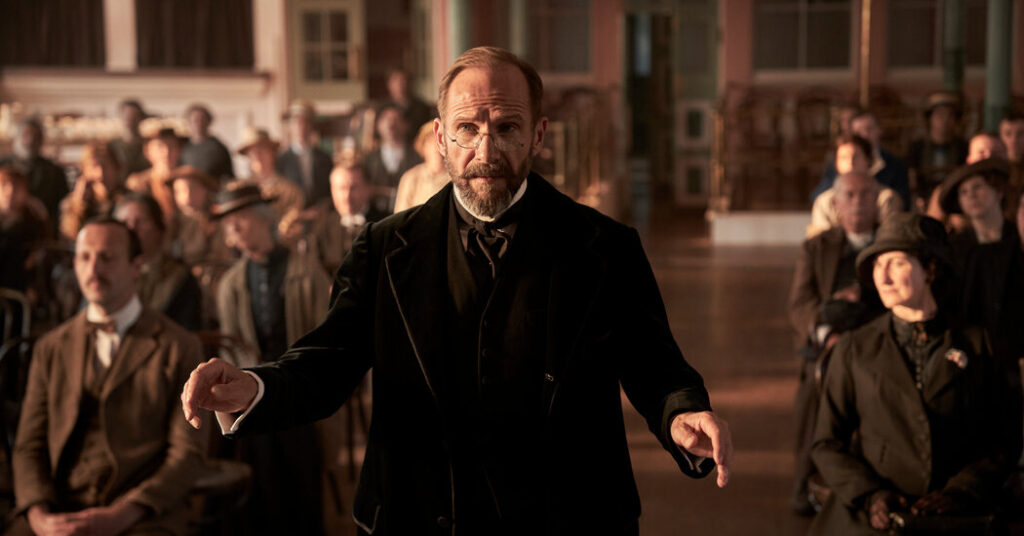
The movie reunites Bennett with Hytner, with whom he brought “The Madness of King George” and “The History Boys” to stage and screen. Ralph Fiennes plays Guthrie, a choir master in 1916 Yorkshire hired by a town council that has some misgivings about him because he’s a bachelor who has returned to England from a long gig in Germany.
The war has sapped the choral of its male singers, so Guthrie enlists local teenagers hoping to avoid the call to war, as well as wounded veterans. He tosses Bach, a German, in favor of the British composer Edward Elgar. He also gives a star-making part to Mary, an unassuming but tremendously talented Salvation Army singer, beautifully played by Amara Okereke. The subsequent aesthetic and emotional tempests are gripping and unpredictable. When Elgar shows up, in the formidable person of Simon Russell Beale, the legendary composer is not in the least bit agreeable.
Fiennes, who’s been going bigger than big in the recent “28 Years Later” horror movies, here reminds us that he’s still capable of poignant subtlety. The film’s final shot will kick your heart into your throat.
The Choral Rated R for language and sexual content. Running time: 1 hour 53 minutes. In theaters.
The post ‘The Choral’ Review: Singing to Keep the Fear at Bay appeared first on New York Times.