In May 2022, clients of the private equity firm Clearlake Capital gathered at a California resort with dazzling views of the Pacific Ocean, where champagne and shrimp flowed freely.
Perhaps even more dazzling than the setting at the Monarch Beach Resort & Club was Clearlake’s recent performance, which had blown through almost every imaginable benchmark, with one fund generating average annual returns of 50 percent.
One reason for the firm’s success, according to one attendee and documents shared at the gathering: Clearlake was selling the companies it owned from one set of investment funds to another set of funds it also managed called “continuation vehicles.”
Continuation funds are meant as a temporary fix for a serious problem that has been bedeviling firms like Clearlake.
Private equity firms have been struggling to deliver on their core business model of taking on debt, buying companies and selling them for a profit. Several years of high interest rates have made it too expensive for many would-be buyers to purchase companies with debt, and private equity firms are contending with a backlog of more than 31,000 unsold companies, a record amount. Deal activity picked up toward the end of this year, but not enough to make a significant dent in the backlog.
Continuation vehicles are providing a short-term solution by allowing firms to sell the companies to themselves, book a paper gain and wait for interest rates to improve.
Private equity firms have been turning to this strategy more frequently. The dollar value of continuation vehicles across the industry is expected to total $100 billion or more by the end of 2025, up from about $35 billion in 2019, according to the investment bank Evercore.
Private equity is one of the biggest parts of the global economy, with more than $7 trillion in investors’ money, and some of those investors are getting increasingly worried that strategies like continuation vehicles are putting off a painful reckoning.
Private equity firms say they are selling only their best-performing companies to continuation vehicles, which would yield big profits when the companies can eventually be sold to outside buyers.
The risk, investors say, is that the insular nature of these sales — where the private equity firm is both the buyer and seller — is leading to questionable valuations and unrealistic projections, leaving investors vulnerable to painful surprises.
At the gathering of pension managers and other Clearlake clients at the Monarch Hotel in 2022, the firm boasted about the success of Wheel Pros, an auto accessories retailer that it had sold to one of its continuation funds.
The company sells flashy hubcaps and other accessories for wheels, which were popular during the pandemic when consumers were flush with stimulus money and had time for do-it-yourself projects.
Two years after that gathering, in September 2024, Wheel Pros declared bankruptcy, because sales slowed after the pandemic. The company couldn’t keep up with its ballooning debt payments. Every investor, including public employees’ pension funds from New York, Connecticut and Nevada, was wiped out. (Connecticut and Nevada had previously sold out of some of their Wheel Pros stake.)
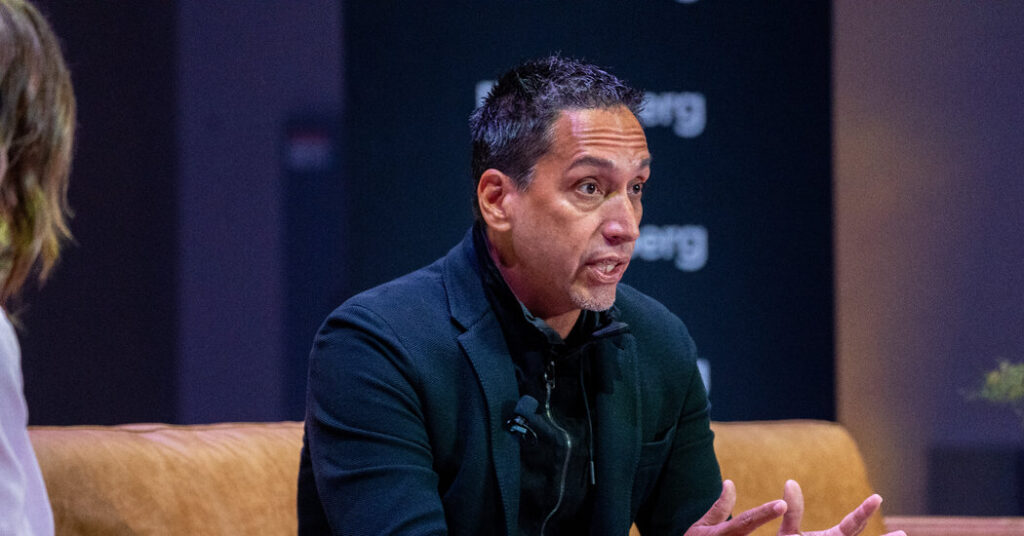
Clearlake Capital declined to make their executives available for an interview. In a 2023 podcast interview, José E. Feliciano, a founder of the firm, said it used continuation vehicles for “companies that were A-plus assets that we wouldn’t mind owning for a long time, maybe forever.” He added that it was also for companies that would need more time and investment to realize their full potential.
Platinum Equity, another firm, has struggled with its investment in United Site Services, which makes portable toilets. In 2021, Platinum Equity executives described the sale of United Site Services to a continuation fund it created as a “win-win.” Now, United Site Services is in the process of turning the company over to its lenders, and its investors are expected to lose all their money.
“Continuation vehicles are indicative of rot in private equity,’’ said Marcus Frampton, chief investment officer of the Alaska Permanent Fund Corporation, which manages $83 billion of the state’s money that is derived from oil revenues and distributed annually to Alaskans.
The increased use of these funds, he said, is one of the reasons the Alaska fund has scaled back investments with private equity firms. Mr. Frampton said the firms were shirking their purpose to create value through buying and selling companies. In 2021, the Alaska fund held 22 percent of its dollars in private equity firms. Now it holds about 17 percent.
Scott Ramsower, who oversees the private equity investments of the Teacher Retirement System of Texas, a pension fund that manages roughly $229 billion, said there were inherent conflicts in continuation funds because a private equity firm is typically involved on both sides of the deal.
“We’d be happier if a private equity firm never did any of these,” Mr. Ramsower said about continuation funds.
The private equity industry says there are no conflicts because the deals are independently vetted. First, a private equity firm’s largest investors must consent to selling a portfolio company to a continuation vehicle. Then, existing and new investors have a chance to scrutinize the company’s financials and decide whether to buy into a deal at a specific price tag. If the investors don’t see the upside for future returns for a specific company when it is finally sold to an outside buyer, the deal won’t move forward.
But some investors say this vetting process is not always transparent.
This month, Abu Dhabi’s sovereign wealth fund filed a lawsuit in the Delaware Court of Chancery claiming that Energy & Minerals Group, a private equity firm, was seeking to “reap a massive benefit for themselves” at the expense of their investors by selling a company into a continuation vehicle.
According to the lawsuit, the firm tried to force the sovereign wealth funds and other investors to vote on the sale on short notice, provided different data to different investors and would not allow the investors to confer with each other about the deal.
Energy & Minerals Group did not respond to requests for comment.
Nigel Dawn, global head of private capital advisory at Evercore, said that so far continuation fund bankruptcies were below the rates of traditional buyout funds, which hover between 5 and 10 percent.
But he said it was far too soon to say what returns will ultimately look like more broadly for these funds. “It’s still the early days,” he said.
Clearlake is one of the most frequent users of continuation funds, creating six of them since 2020.
Clearlake, which was founded by Mr. Feliciano and Behdad Eghbali, both billionaires, in 2006 and initially managed $182 million. Now they manage roughly $90 billion of investor money and recently said they would double that amount by buying another fund.
Clearlake bought Wheel Pros for about $420 million in 2018. As its new owners, Clearlake wanted to go big, pushing executives to buy up almost every competitor that made accessories for the wheels of cars and trucks, according to two people familiar with the firm’s thinking. By 2021, profits had jumped to over $200 million from about $50 million in 2018.
Even though the I.P.O. market was strong in 2021, private equity firms often have to wait a few years after a company goes public to collect all their gains. Clearlake figured it could book an even bigger and immediate gain by putting Wheel Pros into a continuation vehicle that valued the business at $2.3 billion, more than four times the price Clearlake had paid just three years earlier, the two people said. As is typical in continuation funds, Clearlake gave its existing investors the chance to either cash out or roll their investment into the new fund.
Pennsylvania State Employees’ Retirement System was among the sellers, while state pensions for Connecticut and Nevada rolled some of their commitment into the new fund and New York rolled all of it.
Clearlake also brought in a new batch of investors, including other large private equity firms like Blackstone, Pantheon and ICG.
Wheel Pros’ senior managers took their own stock options — worth about $100 million — and put them into the new fund, the people said. Clearlake invested about $50 million of its partners’ profits, too, said another person familiar with the matter.
Once Clearlake moved Wheel Pros into the continuation vehicle and booked a profit, it added substantially more debt to the company, ratcheting up the financial pressure, according to internal company documents reviewed by The New York Times. The move came not long before the Federal Reserve started raising interest rates. Wheel Pros had some debt with an interest rate tied to government bond yields, and that also increased the company’s debt costs.
By 2023, Wheel Pros’ sales were weakening as the pandemic-era boost dissipated. The next year, the company could no longer make its interest payments and filed for bankruptcy.
Clearlake’s continuation vehicles, known as Icon Partners I and II, reported strong annual returns of 49 percent and 56 percent on average through March 2025 since they were created in 2020 and 2021.
But Icon Partners III, which held Wheel Pros, was a total loss, and Icon Partners IV and V reported annualized returns of 2.7 percent and 10.1 percent from their creation in 2021 through the end of March.
Clearlake hasn’t yet sold or taken public any of the companies in the continuation funds, making a true measure of returns difficult to discern.
“Private equity walks so much in the shadows,” said Yaron Nili, a professor of corporate law at Duke Law School who wrote a paper recently on continuation funds.
Because so many deals involve private equity firms buying from each other or from themselves, “it will be hard to distinguish between value-generating activities and just collecting and recollecting fees,’’ Mr. Nili said.
Some firms are pushing out the sales timeline even further. This year, private equity firms including Accel-KKR have started selling their companies from one continuation vehicle to another.
The industry calls these new funds “CV-squared.”
Maureen Farrell writes about Wall Street for The Times, focusing on private equity, hedge funds and billionaires and how they influence the world of investing.
The post Investors Warn of ‘Rot in Private Equity’ as Funds Strike Circular Deals appeared first on New York Times.