Agencies across the Trump administration have taken out subscriptions in recent months to news organizations that officials had very publicly cut off this year, reversing an earlier decision to cancel them that Elon Musk, senior White House aides and President Donald Trump had declared was necessary to end what they called a scandal.
The administration canceled subscriptions en masse in February after Musk’s U.S. DOGE Service posted copies of contracts with news sites. Trump said government contracts for media subscriptions “COULD BE THE BIGGEST SCANDAL OF THEM ALL, PERHAPS THE BIGGEST IN HISTORY!”
But the White House, State Department, Department of Homeland Security and dozens of other agencies are still spending tens of thousands of dollars to access paywalled news sites, including Politico, Bloomberg and The Washington Post, according to federal contract data posted publicly and reviewed by Post reporters. (The Post’s news staff does not have access to internal data about subscribers.)
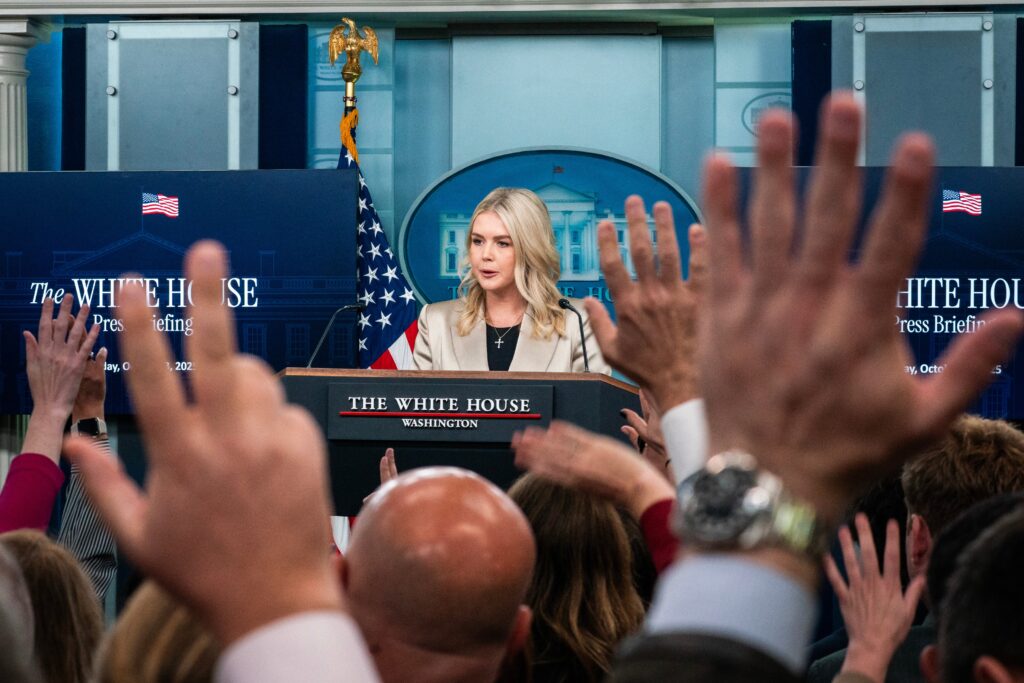
White House spokeswoman Abigail Jackson said in a statement that “unfortunately we are forced to read the Fake News so we know what lies we have to debunk.” A White House official, speaking on the condition of anonymity to discuss internal decisions, said the administration “has made efforts to decrease the amount spent on media subscriptions.”
The Environmental Protection Agency signed up to pay $17,400 to read Politico’s energy and environmental coverage in September. A few days before that, the Equal Employment Opportunity Commission committed $13,320 to Politico. That same month, the Air Force said it planned to spend $39,600 on subscriptions “to conduct daily research on various congressional matters,” according to the contract description.
The government is still canceling news contracts, in line with the February decision. On Sept. 10, the State Department signed a contract to spend $101,624 for Politico’s U.S. and European political stories. But on Sept. 18, a day after The Post asked the White House about the purchase, the agency canceled the contract. In fiscal year 2024, the government set aside about $8 million to spend on various Politico subscriptions; for fiscal year 2025, that was down to $1 million, according to USAspending.gov.
The Department of Transportation signed a contract in August to spend $17,500 on Politico Pro for three to five users and a contract in June to spend $17,290 on E&E News & Politico Pro subscriptions. A spokesman for the agency, Nate Sizemore, said in a statement that it “canceled its original, bloated contract with Politico and minimized it to a much smaller expense.”
EPA spokeswoman Carolyn Holran said the agency has canceled over $1 million “in wasteful media subscriptions, which included slashing Politico E&E News subscription costs by $441,519.”
Bloomberg, another target of the February cuts, has also seen purchases continue, such as a $37,710 subscription that the Energy Department signed up for last Wednesday for Bloomberg Finance. On Dec. 15, the U.S. International Development Finance Corporation signed a contract for licenses for Bloomberg Anywhere, a service offering access to the financial data and media company’s terminal service.
Politico and Bloomberg are among the most expensive media outlets that the government pays for premium online services, such as legislation tracking and financial information. However, the Trump administration has also paid for mass-market news sites or newspapers.
The White House bought a $41,200 subscription in September for staffers to read The Washington Post online, records showed. In October, the Office of the Comptroller of the Currency signed a nearly $96,000 contract for access to the Wall Street Journal’s digital and pro content.
Politico and Bloomberg declined to comment. The Post did not respond to a request for comment.
Chris Mohr, president of the Software Information Industry Association, a trade group that represents news, software and data companies including Bloomberg and Thomson Reuters, said he was “pleased” to see the government continue to seek out information from those companies because it means the government is staying current on the industries it regulates, among other reasons. He said the government is not different from private companies that rely on facts to make informed decisions.
“Why would you willingly fly blind?” he said.
Much of the criticism of the subscriptions earlier this year centered on an inaccurate claim that the government was giving away funds to media companies in the form of grants. But contracts, unlike grants, generally require the contractor to produce some specific work product or service, said Nicole Darnall, an expert in government procurement at American University. In the case of the news organizations, they provided access to paywalled content in exchange for the money.
At several agencies, officials raised concerns about losing information when the White House initially requested the cancellations.
At the State Department, a top official sent an email in February to procurement staff at posts and consulates worldwide instructing them to end all news subscriptions, according to messages obtained by The Post and an agency employee who spoke on the condition of anonymity for fear of retaliation.
“Posts are asked to immediately place Stop Work orders on all non-mission critical contracts/purchase orders for media subscriptions (publications, periodicals and newspaper subscriptions) that are not academic or professional journals,” stated the email, obtained by The Post.
Following that order, a majority of missions dumped all their subscriptions to local news outlets and U.S. outlets alike, the State employee said. Still, in the days and months since, some staff attempted to check in on or revive the subscriptions, according to emails obtained by The Post.
“Our spokespeople here and overseas need to monitor and engage with foreign and domestic media — that is at the very core of their jobs,” one State employee wrote in February, seeking an exemption from the media ban.
A State Department spokesperson who declined to provide their name said in a statement that “America’s diplomatic corps is having more success than ever before” under Trump.
The post Despite anti-media rhetoric, the government is still reading the news appeared first on Washington Post.