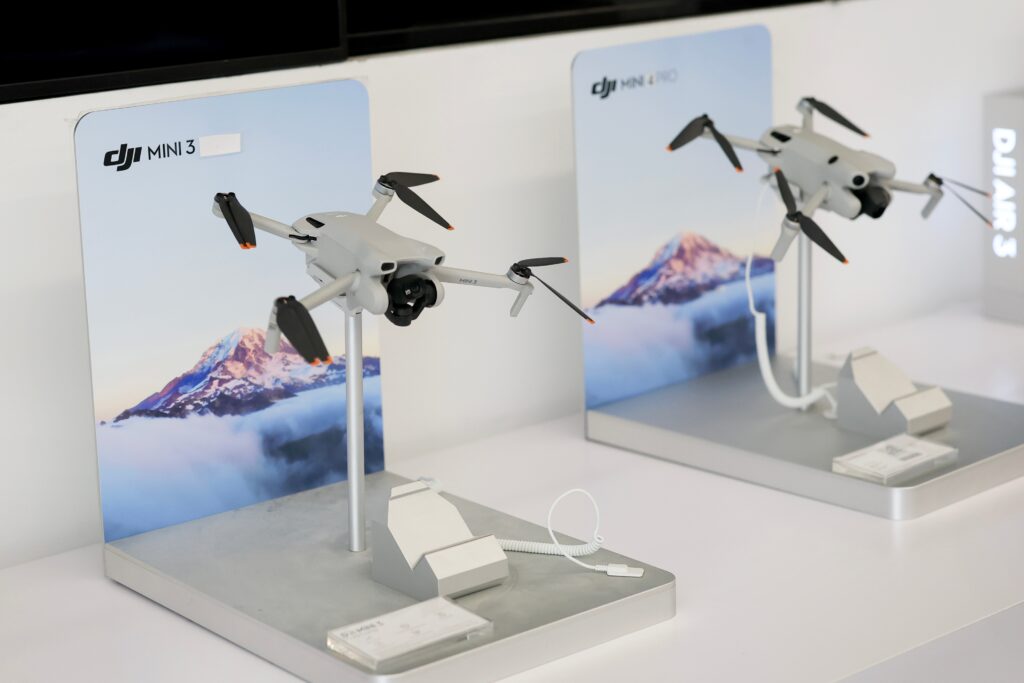
The Federal Communications Commission has banned the sale of new models of foreign drones, including widely used Chinese DJI aircraft, citing concerns they pose a national security threat and could undermine U.S. drone production.
The ban adds DJI to the FCC’s “Covered List” — a designation that blocks authorization of new equipment — effectively preventing U.S. consumers from buying new models of the Chinese company’s drones. Existing models already approved for sale, as well as those currently in use, are not affected by the ban.
The designation deals a major blow to the world’s leading consumer drone maker, as well as other top brands including Shenzhen-based Autel Robotics. It comes after years of pressure from lawmakers and FCC officials, who have argued that DJI’s dominance of the consumer drone market exposes the United States to surveillance risks and gives Chinese firms control over a technology with potential future military applications.
The FCC notice, posted Tuesday, says the Chinese-made devices pose an “unacceptable national security risk.” It also cited President Donald Trump’s recently released National Security Strategy, which calls for the United States to strengthen its defense industrial base with an emphasis on dual-use technology. In June, Trump issued an executive order directing the U.S. intelligence community to accelerate security reviews of foreign drone makers and to prioritize the production of U.S.-made drones “to the maximum extent permitted by law.”
Changes to the Covered List cannot be solely made by the FCC; they are determined by recommendations from other national security authorities. Tuesday’s FCC notice cites a national security determination issued by the White House.
“I welcome this Executive Branch national security determination … following President Trump’s leadership, the FCC will work closely with U.S. drone makers to unleash American drone dominance,” FCC Chairman Brendan Carr said in a statement.
DJI, founded in 2006, quickly rose to become the world’s top consumer drone maker, with its capable and relatively affordable drones widely adopted by hobbyists, real estate agents and U.S. police and fire departments. There are no current figures on DJI’s total market share in the United States, but as of 2020, DJI held 77 percent of the American hobby drone market. A Bard College study released the same year showed that DJI drones accounted for about 90 percent of the drones in its database used by public safety agencies.
“DJI is disappointed by the Federal Communications Commission’s action today to add foreign‑made drones to the Covered List. While DJI was not singled out, no information has been released regarding what information was used by the Executive Branch in reaching its determination,” said a DJI spokesman in a statement.
China’s foreign ministry on Wednesday issued a sharp rebuke of the ban. “China firmly opposes the U.S. overstretching the concept of national security and making discriminatory lists to go after Chinese companies. The U.S. should stop its wrong practice and create a fair, just and nondiscriminatory environment for Chinese companies,” said foreign ministry spokesman Lin Jian at a news briefing.
Amid its global success, DJI — like many Chinese firms — has struggled to balance its ties to the Chinese government with a growing wave of international scrutiny over the potential national security risks of its products. In 2022, The Washington Post reported that it had obscured funding it received from the Chinese government.
The Department of Defense in 2017 banned the acquisition of DJI drones by the military, and other government agencies have introduced similar restrictions around using taxpayer dollars on the company’s products. As of 2025, DJI products are still employed by the police, firefighters and other public safety agencies across the United States, though some states — including Florida, Arkansas and Mississippi — have issued localized restrictions on those purchases.
The post FCC bans new DJI Chinese drones, citing national security appeared first on Washington Post.