Large shares of America’s closest allies view the United States as unreliable, disruptive, and increasingly negative on the world stage, according to new international polling.
The data, released by Politico and polling firm Public First, shows that pluralities in Germany and France, and a majority in Canada, now see the United States as a negative global force. Views are more mixed in the United Kingdom, though skepticism remains widespread. The results capture growing unease with President Donald Trump’s foreign policy agenda.
In Canada, 56 percent of respondents said the United States is a negative force globally, compared with just 26 percent who described it as positive. In Germany, 40 percent viewed the United States negatively, while 29 percent said it was a positive force, and the remainder reported neutral views.

France showed a similar split, with 40 percent calling the United States a negative force and 34 percent saying it was positive. In the United Kingdom, 35 percent said the United States is a negative force, while 41 percent viewed it positively.
Across all four countries, near-majorities also said the United States tends to create problems for other countries rather than solve them. That view was strongest in Canada, where 63 percent said the United States creates problems.
In Germany, 52 percent agreed. In France, 47 percent said the United States creates problems, compared with 29 percent who said it solves them. In the United Kingdom, 46 percent said the United States creates problems, while 35 percent said it solves them.
When asked whether the United States supports or challenges its allies, Canada again stood out as the most critical. Sixty percent of Canadians said the United States challenges its allies. In Germany, 46 percent said the same, compared with 29 percent who said the United States supports allies.
In France, 45 percent said the United States challenges allies and 33 percent said it supports them. The United Kingdom was the most evenly divided, with 41 percent saying the United States challenges allies and 40 percent saying it supports them.
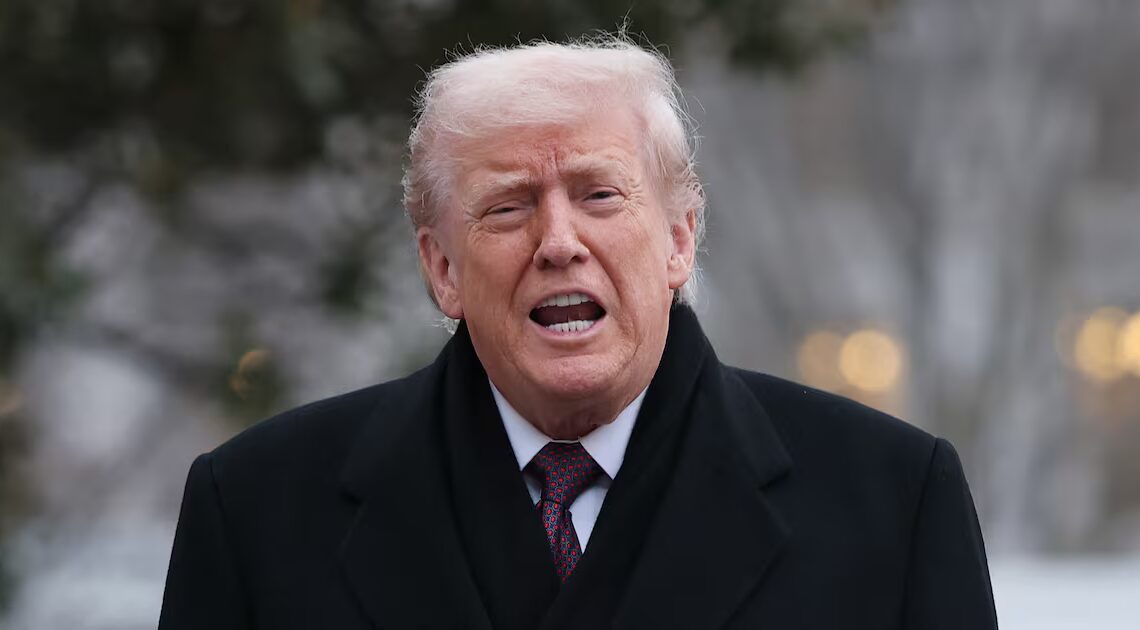
The findings come as Trump has upended long-standing alliances through trade disputes, sharp rhetoric toward allied governments, and shifts in military posture. In a recent Politico interview, Trump described Europe as a “decaying” group of nations led by “weak” people. At the same time, his National Security Strategy argued the continent had lost its “national identities and self-confidence.”
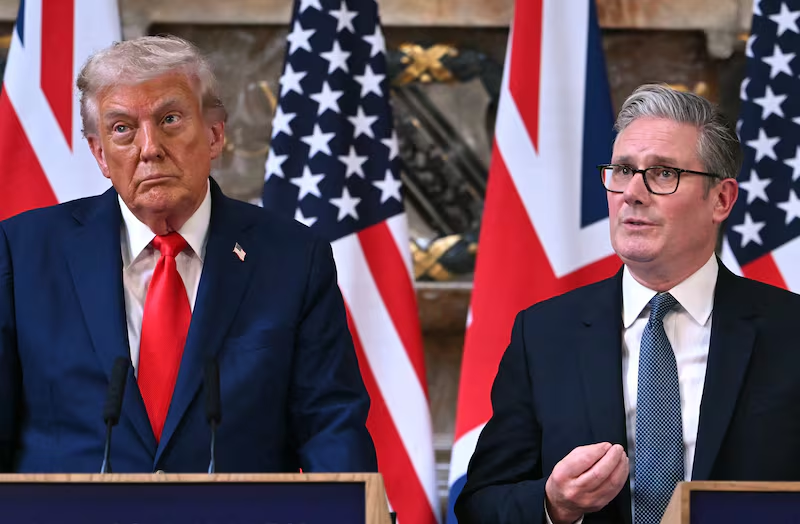
Secretary of State Marco Rubio pushed back on European criticism, saying the transatlantic alliance remains grounded in shared values. “I do think that at the core of these special relationships we have is the fact that we have shared history, shared values, shared civilizational principles that we should be unapologetic about,” Rubio said at a briefing.
Matthew Kroenig, vice president and senior director of the Atlantic Council’s Scowcroft Center for Strategy and Security, said the polling likely reflects elite skepticism filtering down to voters.
“Public opinion in democracies often reflects elite opinion,” he said. “What you’re probably seeing there is that you do have politicians in these countries expressing skepticism about the United States and about the Trump administration, and that’s being reflected in the public opinion polling.”
The Politico Poll was conducted from Dec. 5 to Dec. 9 among 10,510 adults in the United States, Canada, the United Kingdom, France, and Germany, and the results were weighted for age, gender, and geography.
The post Scathing Polling Reveals What Key U.S. Allies Really Think of America Under Trump appeared first on The Daily Beast.