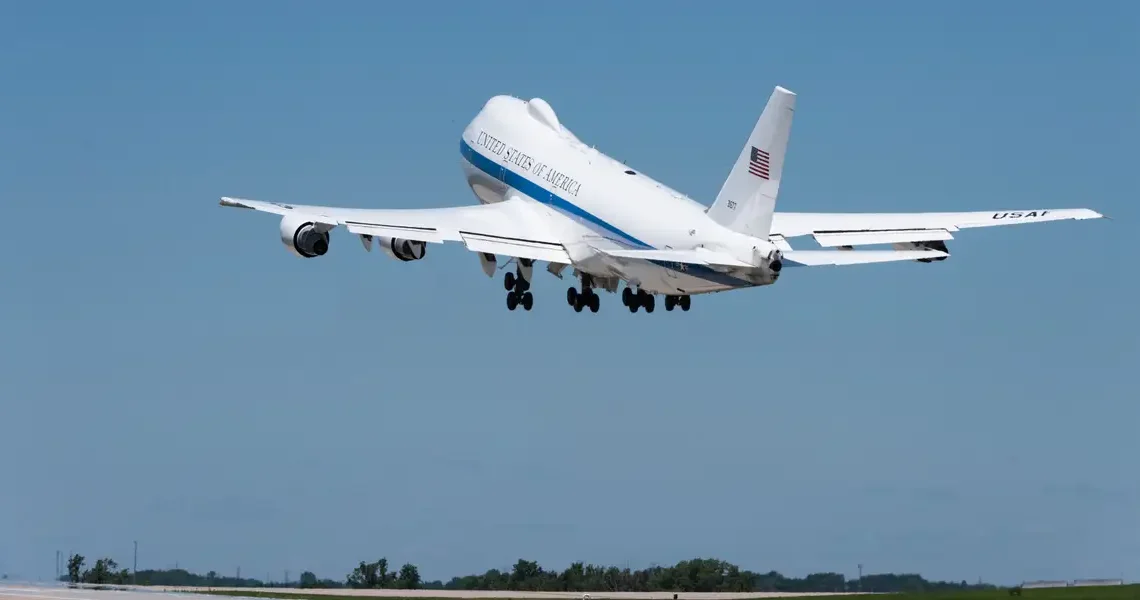
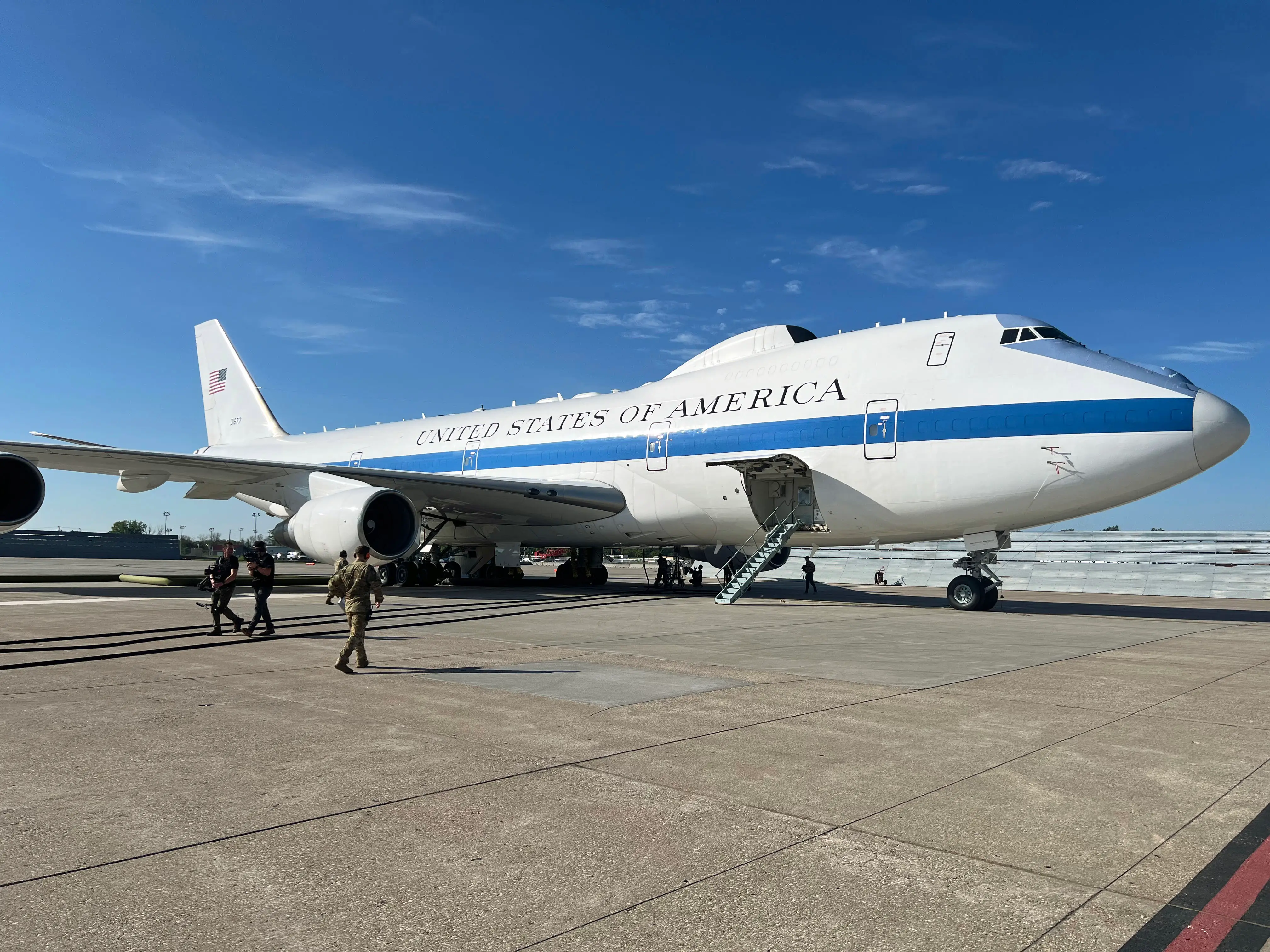
Maintainers from the 595th Aircraft Maintenance Squadron prepare the E-4B for flight as a visiting documentary production team loads onto the Nightwatch to film a local training sortie and air refueling mission from Offutt Air Force Base, Neb., May 15, 2024. Justin Oakes/US Air Force
The E-4B “Nightwatch” is nicknamed the “doomsday plane” because it can survive a nuclear attack.
In the event of nuclear war, it would serve as the US military’s command and control center.
It is the US Air Force’s most expensive plane to operate, at $159,529 per hour.
Air Force One is known as the “flying Oval Office,” but there’s another lesser-known presidential plane that can operate as a “flying war room”: the E-4B “Nightwatch.”
Nicknamed the “doomsday plane” for its ability to survive a nuclear blast, the E-4B is designed to protect the president and other senior officials and function as a military command center in worst-case scenarios. It also transports the secretary of defense on international trips.
Many of the E-4B’s features are classified, but the US Air Force has shared some glimpses into its capabilities. Take a look inside the top-secret aircraft.
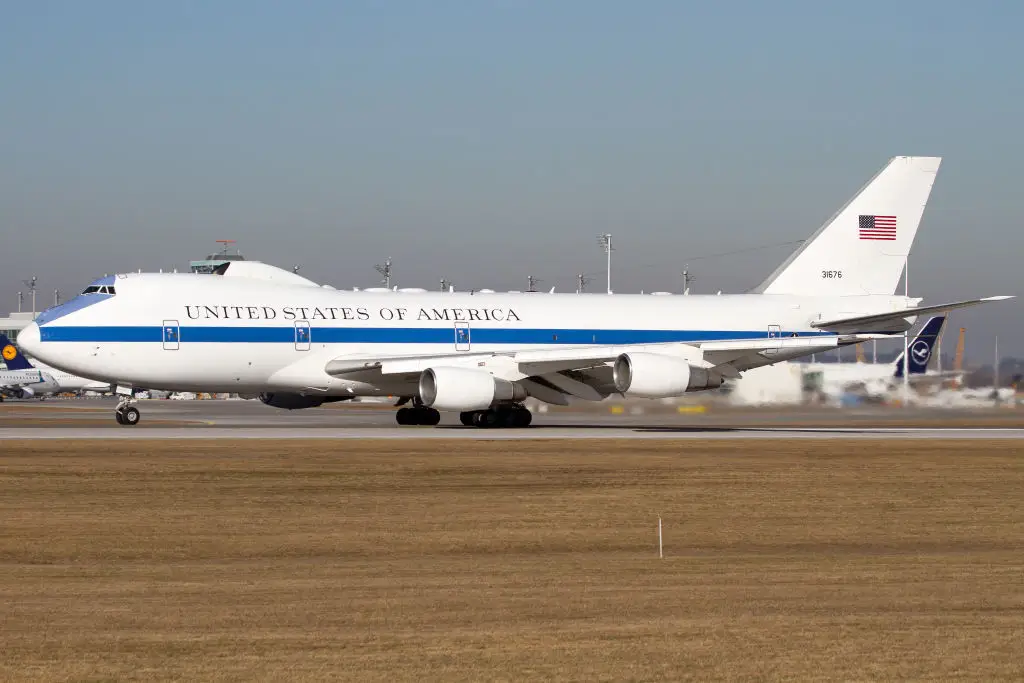
The E-4B “Nightwatch” is a militarized version of a Boeing 747-200.
AIRPORT MUNICH, MUNICH, GERMANY – 2019/02/16: An United States US Air Force USAF Boeing E-4B bringing the American delegation back home after the Munich Security Conference. Fabrizio Gandolfo/SOPA Images/LightRocket via Getty Images
The US Air Force’s fleet of four E-4Bs comprises the National Airborne Operations Center at Offutt Air Force Base in Omaha, Nebraska.
It costs $159,529 per hour to operate, making it the Air Force’s most expensive plane.
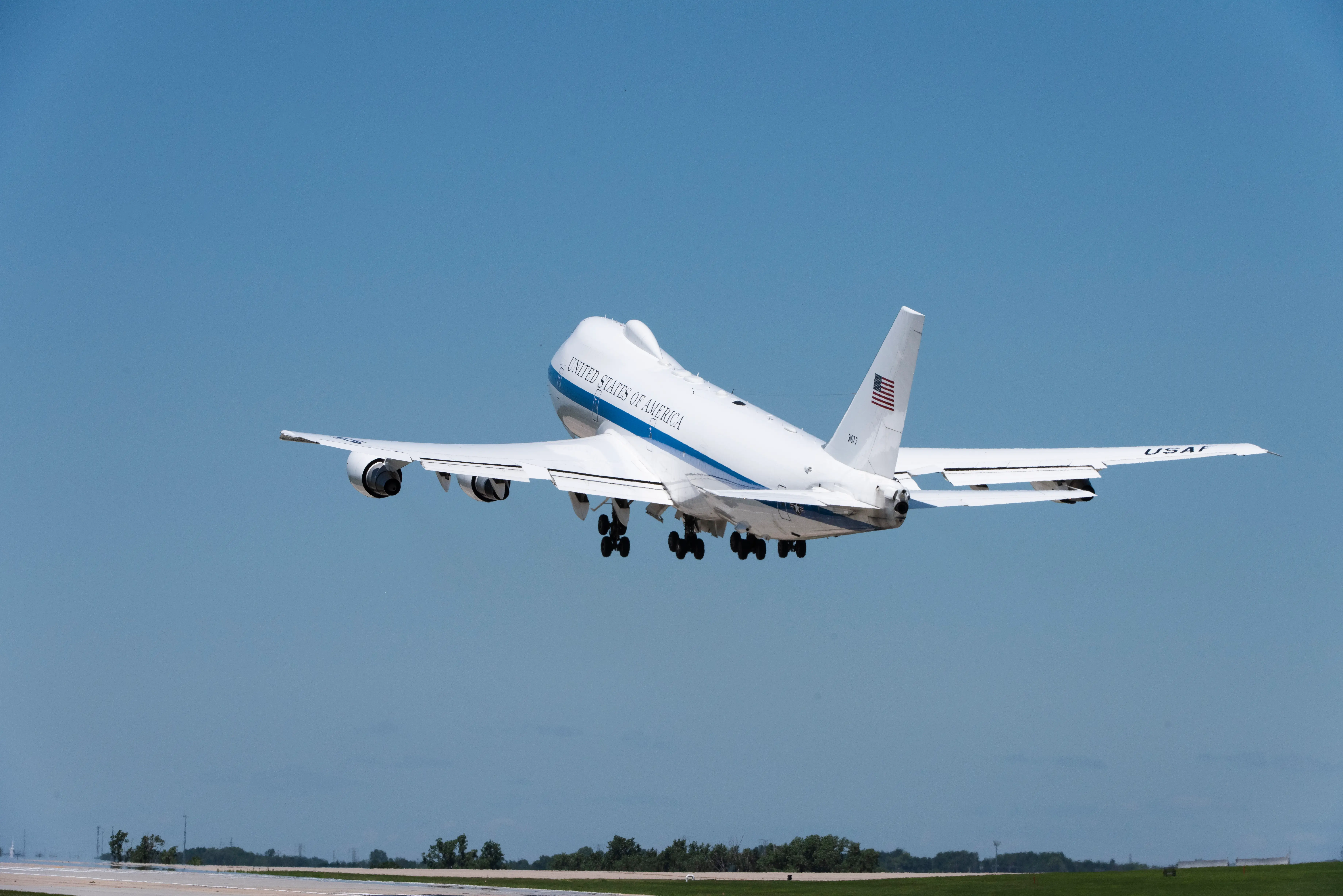
The E-4B serves as the National Airborne Operations Center and is a key component of the National Military Command System for the President, the Secretary of Defense and the Joint Chiefs of Staff. Pictured: A U.S. Air Force E-4B National Airborne Operations Center aircraft takes off from Offutt Air Force Base, Nebraska, July 10, 2019. The E-4B is capable of seating more than 100 people including a joint-service team, an Air Force flight crew, maintenance and security components, a communications team and selected augmentees. US Air Force photo by Staff Sgt. Jacob Skovo
Each E-4B costs $223.2 million to build, according to the US Air Force.
A standard crew consists of 60 people with 15 different specialties.
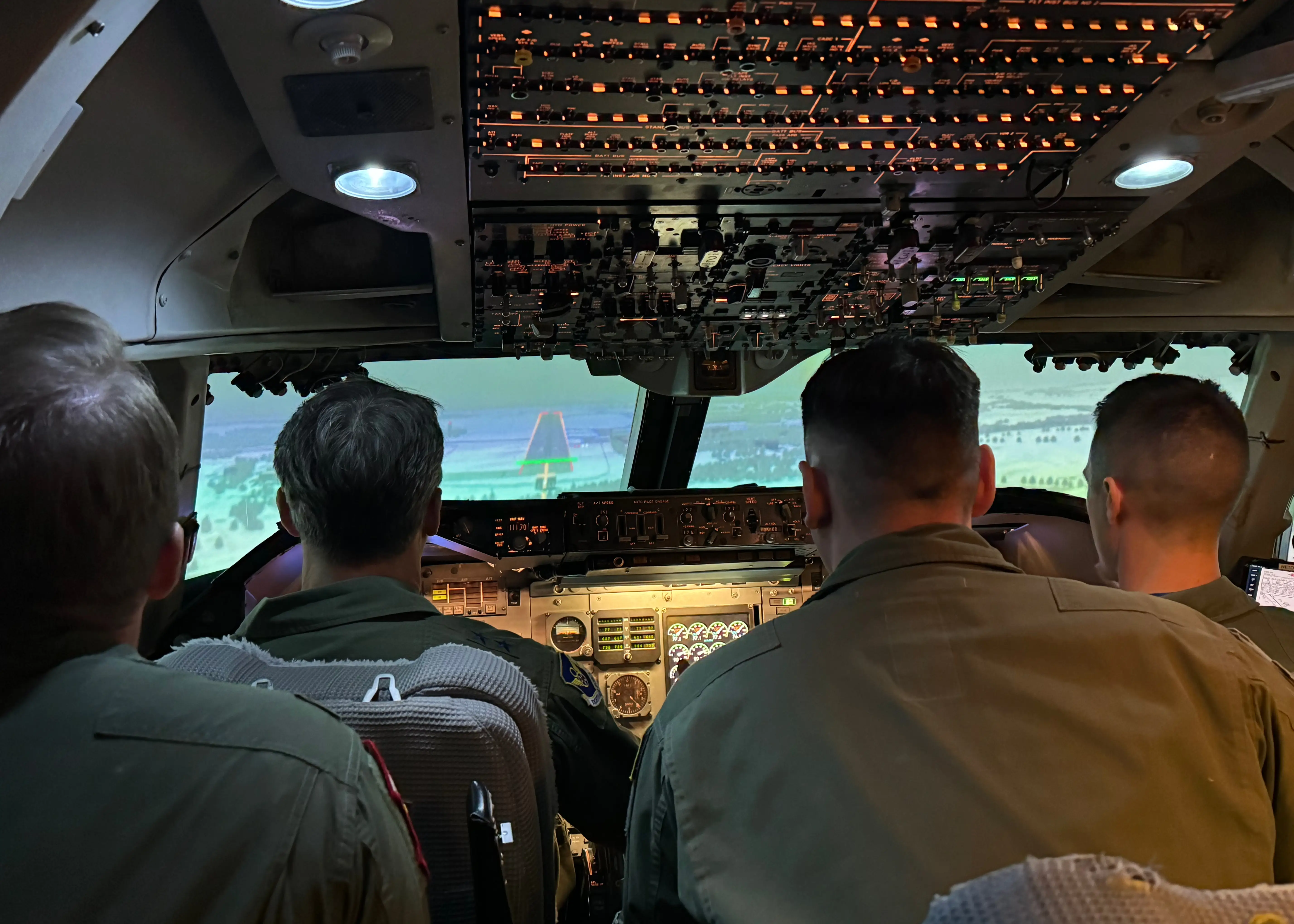
U.S. Air Force Maj. Gen. Jason Armagost, Eighth Air Force and Joint-Global Strike Operations Center commander, center left, flies the E-4B simulator during a training mission prior to a check ride on the E-4B, on Offutt Air Force Base, Neb., Jan. 23, 2024. During the check ride, Armagost earned his senior officer qualification on the E-4B, becoming the first Eighth Air Force commander to do so. US Strategic Command
In 2022, the Air Force introduced a $9.5 million E-4B simulator to train pilots, flight engineers, and other crew members to operate the aircraft, according to the US Strategic Command.
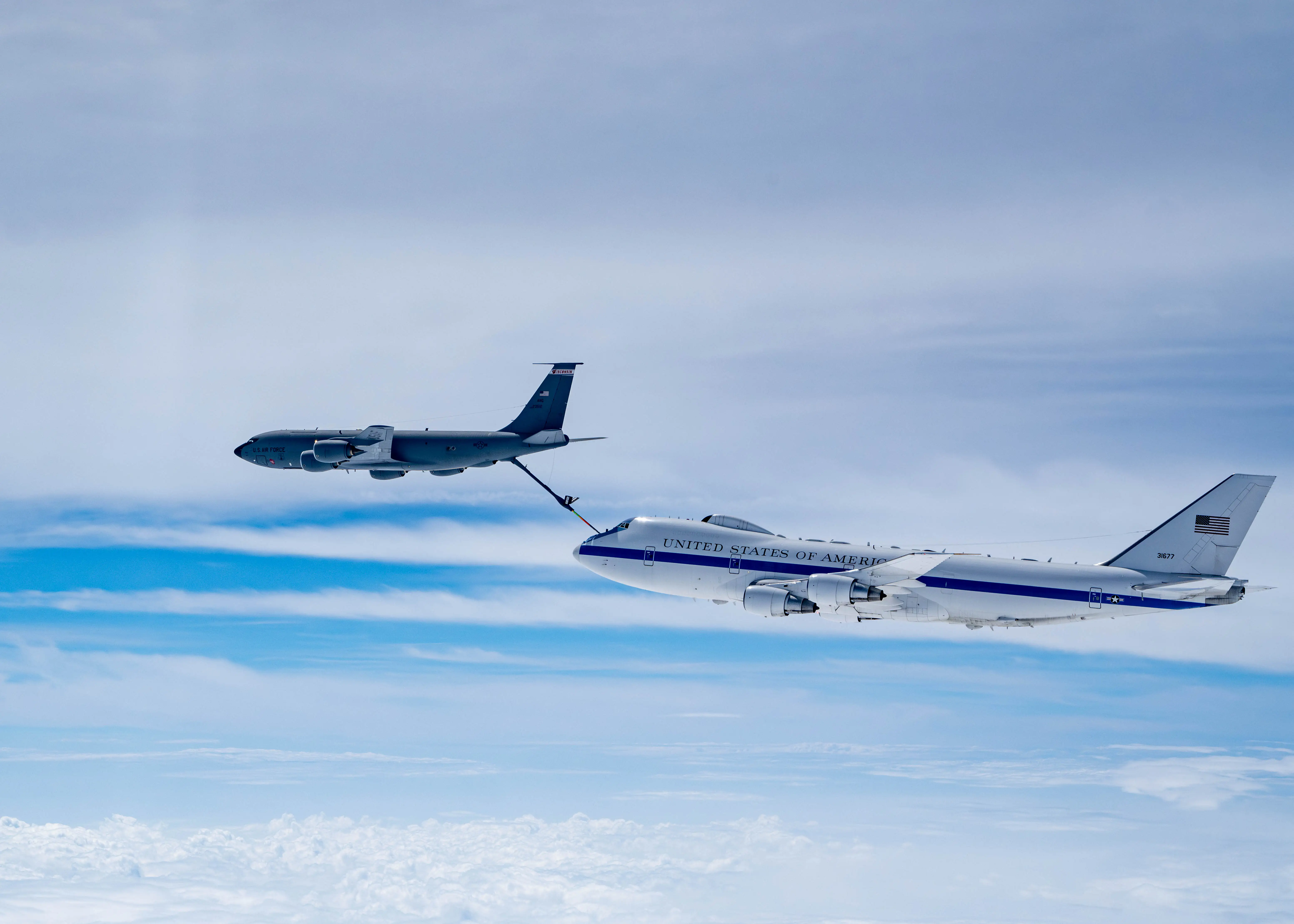
The E-4B can refuel in flight, allowing it to remain airborne for several days at a time.
A U.S. Air Force E-4B assigned to the 595th Command and Control Group, Offutt Air Force Base, Neb., prepares to receive fuel from a KC-135R Stratotanker from the 126th Air Refueling Squadron, Wisconsin Air National Guard, May, 15, 2024. The E-4B is divided into six functional areas: a national command authority work area, conference room, briefing room, an operations team (battle staff) work area, communications area and a rest area, including seating for up to 111 crew members. US Air Force photo by Tech. Sgt. Codie Trimble
The E-4B can fly for 12 hours straight without refueling.
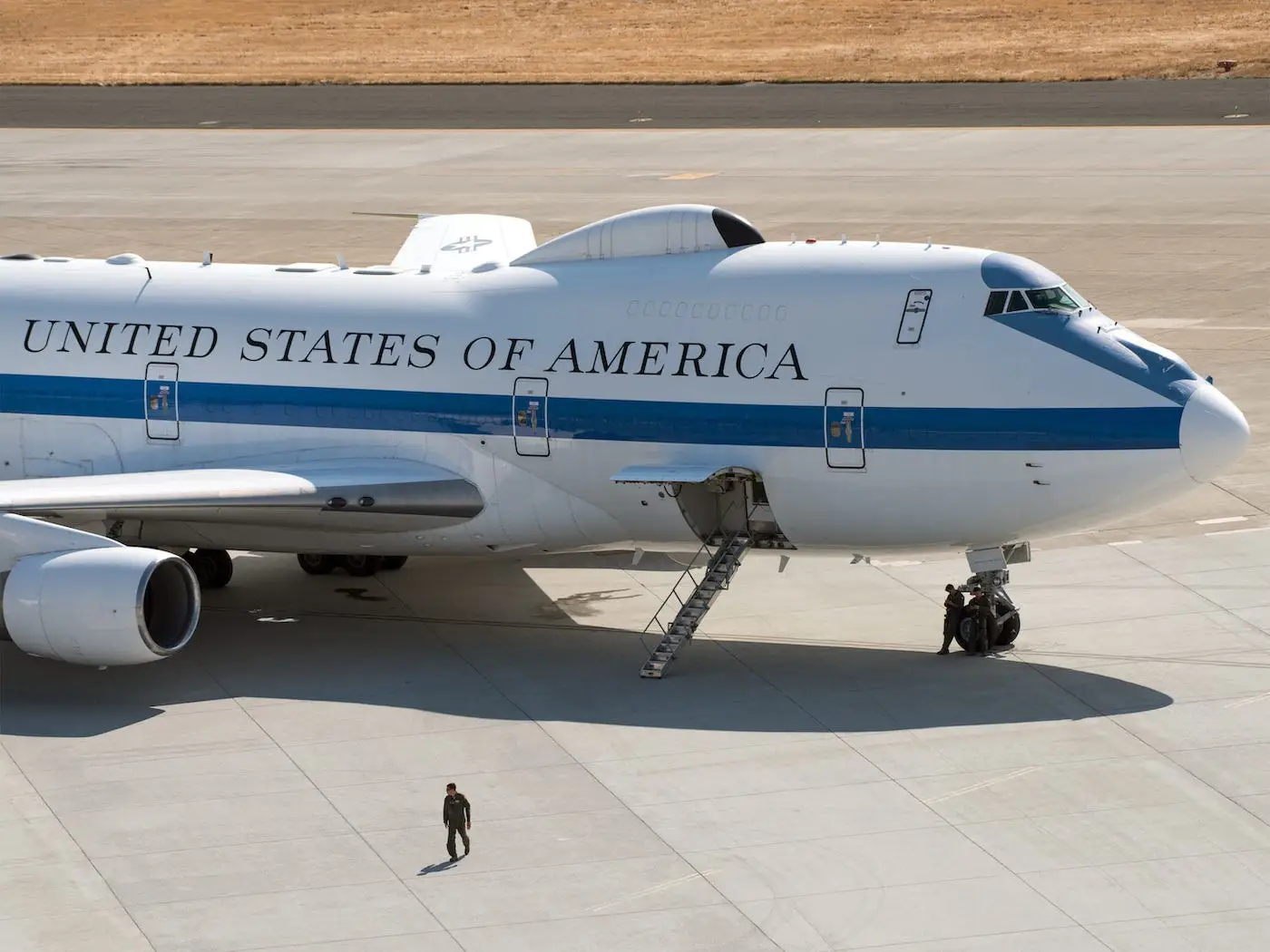
Its communications technology is kept in a bulge on top of the plane called the radome.
An E-4B aircraft on the tarmac at Travis Air Force Base, California, September 11, 2017. US Air Force/Louis Briscese
The E-4B possesses more communications capabilities than Air Force One, with about 67 satellite dishes and antennas in the radome.
The plane’s exterior also features thermal and nuclear shielding, and its electrical system can withstand electromagnetic pulses.
The plane’s main deck features six functional areas.
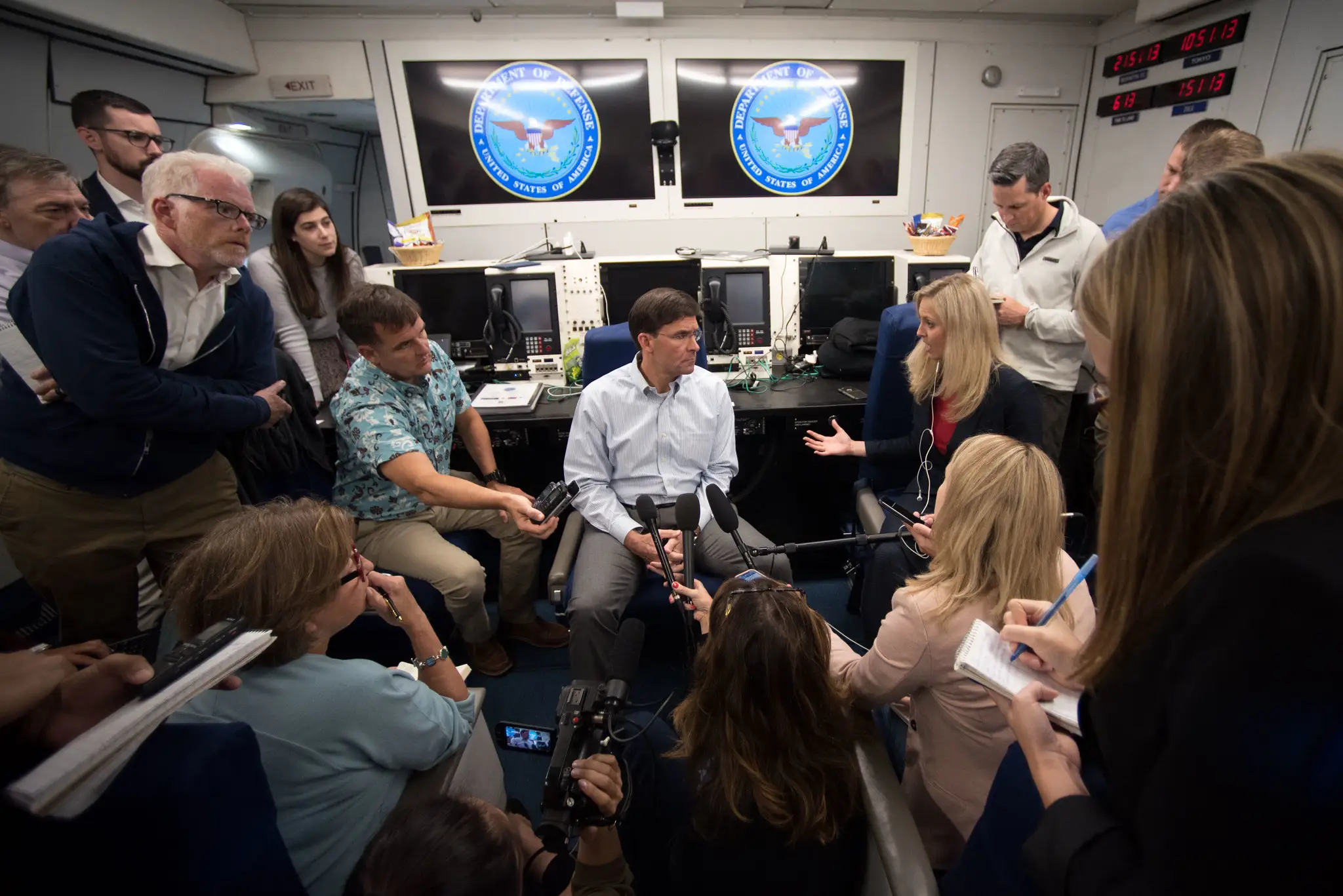
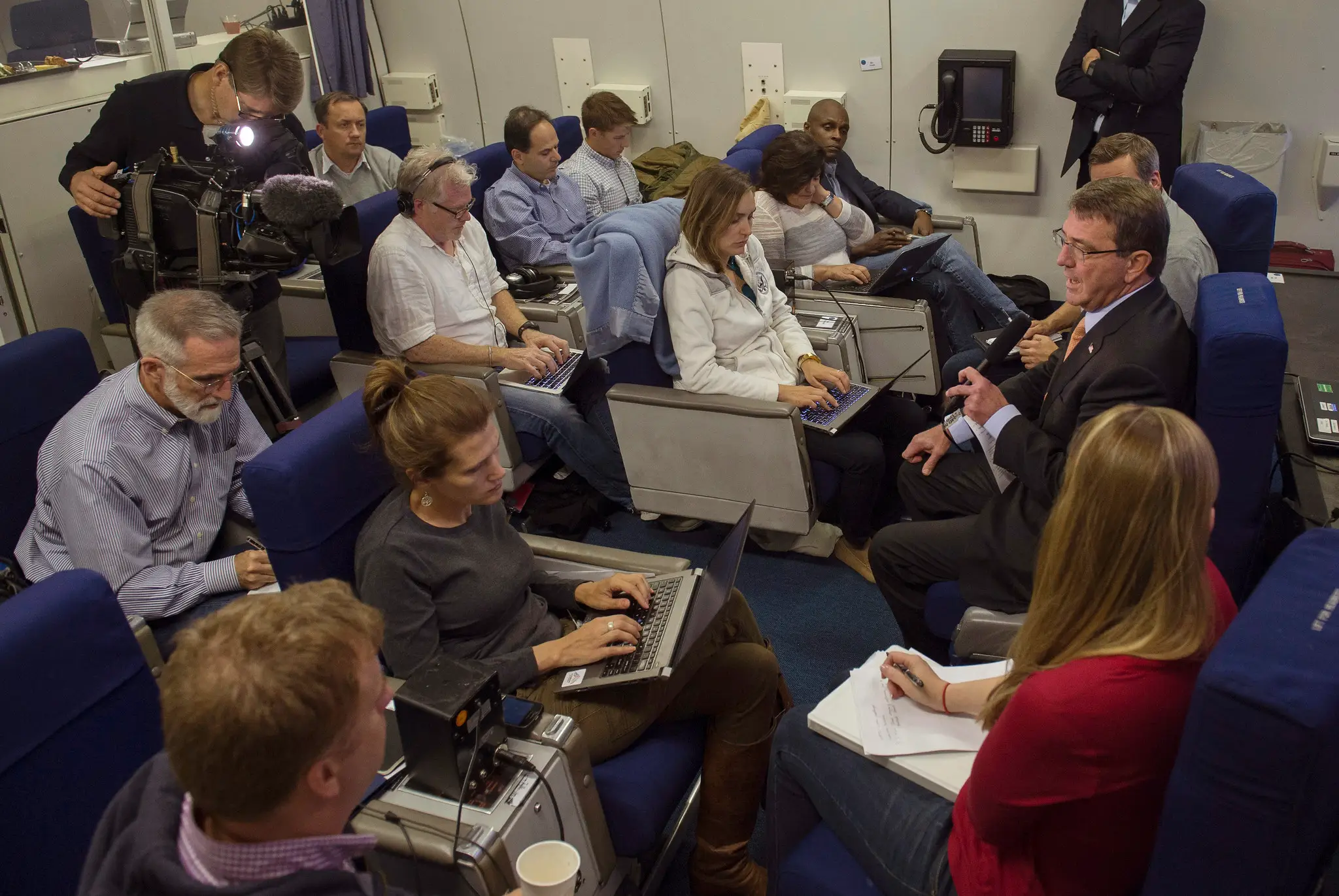
U.S. Secretary of Defense Dr. Mark T. Esper speaks to reporters during a press gaggle on board an E-4B Advanced Airborne Command Post over the Pacific Ocean, Aug. 6, 2019. DoD photo by US Army Sgt. Amber I. Smith
The layout includes a command room, conference room, briefing room, operations team work area, communications room, and a rest area. The plane can seat up to 112 people.
In the briefing room, officials update members of the press and conduct meetings with staff.
Secretary of Defense Ash Carter speaks with members of the media on board an E-4B aircraft as they travel to Europe June 21, 2015. Secretary Carter is traveling in Europe to to hold bilateral and multilateral meetings with European defense ministers and to participate in his first NATO ministerial as Secretary of Defense. Master Sgt. Adrian Cadiz/US Secretary of Defense
The E-4B isn’t just a “doomsday plane.” The defense secretary occasionally uses it to travel overseas and hold press briefings.
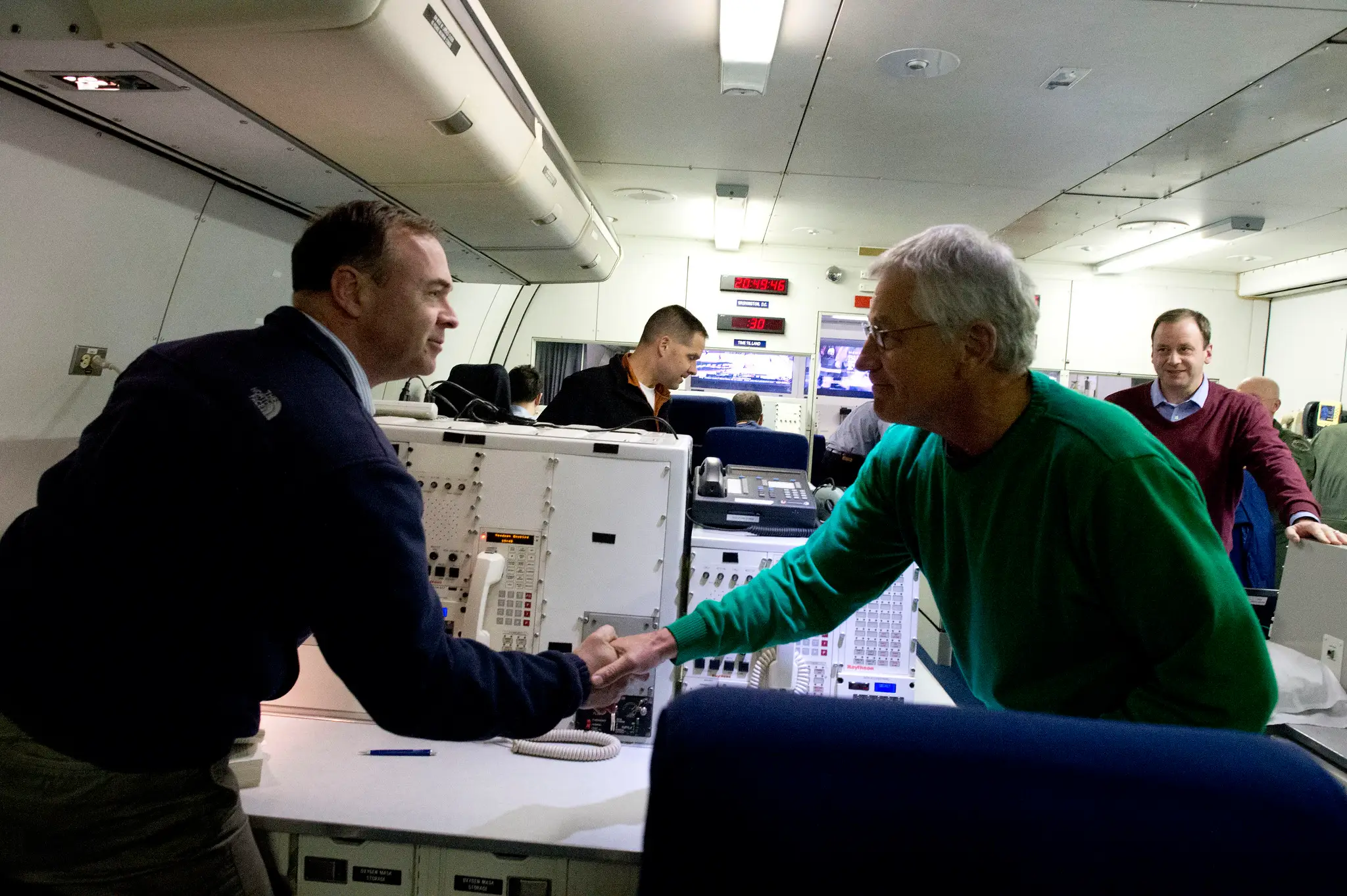
Located in the center of the plane, the battle staff room is where officers would gather to strategize in a national emergency.
The battle staff room on board an E-4B. Erin A. Kirk-Cuomo/US Secretary of Defense
In the event of a nuclear attack or other apocalyptic scenario, the president, secretary of defense, and chairman of the Joint Chiefs of Staff would use the plane as a secure command and control center similar to the Pentagon.
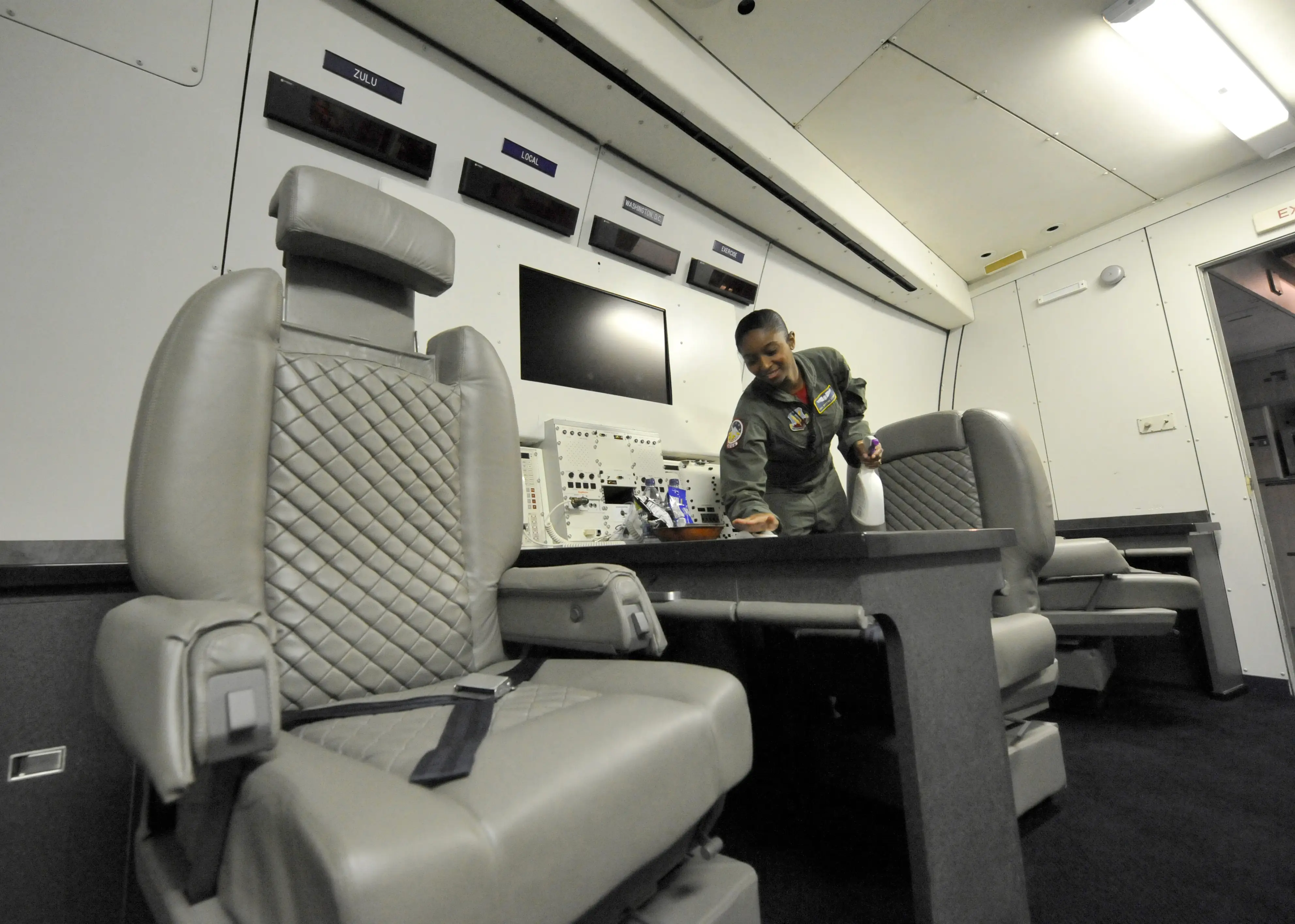
The rest area has 18 crew bunks, while the defense secretary occupies private quarters on international trips.
Staff Sgt. Krystal Lerohl, a flight attendant with the 1st Airborne Command and Control Squadron at Offutt Air Force Base, Neb., wipes off a table in the private quarters of an E-4B prior to a simulated alert mission. The E-4B serves as the National Airborne Operations Center for the president, secretary of defense and chairman of the Joint Chiefs of Staff. The aircraft passed a significant milestone this month by sitting alert constantly for more than 35 years. (U.S. Air Force photo/Lance Cheung) Lance Cheung/US Air Force photo
The secretary’s private quarters are furnished with a bunk and a desk with chairs.
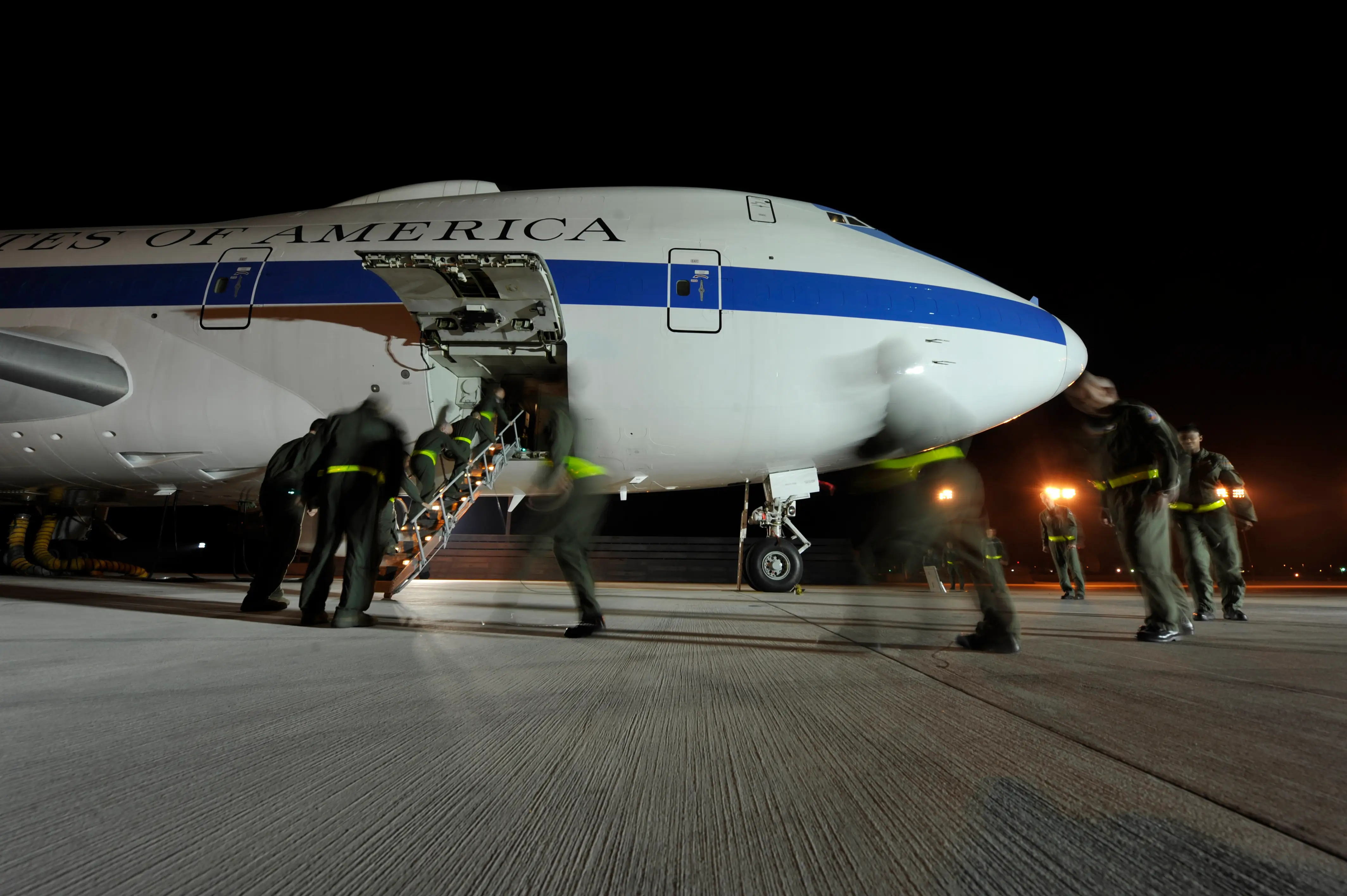
The E-4B is staffed and on alert 24 hours a day, seven days a week.
OFFUTT AIR FORCE BASE, Neb. – An aircrew from the 1st Airborne Command and Control Squadron board an E-4B here during a simulated alert mission. The E-4B is a militarized version of the Boeing 747-200 and serves as the National Airborne Operations Center for the president, secretary of defense and chairman of the Joint Chiefs of Staff. The aircraft passed a significant milestone this month by sitting alert constantly for more than 35 years. US Air Force photo by Lance Cheung
At least one E-4B has been on continuous alert since 1975, ready to deploy at a moment’s notice.